
Table of Contents
- How Foot Pain Spray Works
- Preparing Your Feet Before Application
- Step-by-Step Application Technique for Foot Pain Spray
- Best High Heel Pain Relief: Dosage and Reapplication
- How to Prevent Foot Pain in Heels: Post-Application Care
- Safety Precautions and Common Mistakes to Avoid
- Conclusion
- Frequently Asked Questions
Last Updated: September 30, 2026
How Foot Pain Spray Works
A foot pain spray delivers active ingredients directly to problem areas, with even distribution across your feet reaching multiple zones at once.

Most topical foot pain sprays rely on one or more of these core mechanisms:
Counter-irritant effect (menthol and camphor)
Menthol and camphor activate cold-sensitive nerve receptors (TRPM8), creating a cooling sensation that overrides pain signals via the "gate control theory", the cooling input closes the gate on pain perception without numbing sensation or blocking the natural feedback needed for balance and safety.
Salicylate-based analgesics
Salicylates (like methyl salicylate) penetrate skin and reduce localized inflammation by decreasing prostaglandin production, which lowers both pain and swelling without systemic absorption.
Capsaicin (in some formulations)
Capsaicin depletes substance P, a pain-signal neurotransmitter, providing longer-lasting relief with repeated application, though initial use may cause warming or burning. Capsaicin sprays are less common in heel-focused products.
How absorption works
Topical analgesics must penetrate the skin's outer layer (stratum corneum) to reach living tissue where nerve receptors reside, making application technique critical.
The spray format maximizes absorption by breaking the formula into fine particles, allowing controlled application thickness, and reaching curved areas (between toes, heel creases) more effectively than creams or gels.
Clean, dry skin absorbs faster than moist or oily skin. Massage after application increases blood flow, accelerating absorption.
Preparing Your Feet Before Application
Clean feet absorb spray more effectively than dirty ones. Sweat, dirt, and oils create a barrier that slows absorption.
Clean and dry your feet thoroughly
Wash feet with warm water and mild soap, then dry thoroughly with a clean towel, paying special attention to between toes and soles. Wait 2-3 minutes for remaining moisture to evaporate. Damp feet prevent proper absorption; the spray needs direct skin contact to penetrate effectively.
Test for skin sensitivity
Before your event, test the spray on a small area (inside of foot or ankle). Wait 10-15 minutes and observe for redness, itching, burning, or unusual sensation. This is especially important if using the spray for the first time or if you have sensitive skin. Skip only if you've used this specific product before without issues.
Step-by-Step Application Technique for Foot Pain Spray
Proper application technique ensures every zone gets coverage; uneven application leaves some areas unprotected.
Spray evenly across all affected areas
Hold the bottle 4-6 inches from your foot to prevent over-saturation while ensuring adequate coverage. Start at the heel and move toward your toes using smooth, steady motions for even misting.
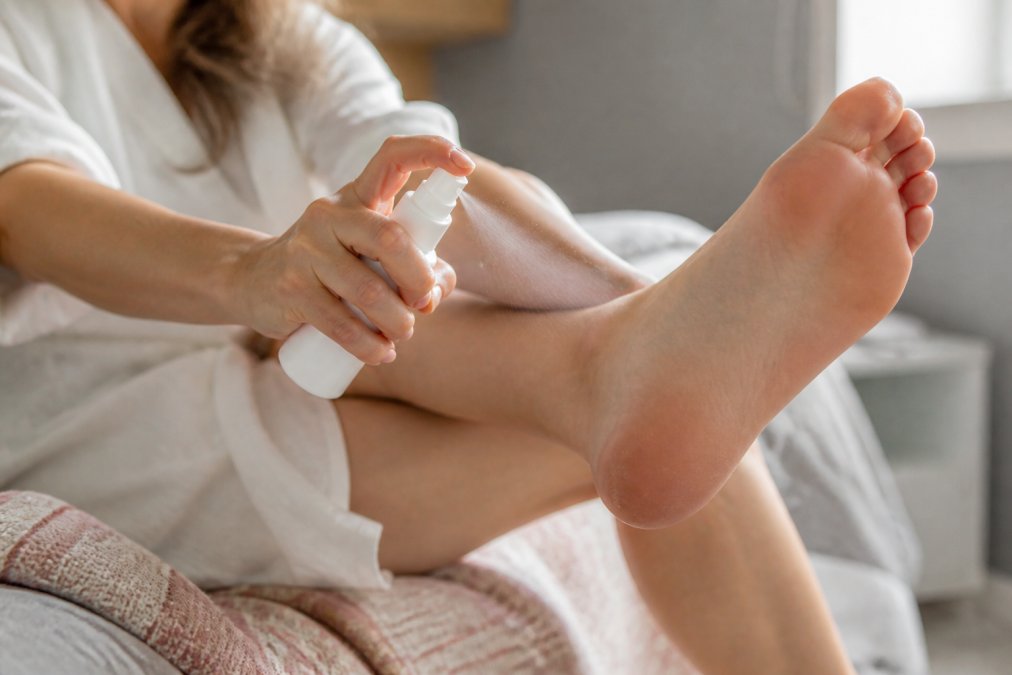
Cover key areas: heel, ball of foot, sides and top (shoe-rub zones), and between toes. One full application typically requires 4-6 spritzes per foot, varying by bottle design and foot size.
Massage the spray into your skin
Gently massage the formula into your feet using circular motions from toes toward ankles, spending extra time on high-pressure areas. This 1-2 minute step aids absorption and even distribution.
Allow proper absorption time
After massage, allow 5-10 minutes for the spray to absorb fully. Keep feet bare during this window; movement and friction interfere with absorption. Apply early in your routine to allow a buffer.
Best High Heel Pain Relief: Dosage and Reapplication
Most people find one application before putting on heels provides relief for 2-4 hours.
Initial application dosage
Use 4-6 spritzes per foot for even coverage, not saturation. Over-applying wastes product and can cause skin irritation without improving results.
Post-application care before wearing heels
After you've massaged the spray into your feet and allowed 5-10 minutes for absorption, proper care during this window ensures maximum effectiveness:
Foot Comfort Spray for Ultimate High →
Do not put on socks immediately. Socks trap moisture and heat, which interferes with absorption and can reduce the spray's effectiveness by 30-50%. Keep your feet bare during the absorption window. If you must wear socks (for warmth or comfort while getting ready), wait at least 15 minutes after application and ensure your feet are completely dry first.
Wash your hands thoroughly after application. Most foot pain sprays contain menthol, salicylates, or other active ingredients that can irritate eyes and mucous membranes. Wash with soap and water for at least 20 seconds, paying special attention to fingertips and under nails. If you accidentally touch your face or eyes before washing, rinse immediately with cool water.
Allow complete drying before shoe contact. The spray should feel dry to the touch (not sticky or wet) before you put on shoes. This typically takes 3-5 minutes after massage. If you put on shoes while the spray is still damp, the moisture creates a barrier that reduces absorption and can trap the formula against your skin, potentially causing irritation from prolonged contact.
Avoid lotions or additional products on application sites. Don't apply foot cream, powder, or other topicals to the sprayed areas during the absorption window. These products create a barrier that blocks the spray's active ingredients from penetrating effectively. Maintaining a clean surface ensures that the medication reaches the underlying tissue, which is a fundamental principle when treating foot conditions that prove resistant to standard topical interventions.
Reapplication during long events
For events lasting longer than 4 hours, plan for reapplication. Still Standing® Spray's travel-size bottle (0.5 fl oz) fits easily in a clutch or pocket for touch-ups throughout the day or evening.
Reapplication works best in a bathroom or private space. Remove your shoe, clean your foot with a tissue if needed to remove sweat or debris, spray lightly (2-3 spritzes), and massage for 30 seconds. You don't need the same thorough application as the initial spray; a quick refresh maintains comfort.
Hand washing after reapplication is critical. If you're reapplying in a public restroom or at an event, wash your hands immediately afterward before touching food, your face, or other people. Menthol residue on your hands can transfer to food and create an unpleasant taste, or irritate eyes if you touch your face.
Wait 2-3 minutes before putting shoes back on. Even for a quick reapplication, give the spray a moment to begin absorbing before you put your shoe back on. This brief pause prevents the same moisture-trapping issue that reduces initial application effectiveness.
Some people reapply every 2-3 hours during a long event.
Bottle size and usage timeline
The 3.4 fl oz (100 mL) full-size bottle is ideal for your primary application before putting on your shoes. The travel-size bottle is ideal for keeping at your desk or in your bag for unexpected occasions.
How to Prevent Foot Pain in Heels: Post-Application Care
What you do after wearing heels matters as much as what you do before. Post-event care affects how quickly your feet recover and how ready they are for your next occasion.
Safety Precautions and Common Mistakes to Avoid
Understanding what not to do protects your feet and ensures the spray delivers maximum benefit.
Common mistakes and their fixes:
| Mistake | What Happens | The Fix |
|---|---|---|
| Applying to wet feet | Spray sits on surface, doesn't absorb | Dry feet completely before application |
| Skipping sensitivity test | Possible reaction during your event | Test 10-15 minutes before wearing heels |
| No absorption time | Reduced effectiveness, wasted product | Wait 5-10 minutes after applying |
| Single application for 8+ hours | Discomfort returns partway through | Plan reapplication every 3-4 hours |
| Applying between toes heavily | Moisture trap, potential irritation | Use light application between toes only |
| Storing in heat | Formula degrades, loses potency | Keep in cool, dry location |
Conclusion
Using foot pain spray effectively comes down to three fundamentals: proper preparation, correct application technique, and realistic expectations about reapplication timing. Clean, dry feet absorb the formula better. Even distribution across all affected areas ensures consistent relief. And planning for touch-ups during long events keeps your comfort steady.
Frequently Asked Questions
How long does foot pain spray take to work?
Most topical analgesic sprays begin providing therapeutic relief within 5-15 minutes of application, though full absorption and maximum comfort typically occur after 20-30 minutes. Still Standing® Foot Comfort Spray's cooling menthol formula works through transdermal absorption, so allowing adequate time before putting on your shoes ensures the spray reaches the affected areas and delivers optimal symptom relief for your event.
Should you apply foot pain spray before or after putting on shoes?
Always apply foot pain spray before putting on your shoes. This allows the spray to absorb fully into your skin and create a protective barrier. Applying after you're already in heels prevents proper absorption and reduces effectiveness. For best results, spray your feet 20-30 minutes before wearing high heels, then put on your shoes once the spray has dried completely.
How often can you reapply foot comfort spray throughout the day?
You can reapply foot comfort spray every 4-6 hours as needed, depending on your activity level and comfort needs. If you're wearing heels all day at work or a wedding, a mid-day touch-up application can extend your comfort. Remove your shoes, clean the application site if possible, and reapply the spray to the affected areas. Still Standing® travel-size bottles make on-the-go reapplication convenient.
Can I use foot pain spray if I have sensitive skin?
Yes, but perform a patch test first. Apply a small amount of spray to a small area of your foot and wait 24 hours to check for any adverse reactions or irritation. Still Standing® is paraben-free and made with plant-derived ingredients, making it gentler on sensitive skin. If you experience any irritation, discontinue use and consult a healthcare professional before wearing heels.