
Table of Contents
- Why Heels Tear Up Your Feet: Causes of Cracked Heels and Pain
- Quick Comparison: Still Standing Sprays for Heel Comfort
- Best High Heel Pain Relief: Sprays, Inserts, and What Actually Works
- How to Treat Cracked Heels at Home: A Step-by-Step Routine
- Podiatrist Recommended Foot Cream: Ingredients That Repair Skin
- Shoe and Sock Choices That Protect Your Heels
- Day vs. Night: A Foot Care Routine That Fits Real Life
- Conclusion
- Frequently Asked Questions
Last Updated: September 14, 2026
Why Heels Tear Up Your Feet: Causes of Cracked Heels and Pain
The best foot care for heels starts with understanding why high heels damage skin. Heels shift your weight onto the ball of your foot and the heel edge, concentrating pressure on a small area for hours. That pressure, plus friction inside the shoe, weakens the skin barrier.
Cracked heels, clinically called fissures, form when the skin around the heel rim loses elasticity and splits under load. Calluses are the skin's first defense: thickened patches of dead skin cells that build up where pressure repeats. Once dry, a callus cracks.
This guide from Still Standing® Spray breaks down seven steps that address both the pain of wearing heels and the skin damage they leave behind.

American Podiatric Medical Association guidance on heel fissures
Fissures, Calluses, and the Skin Barrier
Your skin barrier is the outermost layer of skin, made of lipids and dead skin cells that lock in moisture and keep irritants out. When it thins from friction and dryness, water loss accelerates and the heel flexes less without splitting.
Three things drive this breakdown:
- Pressure: body weight concentrated on the heel edge for hours
- Friction: the shoe's heel cup rubbing against dry skin
- Moisture loss: open-back shoes and dry indoor air pull water from the skin
A common mistake is treating the crack while ignoring the callus underneath it. The callus is the root cause. Soften it, and the fissure has room to close.
Quick Comparison: Still Standing Sprays for Heel Comfort
Still Standing® Spray is a non-numbing, cooling menthol foot comfort spray that keeps you comfortable in high heels without deadening sensation.
| Product | Size | Price | Best For |
|---|---|---|---|
| Still Standing® Spray - Large | 3.4 fl oz | $37.99 | Primary first application at home |
| Still Standing® Spray - Mini | 0.5 fl oz | $20.00 | Touch-ups on the go |
| Still Standing® Spray - Mini Set | 2 x 0.5 fl oz | $34.00 | Gifting to your bridal party |
| Still Standing® Spray Comfort Set | 3.4 fl oz + 0.5 fl oz | $48.99 | All-day events and travel |
Every option is TSA-friendly, paraben-free, and cruelty-free, and each is made without numbing agents. The formula pairs cooling menthol with plant-derived anti-inflammatory ingredients to reduce swelling and discomfort.

Best High Heel Pain Relief: Sprays, Inserts, and What Actually Works
The best high heel pain relief combines three things: reduced pressure at the heel, controlled inflammation, and a fit that stops the shoe from sliding. No single product does all three, which is why so many people cycle through inserts that never solve the problem.
Inserts and gel pads absorb impact but take up room inside the shoe, pushing your foot higher and creating new pressure points. Numbing sprays kill sensation entirely, if you cannot feel your foot, you cannot feel a blister forming or an ankle starting to roll.
A targeted comfort spray calms the inflammatory response behind swelling and throbbing while leaving sensation intact, so you stay aware of how you're standing.
Cleveland Clinic overview of foot pain causes and treatment
Why Non-Numbing Formulas Beat Numbing Agents
Numbing agents block nerve signals, which sounds ideal until you consider what those signals are for. Pain is feedback: when your foot goes silent, you keep walking on a hot spot that's turning into a blister, or miss the instability that precedes a fall.
Non-numbing formulas take the edge off swelling and heat without switching off that feedback loop, so you can wear heels longer and still know when to sit down.
How to Treat Cracked Heels at Home: A Step-by-Step Routine
You can treat most cracked heels at home with a consistent routine of soaking, exfoliating, and moisturizing, in that order. Skipping a step or doing them out of sequence is the most common reason home treatment stalls.
- Soak in lukewarm water for 10-15 minutes to soften dead skin cells. Hot water strips lipids and makes dryness worse.
- Exfoliate with a pumice stone or foot file while the skin is still soft, using light pressure in one direction.
- Pat dry completely, especially between the toes, to prevent athlete's foot.
- Moisturize immediately while the skin is still slightly damp, sealing in hydration.
- Occlude by pulling on therapeutic socks to hold the moisturizer against the skin overnight.
- Repeat three to four times per week until the fissure closes, then twice weekly for maintenance.
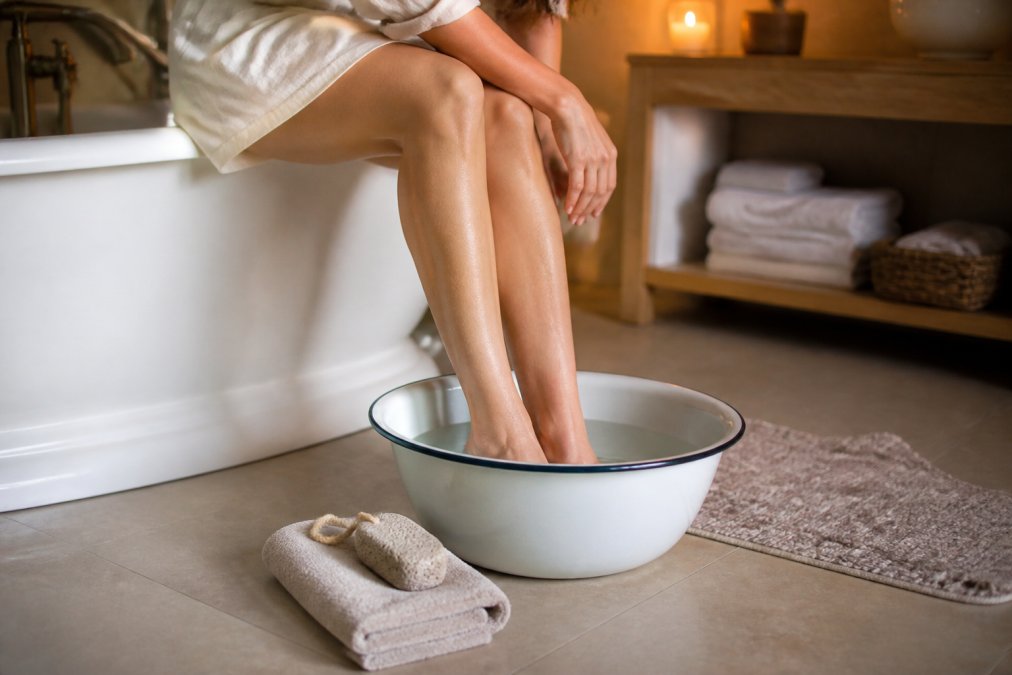
Soaking, Exfoliating, and Moisturizing in Order
Soaking first is mechanics, not preference: softened dead skin cells release far more easily than dry ones, so exfoliating after a soak removes the callus without tearing live skin. Aggressive filing on dry skin creates micro-tears that make the next fissure more likely, so gentle, frequent sessions beat one vigorous scrub.
Podiatrist Recommended Foot Cream: Ingredients That Repair Skin
A podiatrist recommended foot cream should contain three categories of ingredients: humectants to pull water into the skin, emollients to soften and smooth, and keratolytics to break down thickened dead skin. What separates a cream that works from one that sits on the shelf is the active ingredient's concentration and how often you apply it.
Urea is the workhorse here. It is a humectant and a keratolytic at once, which is why it appears in so many heel balms. Concentration decides the job it does:
- 10% urea or less: light hydration for maintenance and daily use
- 10-20% urea: softens moderate calluses and early fissures
- 20-40% urea: reserved for thick, hard calluses and deep cracks, and typically used short-term
Most practitioners find that a 20-25% urea cream applied twice daily for two to four weeks resolves mild to moderate heel fissures, then stepping down to a 10% formula prevents recurrence (pubmed.ncbi.nlm.nih.gov). Higher is not automatically better: very high concentrations sting broken skin, and overuse can leave the heel raw.
Pair urea with ingredients that cover the jobs it does not:
- Glycerin and hyaluronic acid as humectants that pull water into the upper layers
- Shea butter, lanolin, or ceramides as emollients for lipid replenishment
- Salicylic acid or lactic acid as additional keratolytics when the callus is stubborn
- Petrolatum for occlusion, trapping moisture against the skin
Thick cream beats lotion for heels: lotions are mostly water and evaporate quickly, while a thick cream or ointment stays put long enough to work. If you layer a keratolytic and an occlusive, apply the active first, let it absorb, then seal it with the heavier balm.
One caution: do not apply high-concentration urea or salicylic acid to an open, bleeding fissure. Treat the surrounding callus, keep the crack clean and covered, and see a podiatrist if it does not close within a few weeks.
Internal Factors That Decide Whether Topicals Work
Skin repair is an inside job: a topical routine layered on top of poor hydration and nutrition will underperform.
- Water intake: skin is roughly 30% water by weight. Chronic mild dehydration reduces skin turgor and makes the heel less able to flex without splitting. Aim for consistent daily fluid intake, not catching up after the fact.
- Vitamin E: a fat-soluble antioxidant that supports the skin barrier. Deficiency is uncommon, but low-fat diets can leave intake short. Nuts, seeds, and vegetable oils are common sources.
- Vitamin B3 (niacin): supports the skin's ability to retain moisture and maintain its barrier. Found in poultry, fish, whole grains, and legumes.
- Essential fatty acids and protein: the lipids that make up your skin barrier and the protein that rebuilds it both come from diet. Very low-fat or low-protein eating patterns show up as dry, slow-healing skin.
- Systemic conditions: diabetes, thyroid disorders, and poor circulation all slow healing and change how the skin on your feet behaves. If cracks persist despite a solid routine, that is a signal to look beyond the foot cream.
The cream supplies the raw material, but hydration and nutrition decide whether your body can use it. Fix the topical routine and the internal inputs together, and the results hold.
DIY and Natural Alternatives That Actually Help
If you prefer to avoid synthetic actives, evidence-based natural options can work as part of a routine, with realistic expectations about what each one does.
- Coconut oil: a solid occlusive at room temperature. It seals moisture in but has no keratolytic action, so it will not break down a thick callus alone. Best used after gentle exfoliation.
- Honey: a humectant that draws water into the skin. Raw honey also has mild antibacterial properties, which helps if the surrounding skin is irritated.
- Shea butter and beeswax balm: a homemade occlusive that mimics the sealing effect of petrolatum. Melt roughly equal parts shea butter and beeswax, cool, and apply to damp skin before socks.
- Olive oil or avocado oil: emollients that soften the surface. Useful as a massage medium before exfoliation, not as a stand-alone repair treatment.
The trade-off is real: natural occlusives and humectants hydrate and protect, but they lack the keratolytic punch of urea or salicylic acid. If your heels are deeply cracked, pair a natural balm with regular gentle exfoliation rather than relying on the balm alone.
Shoe and Sock Choices That Protect Your Heels
What you put on your feet matters as much as what you put on your skin. Shoe material, heel height, and sock fabric decide how much friction your heels absorb over a long day, and small changes here prevent the damage your nighttime routine repairs. Selecting breathable materials and supportive designs creates a foundation that allows your body to naturally repair damaged skin while you rest.
Heel Height and Shoe Construction
Heel height changes where pressure lands. A low block heel under about two inches keeps more weight over the heel itself. Past three inches, body weight shifts forward onto the ball of the foot and the heel edge, concentrating load on a smaller area, the setup for both forefoot pain and heel fissures.
- Wider heel base: a block or stacked heel distributes load better than a stiletto, which concentrates pressure into a narrow point.
- Padded or lined heel cup: a cushioned back reduces the rubbing that starts a fissure. Look for a suede-lined or foam-padded heel counter.
- Platform under the toe: a small platform reduces the effective heel pitch without lowering the look, which takes pressure off the ball of the foot.
- Adjustable straps: a slingback or ankle strap keeps the foot from sliding, which cuts friction at the heel edge.
Leather and suede uppers breathe and gradually mold to your foot. Synthetic materials trap heat and moisture, softening the skin barrier and making it more vulnerable to friction damage. If a new pair rubs, break them in over short wears, not a full event day.
Sock Fabric and Weight
Sock fabric follows the same logic as shoe material. Cotton holds moisture against the skin, keeping the heel damp and prone to friction damage. Merino wool and moisture-wicking blends move sweat away, keeping skin drier and more resilient.
- Thin moisture-wicking liner: the right choice inside closed-toe heels, where a bulky sock will not fit.
- Cushioned wool blend: better for boots and closed shoes where you have room, since the cushioning absorbs impact at the heel.
- Seamless toe: reduces the ridge that rubs against toes and the top of the foot.
- Fresh pair daily: a damp sock from yesterday carries moisture and warmth that feed fungal growth.
In open-back heels, a sock is not an option, so the shoe itself has to do the work. That is where a padded heel cup and a stable fit matter most.
Foot Hygiene and Shoe Rotation
Foot hygiene ties it together. Rotating shoes so each pair dries fully between wears limits the moisture and warmth that feed athlete's foot, corns, and warts, all of which change how you walk and where pressure lands. Give each pair at least a full day to dry, and use shoe trees or newspaper to pull moisture from leather.
Wash and fully dry your feet daily, especially between the toes, and keep toenails trimmed straight across so they don't press into the shoe. Persistent itching, scaling, or a change in how a shoe fits is a signal, not an inconvenience.
Day vs. Night: A Foot Care Routine That Fits Real Life
Repair happens overnight, protection happens during the day. Splitting your routine this way makes it sustainable when you wear heels multiple times a week.
Daytime routine:
- Apply Still Standing® Spray before you put heels on, for even coverage and longer-lasting comfort
- Carry the Mini in your clutch for a mid-event touch-up
- Swap to flats for your commute if the day allows it
Nighttime routine:

- Soak and exfoliate on your scheduled days
- Apply thick heel cream while skin is damp
- Pull on therapeutic socks and let the cream work while you sleep
Conclusion
Cracked heels and heel pain share the same root causes: pressure, friction, and a weakened skin barrier. Fixing one without the other rarely holds.
That's why Still Standing® Spray pairs a repair-focused routine with in-the-moment comfort. The non-numbing menthol formula calms swelling without deadening sensation, the portable Mini fits in a clutch or carry-on, and every order is backed by a 30-day money-back guarantee. Start with the Still Standing® Spray - Large, then add the Mini for touch-ups.
Get started with Still Standing® Spray and wear your heels through the whole event, not just the first hour.
Frequently Asked Questions
What is the best foot treatment for dry heels?
The most effective approach combines exfoliation with deep moisturizing. Soak feet in lukewarm water for 10 minutes, gently file dead skin with a pumice stone or foot file, then apply a thick cream containing urea or glycerin. Seal in moisture with therapeutic socks overnight. For daytime comfort in heels, a non-numbing spray like Still Standing® can prevent the friction and swelling that make dry skin worse. Consistency matters more than any single product.
What can I put on my feet when wearing heels?
Before slipping into heels, apply a non-numbing foot comfort spray that uses cooling menthol and plant-derived anti-inflammatory ingredients. Unlike numbing agents, this approach reduces swelling and friction without deadening sensation, so you stay steady on your feet. Still Standing® Spray is TSA-friendly and comes in a mini size for touch-ups. Avoid greasy creams right before wearing heels, as they can make feet slide inside the shoe.
What are the best foot care products for cracked heels?
Look for three categories: a keratolytic ingredient like urea to break down thick dead skin, an emollient like shea butter to soften, and a humectant like glycerin to draw in moisture. A podiatrist recommended foot cream often combines all three. Pair that with a foot file for exfoliation and a spray for daytime heel comfort. Still Standing® Spray addresses the pain and swelling side, while a thick cream handles skin repair overnight.
How can I prevent foot pain when wearing high heels?
Prevention starts before you put shoes on. Spray feet with a non-numbing comfort formula, choose heels with a wider toe box and cushioned insole, and take seated breaks every hour to flex your feet. Alternate heel heights throughout the week to reduce repetitive strain. At the end of the day, soak feet in lukewarm water and moisturize. Still Standing® works for 94% of users and is recommended by Solutions Bridal for wedding parties.
How long does a bottle of foot comfort spray last?
It depends on frequency. The Still Standing® Large bottle is 3.4 fl oz (100 mL) and works as your primary application before events. The Mini is 0.5 fl oz (15 mL) for touch-ups on the go. If you wear heels several times a week, the Comfort Set at $48.99 gives you both sizes so you are not rebuying constantly. A 30-day money-back guarantee covers your first purchase if it does not work for you.