
Table of Contents
- Why Your Feet Hurt After a Long Day at Work
- Best Shoes for Standing All Day: What to Look For
- How to Stop Feet From Hurting in Heels
- Stretches for Foot Pain Relief You Can Do at Your Desk
- Workplace Ergonomics Beyond Footwear: Mats, Posture, and Breaks
- Post-Shift Recovery Routines to Prevent Foot Pain at Work
- When to See a Podiatrist: Medical Red Flags
- Conclusion
- Frequently Asked Questions
Last Updated: September 11, 2026
Why Your Feet Hurt After a Long Day at Work
Preventing foot pain at work starts with understanding what causes it. Your feet absorb significant force with every step, and standing or walking for hours on hard surfaces takes a cumulative toll on muscles, tendons, and fascia. This guide from Still Standing® Spray breaks down the strategies that keep feet comfortable through a full shift.

The discomfort rarely comes from one dramatic moment; it builds. Foot pain is not simply the price of a standing job. The cause is usually a combination of inadequate arch support, poor shock absorption, prolonged pressure on the same points, and reduced circulation from staying in one position.
Foot pain at work is the discomfort, aching, burning, or sharp sensation in the feet and heels caused by prolonged standing, walking, or restrictive footwear during a work shift. It can range from mild fatigue to conditions like plantar fasciitis or metatarsalgia that require medical attention.
The fix is not a single product but a system: footwear, stretches, ergonomic adjustments, and recovery habits that address root causes rather than masking symptoms.
Best Shoes for Standing All Day: What to Look For
The best shoes for standing all day prioritize arch support, cushioning, and shock absorption over style, distributing body weight evenly and reducing pressure points. But the shoe is only half the equation: what you stand on and how you rotate footwear matter just as much.
When evaluating footwear, check these features:
- Arch support: A firm midsole that follows your foot's natural curve prevents overpronation and reduces strain on the plantar fascia. Press your thumb into the arch area from the side; it should resist slightly rather than collapse.
- Cushioning: Look for adequate padding in the heel and forefoot to absorb impact. EVA and polyurethane foams are common; polyurethane tends to hold its shape longer under continuous load.
- Breathable materials: Leather or mesh uppers reduce moisture buildup that leads to blisters and irritation.
- Heel height: For daily standing, a heel between one-half and one inch is ideal (aofas.org). Flats with no support can be just as problematic as stilettos.
- Replaceable insoles: Shoes that accept orthotics or aftermarket insoles give you flexibility as your needs change.
- Outsole traction: A slip-resistant rubber outsole reduces the micro-adjustments your feet make to stay stable on smooth floors, which is a hidden source of fatigue.
For those who wear heels to work, a supportive heel with a wider toe box and cushioned insole makes a measurable difference.
The footwear rotation schedule most guides miss
Cushioning materials compress under load and recover slowly, so wearing the same pair daily means standing on foam that never fully rebounds. Rotating pairs gives each 24 to 48 hours to recover its shape.
A workable three-pair rotation looks like this:
- Day 1: Primary supportive shoe (your most cushioned pair).
- Day 2: Secondary pair with a different last and heel-to-toe drop, which shifts pressure to different points on your foot.
- Day 3: Third pair, or the primary pair again if you only own two.
- Weekend: Let all pairs air out, remove insoles, and stuff with newspaper or cedar inserts to pull moisture.
Alternating two or three pairs also reduces repetitive stress, because each shoe's geometry loads your foot differently. With only two pairs, rotate them and replace the more worn pair every six to nine months, or sooner if the midsole feels flat when pressed.
Match the shoe to the surface
Footwear does not work in isolation from the floor. Concrete and tile transmit more impact than wood or carpet. On hard flooring, a thicker, more resilient midsole paired with an anti-fatigue mat is more effective than either alone; on carpet or wood, a slightly firmer shoe works because the surface absorbs some shock.
Quick test: stand in your work shoes on your actual work surface for five minutes before buying. If your heels or the balls of your feet ache, the shoe-surface combination is wrong, however good the shoe looks on paper.
How to Stop Feet From Hurting in Heels
Stopping feet from hurting in heels means addressing both the shoe and your foot's response. Heels shift weight forward, compressing the metatarsal heads and shortening calf muscles, producing the burning, aching sensation that shows up after a few hours.
A few adjustments help:
- Choose a heel with a wider base for stability and better weight distribution.
- Use a gel or foam insert designed for high heels to cushion the ball of the foot.
- Take seated breaks where you can slip your heels off under the desk for a few minutes.
- Apply a foot comfort spray before putting heels on. A non-numbing formula like Still Standing® Spray uses cooling menthol and plant-derived anti-inflammatory ingredients to reduce pain without the dangerous loss of sensation that numbing products cause.
That last point matters: numbing your feet removes your body's natural feedback system, which is how people end up with falls and injuries. A formula that prevents pain while keeping sensation intact lets you stay aware and stable.
Stretches for Foot Pain Relief You Can Do at Your Desk
Stretches for foot pain relief target the plantar fascia, Achilles tendon, and calf muscles, which tighten during prolonged standing or heel wear. Each takes under two minutes and can be done at your desk.
Plantar fascia stretch: Sit with one ankle crossed over the opposite knee. Use your hand to pull your toes back toward your shin until you feel a stretch along the arch. Hold for 30 seconds. Repeat three times per foot.
Calf raise and lower: Stand and rise onto the balls of your feet, then slowly lower your heels. Repeat 15 times. This pumps blood through the lower legs and reduces swelling.
Toe spread and curl: Spread your toes wide, hold for five seconds, then curl them under. Repeat 10 times. This activates the small muscles in your feet that support the arch.
Ankle circles: Lift one foot and rotate your ankle 10 times in each direction. Switch feet. This maintains mobility and reduces stiffness.
A common mistake is stretching only when pain appears. Consistency beats intensity: two minutes every hour keeps circulation moving and prevents the buildup that leads to end-of-day pain.
Workplace Ergonomics Beyond Footwear: Mats, Posture, and Breaks
Workplace ergonomics extends past what you put on your feet. Anti-fatigue mats, posture, and structured breaks address environmental factors footwear alone cannot fix.
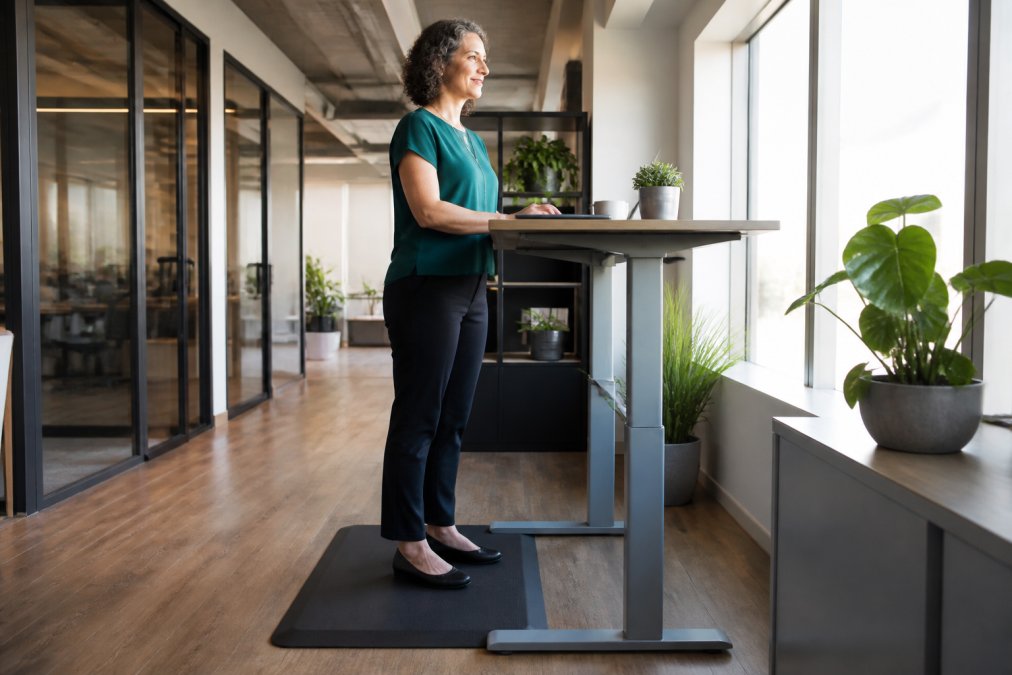
An anti-fatigue mat provides a cushioned surface that encourages subtle muscle movements in your legs and feet, improving blood flow and reducing the static pressure that causes fatigue. If your employer does not provide one, a portable version costs little and travels with you. treating plantar fasciitis.
Posture plays a role too. Standing with weight evenly distributed, knees slightly soft, and shoulders relaxed reduces the load on your lower back and feet. Avoid locking your knees, which restricts circulation.
Breaks should be scheduled, not taken only when pain hits. The Occupational Safety and Health Administration recommends that workers who stand for extended periods have opportunities to sit, stretch, and change posture throughout the day. Set a reminder to shift positions every 30 to 60 minutes. Even a 30-second change in stance resets the pressure distribution in your feet.
Post-Shift Recovery Routines to Prevent Foot Pain at Work
Most foot pain guides stop at prevention, telling you what to wear and how to stretch, then sending you home. But the habits you practice after work determine how your feet feel tomorrow. A structured post-shift recovery routine is the most underserved part of work-related foot care, and where you can make the biggest difference in next-day soreness.
The routine below takes about 20 minutes and follows a sequence: cool down, elevate, release, rehydrate, sleep. Do it in order when you can.
Step 1: Cool down before you sit (first 5 minutes)
Resist collapsing onto the couch the moment you get home. Walk five minutes at an easy pace to keep blood moving through your calves and feet and prevent the pooling that causes end-of-day swelling. If you drove, park a few blocks away or take a short loop before going inside.
Step 2: Elevate above heart level (10 to 15 minutes)
Lie on your back and raise your feet above heart level, propped on pillows or against a wall. This reduces swelling and takes pressure off the veins in your lower legs. After a day on your feet, it is the single most effective recovery step; ten to fifteen minutes is enough.
Step 3: Contrast or warm soak (10 minutes)
Alternating warm and cool water soaks stimulates circulation and reduces inflammation: three minutes warm, one minute cool, repeated two or three times (peer-reviewed research). Without two basins, a single warm soak with Epsom salts is a reasonable, easier-to-sustain substitute, especially after a shift in heels.
Step 4: Release tension with a tool (3 to 5 minutes per foot)
Roll a frozen water bottle or tennis ball under your arch for a few minutes per foot. The frozen bottle adds a mild anti-inflammatory effect; the tennis ball gives firmer pressure for releasing the plantar fascia. Work from heel to ball, pausing on tight spots. A massage roller or foot massager can substitute if rolling is uncomfortable.
Step 5: Rehydrate and protect your sleep
Muscles recover during sleep, and dehydration worsens cramping and fatigue. Drink water in the evening rather than relying on daytime caffeine. A consistent sleep schedule does more for foot health than most people realize. Waking with heel pain often means the plantar fascia tightened overnight, which is why a morning stretch before your first step helps.
Build the routine into a habit
The hardest part is consistency, not the steps. Stack the routine onto something you already do: soak your feet while watching the evening news, or roll your arches while reading before bed. Keep a frozen water bottle in the freezer and a tennis ball in your bag so the tools are always within reach.
When to See a Podiatrist: Medical Red Flags
Most work-related foot pain improves with better footwear, stretching, and recovery habits, but certain symptoms need professional evaluation.

See a podiatrist or physician if you notice:
- Persistent pain that does not improve after rest and home care for more than two weeks
- Numbness, tingling, or loss of sensation in your feet
- Swelling that does not go down with elevation
- Redness, warmth, or signs of infection
- Sharp, shooting pain that wakes you at night
- A visible deformity or change in foot shape
These red flags can indicate plantar fasciitis, tendonitis, metatarsal stress fractures, or nerve compression. Early treatment prevents a minor issue from becoming chronic, and a podiatrist can fit custom orthotics with support over-the-counter insoles cannot match.
| Symptom | Likely Cause | When to Act |
|---|---|---|
| Morning heel pain | Plantar fasciitis | If it lasts more than 2 weeks |
| Burning in ball of foot | Metatarsalgia | If it recurs daily |
| Numbness or tingling | Nerve compression | Immediately |
| Swelling that won't subside | Circulation issue | Within a few days |
| Sharp night pain | Stress fracture | Immediately |
Conclusion
Preventing foot pain at work comes down to a system: supportive footwear, regular stretching, ergonomic adjustments, and a recovery routine you actually follow. The workplace factors that cause foot pain are largely within your control once you know where to look.
Still Standing® Spray makes the footwear part of that system easier. The non-numbing formula uses cooling menthol and plant-derived anti-inflammatory ingredients to prevent pain without the fall risk of numbing products, and the portable bottle fits in a work bag or desk drawer for reapplication during long shifts. With a 30-day money-back guarantee and a formula that works for 94% of users, it is a practical addition to any foot care routine.

Get started with Still Standing® Spray and stay comfortable on your feet from the first hour of your shift to the last.
Frequently Asked Questions
Are compression socks effective for preventing foot pain at work?
Compression socks can help improve circulation and reduce swelling, which are common causes of foot pain during long shifts. They apply gentle pressure to your legs and feet, supporting blood flow back to the heart. For best results, choose a graduated compression level (15-20 mmHg for general use) and wear them consistently. They work well alongside other preventive measures like supportive footwear and regular breaks.
How to stop feet from hurting during a 12-hour shift?
Start with supportive shoes that have cushioning and arch support. Take short breaks every hour to stretch your feet and calves. Use anti-fatigue mats if you stand in one place. Consider a foot comfort spray like Still Standing® Spray to prevent pain before it starts. Elevate your feet during breaks to reduce swelling. Stay hydrated and maintain a healthy weight to lessen strain on your feet.
When should I see a podiatrist for work-related foot pain?
See a podiatrist if pain persists despite rest and home care, or if you notice redness, swelling, numbness, or tingling that doesn't improve. Sharp heel pain, especially in the morning, could signal plantar fasciitis. Any foot pain that interferes with your daily activities or lasts more than a week warrants a professional evaluation. Early treatment can prevent chronic issues.
What could be causing foot pain while I'm resting?
Resting foot pain can stem from inflammation, nerve issues, or conditions like plantar fasciitis or tendonitis. Poor circulation or prolonged pressure during the day may also cause discomfort at night. If pain wakes you up or is accompanied by swelling, consult a doctor. Stretching before bed and elevating your feet can help, but persistent pain needs medical attention.