
Table of Contents
- Why High Heels Cause Foot Swelling
- How to Stop Feet from Hurting in Heels: Start with Proper Fit
- Elevation and Cold Therapy Techniques
- How to Reduce Foot Swelling After Wearing Heels
- Best Foot Comfort Spray for Heels and Compression Solutions
- Pre-Event Preparation: Hydration, Stretching, and Conditioning
- Prevent Foot Swelling in High Heels: Your Complete Action Plan
- Conclusion
Last Updated: August 28, 2026
Why High Heels Cause Foot Swelling
High heels tilt your foot forward at an angle, forcing your toes to absorb pressure they're not designed to handle. This altered biomechanics flattens your arch and tightens your calf muscles. Blood circulation slows because the compressed position restricts venous return, the process that sends blood back to your heart (peer-reviewed research). When blood pools in your feet instead of circulating freely, fluid accumulates in the tissues, causing swelling.
Standing for extended periods compounds this problem. Your feet aren't moving, so muscles can't pump blood upward. Pressure points where your heel sits and your toes compress create inflammation, and your body responds by retaining fluid. This is edema, the medical term for tissue swelling caused by fluid retention (the NIH). Higher heels create more extreme foot angles and faster onset of swelling.
How to Stop Feet from Hurting in Heels: Start with Proper Fit
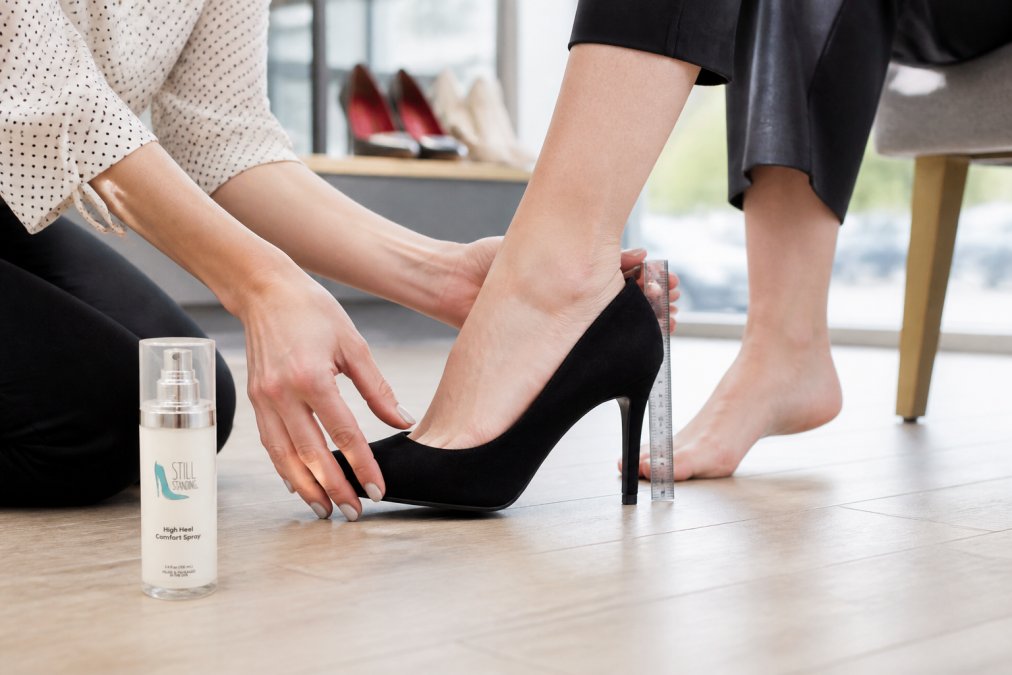
Fit is where prevention begins. Most people buy heels based on appearance, not function. Your heel should fit snugly without slipping, and your toe box needs enough room that your toes aren't cramped. Press down on the top of the shoe, there should be about a half-inch of space between your longest toe and the end of the shoe.
Sizing up in heels backfires. Too much space forces your foot to work harder to stay stable, creating more strain. Too-tight shoes compress your toes and restrict circulation. The goal is snug but not constricting.
Consider heel height relative to your foot structure. High arches may tolerate higher heels better than flat feet. Wide feet need styles that accommodate them. Leather stretches and molds to your foot over time, while rigid synthetics don't adapt. Padding in the insole and heel counter reduces pressure concentration.
Elevation and Cold Therapy Techniques
Elevation works because gravity helps move fluid out of your feet and back toward your heart (peer-reviewed research). Lie down and prop your feet on pillows higher than your chest for 15-20 minutes. You'll feel swelling decrease noticeably. Do this before bed, and you'll wake with significantly less puffiness.
Cold therapy reduces inflammation by constricting blood vessels temporarily. Soak your feet in cold water for 10-15 minutes, or apply ice packs to your ankles and the tops of your feet. The combination of elevation plus cold is more effective than either approach alone.

Epsom salt soaks offer both cold and mineral benefits. Dissolve Epsom salt in warm water (not hot), soak for 15-20 minutes, then elevate. Apply cold therapy as soon as possible after removing your heels, the longer you wait, the less effective it becomes.
How to Reduce Foot Swelling After Wearing Heels
Gentle ankle mobility work helps drainage. Rotate your ankles slowly in both directions, five rotations each way. Flex and point your toes repeatedly. These movements engage your calf muscles, which act as a pump to push blood upward.
Stretching your calves is particularly effective. Stand facing a wall, place one foot forward and one back, and lean into the wall until you feel a stretch in your back calf. Hold for 30 seconds, then switch legs. Do this three times per leg.
Compression socks accelerate recovery by applying graduated pressure that helps push fluid out of your feet and back up your legs. Wear them for a few hours after an event, especially while your feet are elevated.
Massage helps too. Use your hands or a foam roller to gently massage your feet and calves, working upward toward your heart. Hydration is counterintuitive but important, when you're dehydrated, your body retains fluid more aggressively. Drink water consistently throughout the day you're wearing heels.
Best Foot Comfort Spray for Heels and Compression Solutions
Still Standing® Spray represents a different approach to heel comfort than traditional insoles or numbing products. The non-numbing formula reduces foot pain while keeping you aware of your foot position, which matters because you need proprioceptive feedback to walk safely in heels.

The spray combines cooling menthol with plant-derived anti-inflammatory ingredients. You apply it directly to your feet before putting on your heels. The cooling sensation provides immediate relief, and the anti-inflammatory compounds reduce the inflammation that contributes to swelling. Because it's non-numbing, you still feel your feet while experiencing less pain.
Still Standing® Spray comes in a portable bottle design that fits in an evening bag. You can reapply it during an event if needed. The 30-day money-back guarantee removes the risk of trying it.
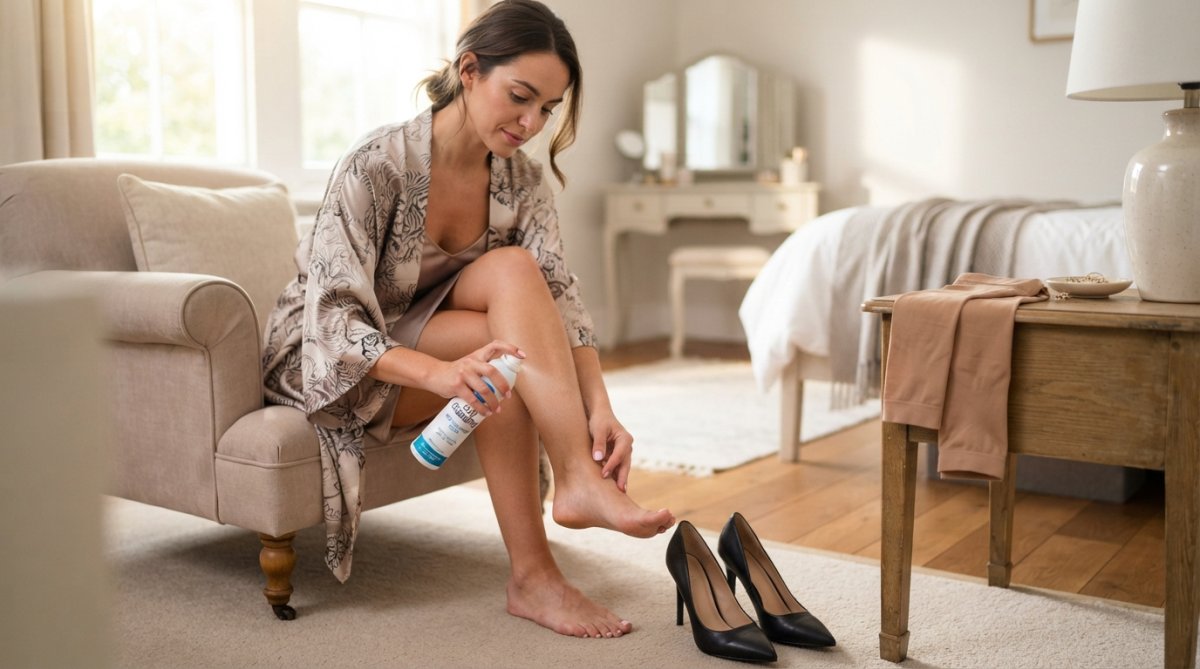
Compression socks apply graduated pressure, tighter at the ankle and gradually less tight up the calf. This pressure gradient helps push fluid upward against gravity. Wear them during your event if possible, or immediately after you get home. Many people wear compression socks overnight after wearing heels all day, which significantly reduces morning swelling.
The combination of Still Standing® Spray plus compression socks addresses swelling from multiple angles. The spray reduces inflammation and pain, while compression actively moves fluid out of your feet.
Pre-Event Preparation: Hydration, Stretching, and Conditioning
Start preparing your feet the day before. Drink water consistently throughout the day before your event, your body needs adequate hydration to regulate fluid balance properly. Dehydration makes swelling worse.
Stretch your calves and foot muscles the day before. Spend 10 minutes stretching your calves, hamstrings, and the soles of your feet. Hold each stretch for 30 seconds. This improves flexibility and blood flow before you put on your heels.
The morning of your event, do a light mobility routine. Ankle circles, toe flexing, and calf stretches prepare your feet for hours of heel wear. Eat foods with anti-inflammatory properties in the days leading up to your event, ginger, turmeric, and leafy greens contain compounds that help reduce inflammation.
Avoid excessive salt the day before and day of your event. Salt causes your body to retain fluid, which worsens swelling. Apply Still Standing® Spray the morning of your event, not just right before you put on your heels, to give the anti-inflammatory ingredients time to start working.
Prevent Foot Swelling in High Heels: Your Complete Action Plan
Preventing foot swelling requires a layered approach. No single strategy works perfectly, but combining multiple tactics creates a system that actually works.
Start with fit. Buy heels that fit properly, snug but not tight, with adequate toe box room. Prepare your feet before the event by hydrating well, stretching your calves and feet, and applying Still Standing® Spray before you put on your heels.
During the event, take movement breaks. Walk around and avoid standing completely still for more than 30 minutes. Wear compression socks if the dress code allows it, or plan to put them on immediately after the event.
After the event, prioritize elevation and cold therapy. Elevate your feet above heart level for 15-20 minutes. Apply cold therapy to reduce inflammation and do gentle stretching to improve circulation.
| Strategy | Best Timing | Duration | Effectiveness for Swelling |
|---|---|---|---|
| Proper shoe fit | Before event | Ongoing | Foundational, prevents worst cases |
| Hydration | Day before + day of | Continuous | Supports overall fluid balance |
| Pre-event stretching | Day before + morning of | 10-15 minutes | Improves baseline circulation |
| Still Standing® Spray | Before heels + during event | Reapply every 4-6 hours | Reduces inflammation and pain |
| Compression socks | During event or immediately after | 2-4 hours | Actively drains fluid |
| Elevation | After event | 15-20 minutes | Reverses pooling quickly |
| Cold therapy | After event | 10-15 minutes | Reduces inflammation fast |
| Calf stretching | After event | 30 seconds × 3 | Improves circulation recovery |
Foot swelling from high heels doesn't have to be inevitable. The strategies in this guide work because they address the actual mechanisms causing swelling: biomechanical stress, restricted circulation, and inflammation. Still Standing® Spray accelerates this process by reducing inflammation from the moment you put on your heels, so you spend your event comfortable instead of counting down until you can take your shoes off. Start with proper fit, prepare your feet beforehand, and use a combination of spray, compression, and post-event recovery techniques. You'll notice the difference immediately.
Frequently Asked Questions
Q: Why do feet swell when wearing high heels?
A: High heels restrict blood flow and increase pressure on the forefoot, causing fluid to accumulate in tissues. The elevated heel position forces your calf muscles to work harder, reducing venous return, the flow of blood back to your heart. This fluid retention and inflammation lead to edema. The higher the heel and longer you wear it, the more pronounced the swelling becomes.
Q: How can I prevent foot swelling in high heels before an event?
A: Start preparation 24 hours before wearing heels. Stay hydrated to support circulation, elevate your feet when resting, and do calf stretches to maintain ankle mobility. Apply a foot comfort spray like Still Standing® Spray before putting on your heels to reduce inflammation and pain. Choose heels with proper arch support and a wider toe box to reduce pressure points.
Q: What's the fastest way to reduce foot swelling after wearing heels?
A: Elevation is the most effective immediate remedy. Lie down and prop your feet 12 inches above heart level for 15-20 minutes to drain fluid back toward your body. Follow with a 10-minute cold therapy session using ice wrapped in a thin cloth. An Epsom salt soak (15 minutes in warm water) can also reduce inflammation. Gentle calf stretches improve circulation and speed recovery. Avoid standing or walking immediately after removing heels.
Q: Is a foot comfort spray actually effective, or should I just use insoles?
A: Foot comfort sprays and insoles work differently. Insoles provide structural arch support and cushioning, while a non-numbing spray like Still Standing® Spray reduces inflammation and pain through cooling menthol and plant-derived ingredients. Many users find sprays effective because they target inflammation and fluid retention, rather than just padding pressure points. Sprays are also portable and work with any heel style, making them ideal for events where changing shoes isn't an option.