
Table of Contents
- Understanding Ball of Foot Pain and Metatarsalgia
- Common Causes of Ball of Foot Pain
- How to Stop Feet from Hurting in Heels: Footwear Selection
- Best Shoes for Ball of Foot Pain
- Exercises for Metatarsalgia and Foot Strengthening
- Immediate Relief: Orthotics, Pads, and Foot Care Strategies
- When to See a Doctor and Long-Term Prevention
Last Updated: August 25, 2026
Understanding Ball of Foot Pain and Metatarsalgia
Ball of foot pain, clinically known as metatarsalgia, is inflammation in the metatarsal region just behind your toes where the metatarsal bones connect to the base of each toe. This develops when pressure concentrates on the forefoot, typically from high-impact activities or unsupportive footwear. The pain often feels sharp, burning, or like walking on pebbles, ranging from mild discomfort to severe limitation in daily movement.
The metatarsal heads bear significant weight with every step. High heels intensify this pressure dramatically by shifting your body weight forward onto a smaller surface area. Without proper arch support and cushioning, tissue surrounding the metatarsal nerves becomes inflamed, triggering persistent pain.
Still Standing® Spray addresses this by providing cooling, anti-inflammatory relief that prevents inflammation before pain develops. Rather than numbing your feet into dangerous insensitivity, the formula prevents the inflammation that causes metatarsalgia. This allows you to feel the ground beneath you while staying comfortable through events, workdays, or nights out.

Common Causes of Ball of Foot Pain
High heels remain the most common trigger for metatarsalgia. A three-inch heel can increase pressure on the ball of your foot by up to 76% compared to flat shoes, explaining why even brief events in heels cause lingering discomfort (peer-reviewed research).
Structural foot issues amplify heel-related pain. High arches concentrate weight on the heel and ball of the foot, while flat feet spread weight unevenly across the forefoot, overloading the metatarsal region. Gait abnormalities, tight calf muscles, and inflexible ankles force your forefoot to compensate, increasing stress on the ball of your foot.
Weight and activity level matter too. Carrying extra weight increases the load your feet support with each step. High-impact activities like running, dancing, or standing for hours strain the metatarsal region. Professional dancers, performers, and people who wear heels daily face cumulative stress that makes prevention especially important.
How to Stop Feet from Hurting in Heels: Footwear Selection
Choosing the right shoes is your first line of defense against metatarsalgia. The goal is finding heels that distribute weight properly while providing adequate cushioning in the forefoot.
Start by examining heel height. Heels under two inches shift weight more evenly across the forefoot and heel. If you must wear higher heels, limit the duration. A three-inch heel for a few hours is manageable; wearing it all day almost guarantees pain.
The toe box shape matters significantly. A narrow, pointed toe box compresses your toes and increases pressure on the metatarsal heads. Look for heels with a wider toe box that allows your toes to spread naturally. You should be able to wiggle your toes without them touching the sides of the shoe.
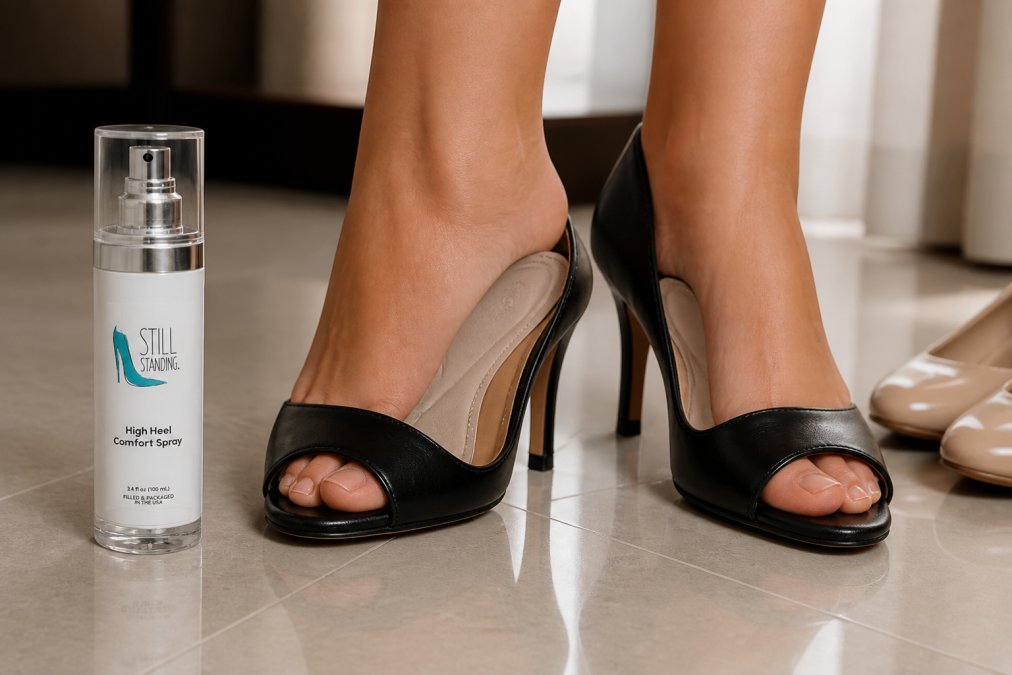
Cushioning and shock absorption determine whether your feet stay comfortable through an event. Quality insoles with metatarsal pads, raised supports positioned just behind the ball of your foot, redirect pressure away from the sensitive metatarsal heads. The best shoes for ball of foot pain include built-in arch support and forefoot cushioning.
Material flexibility is another overlooked factor. Rigid soles force the metatarsal region to work harder with each step. A shoe that flexes naturally at the ball of your foot reduces strain. Leather and natural materials typically offer better flexibility than synthetic options.
Best Shoes for Ball of Foot Pain
When shopping for heels that prevent metatarsalgia, prioritize three features: adequate arch support, forefoot cushioning, and a wider toe box.
Heels with built-in metatarsal pads are specifically designed to prevent ball of foot pain. These pads sit just behind the ball of your foot and redirect pressure away from the sensitive metatarsal heads. If you already own heels you love, you can add aftermarket metatarsal pads to improve comfort significantly.
Block heels and wedges distribute weight more evenly than thin stilettos. The wider base provides stability and reduces concentrated pressure. Many professional women who wear heels daily choose block heels or wedges specifically because they prevent metatarsalgia.
Mary Jane style heels with a strap across the top of the foot provide additional support and prevent your foot from sliding forward inside the shoe. Slingback heels offer similar benefits by distributing pressure more evenly. increasing daily steps.
Platform heels reduce the angle of your foot relative to your leg. A one-inch platform under your forefoot effectively lowers the heel angle by that amount, significantly reducing pressure on the ball of your foot. A three-inch heel with a one-inch platform feels more like wearing a one-and-a-half-inch heel in terms of forefoot stress.
Exercises for Metatarsalgia and Foot Strengthening
Strengthening the muscles in your feet and calves improves their ability to support your weight and absorb impact. Weak foot muscles force the metatarsal region to work harder, increasing inflammation and pain.
Calf raises strengthen the muscles that support your arch. Stand with your feet hip-width apart and slowly rise onto your toes, holding for two seconds, then lower back down. Do three sets of fifteen repetitions. This is especially important if you wear heels regularly.
Toe spreads activate the small muscles between your metatarsal bones. Sit comfortably and spread your toes as wide as possible, holding for five seconds. Repeat twenty times per foot.
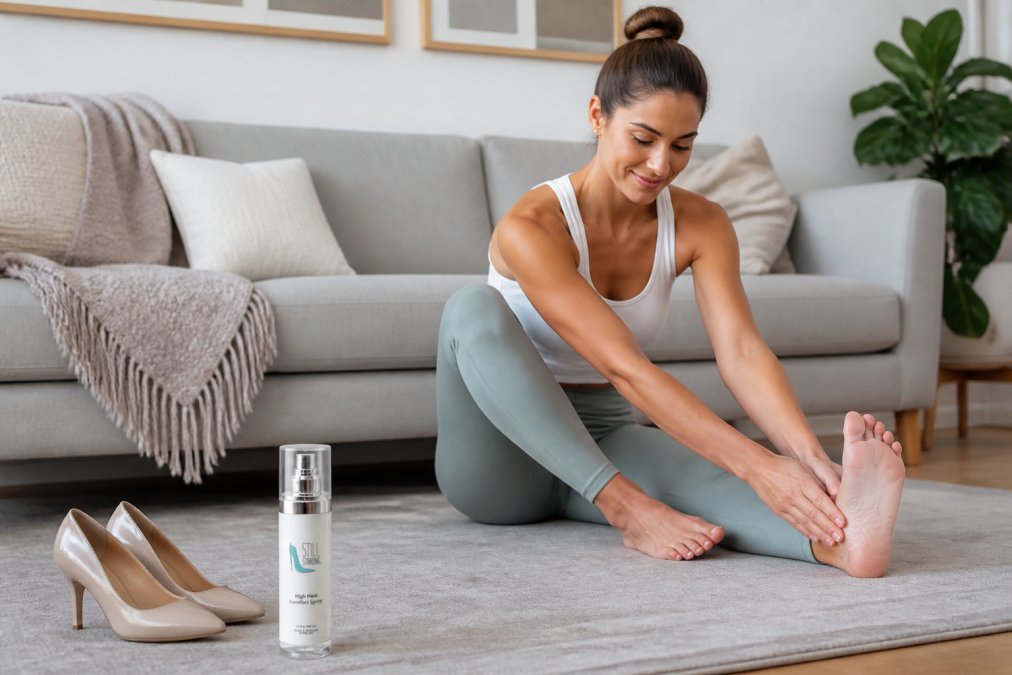
Plantar fascia stretches reduce tension in the tissue that runs along the bottom of your foot. Sit with one leg extended and pull your toes toward your shin, feeling the stretch along your arch. Hold for thirty seconds and repeat three times per foot.
Marble pickups build foot strength functionally. Scatter marbles on a smooth floor and use your toes to pick them up, placing them in a cup. Do this for five to ten minutes per foot.
Resistance band exercises target the muscles that support the ball of your foot. Loop a resistance band around your forefoot and pull your toes toward your shin against the resistance. Do three sets of fifteen repetitions per foot.
Perform these exercises three to four times per week. Consistency matters more than intensity.
Immediate Relief: Orthotics, Pads, and Foot Care Strategies
When ball of foot pain develops, immediate relief strategies help you function while addressing underlying inflammation.
Metatarsal pads redirect pressure away from the painful metatarsal heads. They're available as adhesive pads that stick inside your shoe or as insoles with built-in pads. For immediate relief, adhesive pads work quickly and cost less than custom orthotics.
Ice therapy reduces inflammation in the acute phase. Apply ice wrapped in a thin cloth to the ball of your foot for fifteen minutes, three to four times daily (the CDC). This provides pain relief within hours.
Activity modification prevents pain from worsening. Reduce high-impact activities like running or dancing. Switch to lower-impact options like swimming or cycling. Limit heel wear to shorter durations and lower heights.
Still Standing® Spray offers a preventive approach that works before pain develops. The non-numbing formula combines cooling menthol with plant-derived anti-inflammatory ingredients. Apply it to your feet before putting on heels, creating a protective layer that prevents the inflammation that causes metatarsalgia. Unlike numbing products that mask pain by desensitizing your feet, Still Standing® Spray prevents pain by addressing inflammation. The Still Standing® Spray Mini bottle fits in an evening bag for reapplication during events. The 30-day money-back guarantee removes the risk of trying it.

Foot massage improves circulation and reduces tension in the muscles supporting your forefoot. Use your thumbs to apply firm pressure to the arch, working from your heel toward your toes. A five-minute daily massage reduces pain and prevents flare-ups.
Rest and elevation reduce swelling after wearing heels. Lie on your back with your feet elevated above your heart for fifteen minutes. This uses gravity to drain fluid from your feet, reducing swelling that contributes to metatarsalgia.
Wear supportive slippers or shoes with good arch support at home. Flat shoes without arch support force your feet to work harder, prolonging inflammation.
When to See a Doctor and Long-Term Prevention
Most cases of metatarsalgia respond to conservative treatment within two to four weeks (aafp.org). However, see a doctor if pain persists despite rest and proper footwear, if you develop numbness or tingling in your toes, or if pain is severe enough to affect your gait or daily function.
A podiatrist can perform a gait analysis to identify biomechanical problems contributing to your metatarsalgia. Based on this analysis, they can recommend custom orthotics designed specifically for your foot structure. While custom orthotics cost more than over-the-counter options, they provide precise support that prevents metatarsalgia from recurring.
X-rays or ultrasound imaging may be necessary if your doctor suspects stress fractures or other structural damage.
Long-term prevention requires consistency across multiple strategies. Wear supportive shoes most of the time. Limit heel wear to shorter durations and lower heights. Do foot-strengthening exercises regularly. Maintain a healthy weight. Apply Still Standing® Spray before events where you'll wear heels for extended periods. These habits work together to prevent inflammation from developing.

Prevention protects more than just your feet. When metatarsalgia becomes chronic, it affects your confidence and limits your choices. Effective prevention protects your ability to feel beautiful and confident in the moments that matter.
Preventing ball of foot pain doesn't mean sacrificing style or comfort. The strategies in this guide address the root causes of metatarsalgia: pressure concentration, weak foot muscles, and inflammation. Still Standing® Spray works with these strategies to give you a complete prevention approach. Get started with Still Standing® Spray and experience the difference that non-numbing, anti-inflammatory relief makes for your feet and your confidence.
Frequently Asked Questions
How can I prevent ball of foot pain if I wear high heels regularly for work?
Prevent ball of foot pain by combining three strategies: wear heels with wide toe boxes and cushioned forefoot support, use metatarsal pads or gel inserts designed for the ball of your foot, and apply a cooling foot comfort spray like Still Standing® before wearing heels. Rotate between different heel heights and styles when possible, and perform daily foot stretching exercises to reduce inflammation. If pain persists after two weeks, see a podiatrist to rule out stress fractures or structural abnormalities.
What's the difference between a foot comfort spray and numbing products for heel pain?
Numbing products eliminate sensation entirely, which can cause dangerous falls and mask serious injuries. Non-numbing foot comfort sprays like Still Standing® use cooling menthol and anti-inflammatory ingredients to reduce pain and swelling while keeping your feet alert and responsive. This approach allows you to feel confident and safe in your heels without the risks associated with numbness, and it works for 94% of users seeking relief from metatarsalgia.
Are there specific exercises that help with metatarsalgia and ball of foot pain?
Yes. Perform toe curls by scrunching a towel with your toes, calf stretches by holding a wall and stepping back, and plantar fascia stretches by rolling a tennis ball under your arch for two minutes daily. These exercises for metatarsalgia strengthen the forefoot, reduce inflammation, and improve gait biomechanics. Do stretches twice daily, especially before wearing high heels, and combine them with rest and elevation after long events to prevent chronic pain.
How do I know if my ball of foot pain requires a doctor's visit?
Seek medical attention if pain is severe, persists for more than two weeks despite self-care, causes numbness or tingling, or if you suspect a stress fracture (sharp, localized pain). A podiatrist can perform a gait analysis to identify biomechanical issues, rule out structural abnormalities, and recommend custom orthotics if needed. Early intervention prevents metatarsalgia from becoming chronic and affecting your ability to wear the shoes you love.