
Table of Contents
- Start With the Right Fit: Size, Toe Box, and Heel Height
- How to Break In Heels Without Destroying Your Feet
- Insoles, Cushioning, and Padding: What Goes Inside the Shoe
- High Heel Pain Relief Spray: How a Non-Numbing Formula Works
- Tips for Walking in Heels With Better Posture and Gait
- How to Wear High Heels Comfortably at Weddings and Long Events
- Post-Wear Recovery: Foot Care After a Long Day in Heels
- Conclusion
Last Updated: August 24, 2026
Start With the Right Fit: Size, Toe Box, and Heel Height
Getting the fit right is the single most important thing you can do. A shoe that doesn't fit correctly will cause pain no matter how expensive it is or how many comfort products you layer inside it.
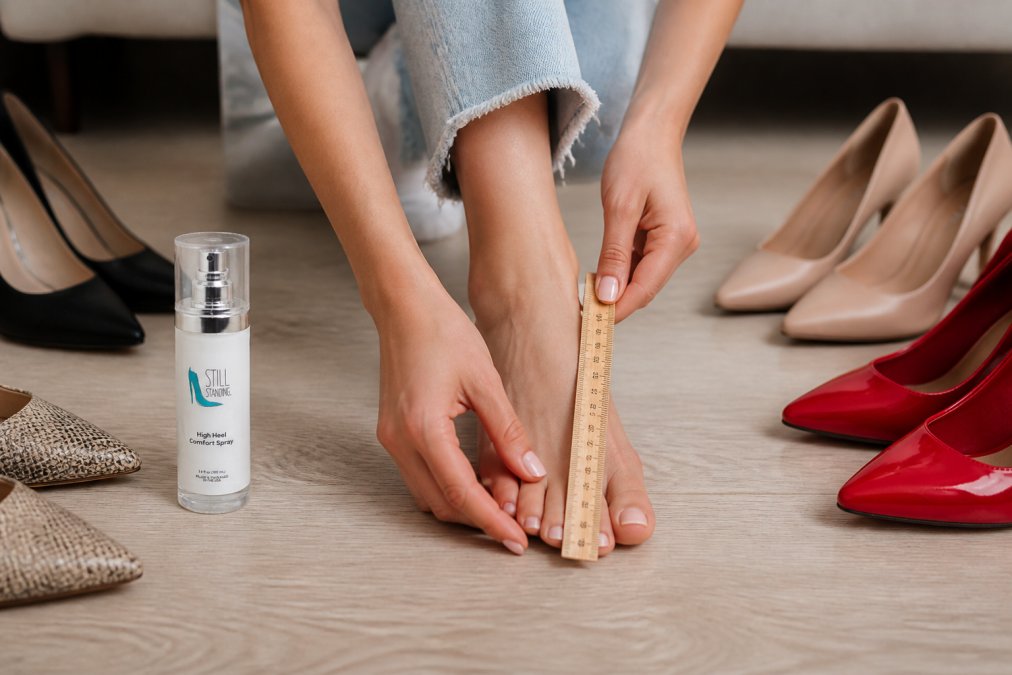
Start with your actual foot measurements, taken at the end of the day when your feet are naturally at their largest. Shoe sizes vary significantly between brands and countries of origin, so when in doubt, size up rather than down. A slightly larger shoe can be corrected with insoles and heel grips; a shoe that's too narrow cannot be corrected at all.
The toe box matters as much as length. A pointed toe box compresses the metatarsal bones and creates pressure points that no amount of cushioning will fully offset. A rounded or almond-shaped toe box distributes weight more evenly across the ball of the foot and significantly reduces foot fatigue over a long event.
Pay attention to the heel counter, the stiff cup at the back of the shoe. It should grip your heel firmly without digging in. According to American Podiatric Medical Association guidance on shoe fit, shoes that fit correctly should have about a thumb's width of space between the longest toe and the end of the shoe, with no pinching across the widest part of the foot.
How Anatomical Foot Type Changes Everything
Your foot type determines which heel styles work for your body and which will cause problems regardless of how well you break them in.
Flat feet (low or no arch) tend to overpronate, destabilizing the gait cycle in heels. People with flat feet do better with block heels or wedges that provide a wider base of support and benefit significantly from structured insoles with arch support.
High arches create the opposite problem. The foot doesn't absorb shock efficiently, so pressure concentrates at the ball of the foot and the heel. Metatarsal support pads placed just behind the ball of the foot redistribute that pressure and reduce pain substantially.
Wide feet need a wider toe box. Narrow shoes cause bunion irritation and nerve compression regardless of heel height. If you're unsure of your foot type, a podiatrist can assess your arch and gait in a single appointment.
Choosing the Right Heel Height for Your Event
Heel height changes everything about weight distribution and stability. A 2-inch heel shifts a moderate amount of weight forward onto the ball of the foot. A 4-inch stiletto shifts dramatically more, compressing the metatarsal bones and requiring significant muscular effort to maintain balance.
| Heel Height | Best For | Stability Level | Ball-of-Foot Pressure |
|---|---|---|---|
| Under 2 inches | All-day work, travel | High | Low |
| 2-3 inches | Office, long events | Moderate | Moderate |
| 3-4 inches | Weddings, formal events | Moderate-Low | High |
| 4+ inches | Short events, photos | Low | Very High |
For events lasting more than four hours, a block heel or wedge at 2.5-3.5 inches offers the best balance of style and endurance.
How to Break In Heels Without Destroying Your Feet
The biggest mistake people make with new heels is wearing them for the first time at an actual event. Start by wearing new heels at home for 30-60 minutes at a time over several days. Walk on carpet first, which is more forgiving than hard floors. Pay attention to where the shoe rubs or pinches, these pressure points need to be addressed before the event. Thick socks worn inside the heels during break-in sessions help stretch the material gently and protect your skin simultaneously.
Shoe Stretching Techniques That Actually Work
When breaking in heels through wear alone isn't moving fast enough, targeted stretching techniques help.
The freezer method works well for tight toe boxes. Fill two zip-lock bags with water, place them inside the shoe in the toe area, and put the shoes in the freezer overnight. Water expands as it freezes, gently stretching the material.
A shoe stretcher is a more controlled option. A wooden or plastic shoe stretcher inserted overnight gradually widens the toe box and lengthens the shoe. Spray a leather conditioner on the inside of the shoe first to make the material more pliable.
Professional stretching is worth the cost for expensive shoes. A cobbler can target specific tight spots with precision tools and professional-grade stretching solutions.
Insoles, Cushioning, and Padding: What Goes Inside the Shoe
Insoles and cushioning address the mechanics of how your foot sits inside the shoe. The right combination can meaningfully reduce foot fatigue and pressure.
Full-length insoles replace the factory footbed entirely and provide arch support along the full length of the foot. They work well for people who need orthotic-level support but are wearing shoes that don't accommodate a separate orthotic.
Metatarsal pads are placed just behind the ball of the foot to lift and separate the metatarsal bones, reducing compression and nerve irritation. These are among the most effective inserts for high heel pain because they address the primary pressure point directly. comfortable formal wear.
Silicone pads at the ball of the foot add cushioning where impact is greatest. They reduce the sharp, burning sensation that comes from standing on a hard insole for hours.
Heel grips prevent the foot from sliding forward in the shoe, a common problem in heels that causes the toes to jam into the toe box.
High Heel Pain Relief Spray: How a Non-Numbing Formula Works
A non-numbing foot comfort spray works differently from topical anesthetics, and that difference matters more than most people realize.
Numbing sprays and gels block nerve signals so you can't feel pain, but they also block your ability to feel when something is wrong. Numbness in the feet while wearing heels is genuinely dangerous. You lose the feedback your body uses to detect instability, adjust your gait, and avoid falls.
A non-numbing formula works by addressing the underlying causes of discomfort rather than masking them. Still Standing® Spray uses cooling menthol combined with plant-derived, anti-inflammatory ingredients to reduce inflammation and soothe tired feet without removing sensation. You stay comfortable and you stay aware, which means you stay safe.

The spray is applied before putting on your shoes. The cooling effect activates immediately, and the anti-inflammatory ingredients work throughout the wear period. The portable bottle design means you can reapply during a long event without needing to carry a bulky product.
Still Standing® Spray works for 94% of users, has been featured in The Zoe Report as "a lifesaver" for long days on your feet, and is recommended by Solutions Bridal for brides, bridesmaids, and mothers of the bride. The 30-day money-back guarantee means you can test it before your event without financial risk.
Shop the Still Standing® Spray Large for all-day events, or the Mini for on-the-go reapplication.

Tips for Walking in Heels With Better Posture and Gait
Walking in heels with good posture is a skill, not a talent. Most people who struggle with heels are fighting their own body mechanics without realizing it.
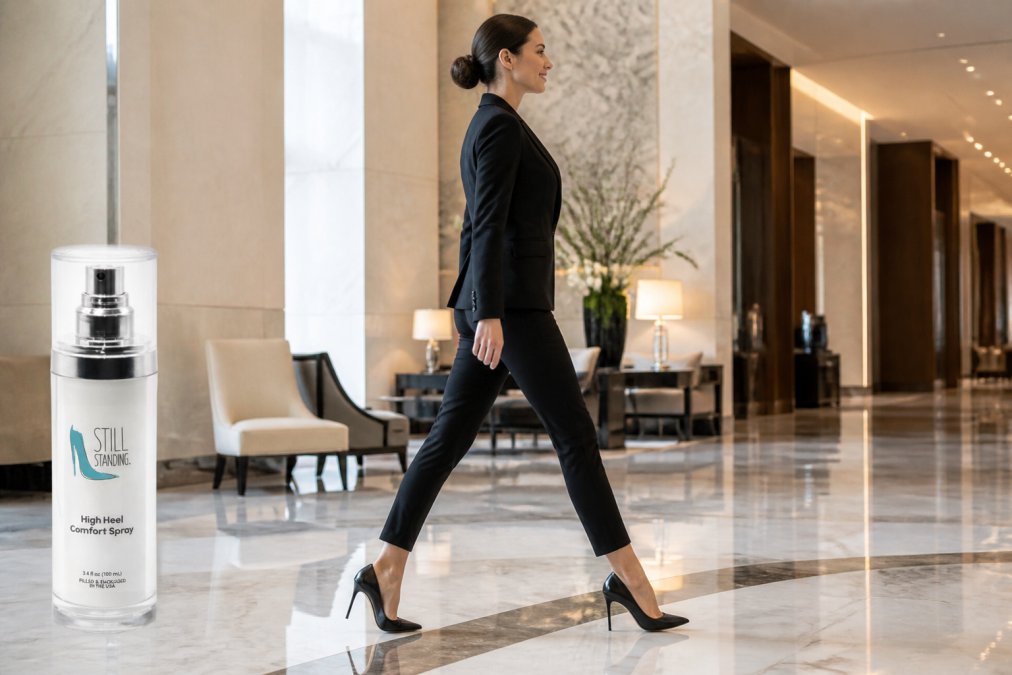
The foundation of comfortable heel-walking is weight distribution. When you wear heels, your center of gravity shifts forward. The correct adjustment is to engage your core and stack your hips directly over your heels, not behind them.
Here's what proper walking mechanics in heels actually looks like:
- Place the heel down first, then roll through to the ball of the foot and toe. Control the placement rather than slamming the heel down.
- Keep your stride shorter than you would in flats. Heels reduce your natural stride length. Forcing a long stride destabilizes the ankle.
- Let your arms move naturally. Stiff arms indicate tension in the upper body, which affects balance.
- Look forward, not down. Your gaze line affects your posture. Looking at your feet causes you to hunch.
- Engage your inner thighs slightly as you walk. This stabilizes the pelvis and reduces lateral sway, a major cause of ankle fatigue in heels.
According to Harvard Health Publishing's guidance on posture and movement, proper posture alignment reduces muscular strain significantly during prolonged standing and walking. Practice on a smooth, hard floor at home.
How to Wear High Heels Comfortably at Weddings and Long Events
Weddings are the ultimate test of heel endurance. You're on your feet for 8-12 hours, alternating between standing, dancing, and walking on multiple surfaces. The single biggest mistake is wearing your wedding shoes for the first time on your wedding day.
A Pre-Event Preparation Checklist
Use this checklist in the weeks and days before any long event:
- Break in shoes over at least 5-7 separate sessions before the event
- Confirm fit with your actual event outfit, shapewear and hosiery affect how shoes fit
- Apply Still Standing® Spray to feet before putting on shoes
- Place metatarsal pads and heel grips inside shoes before the event
- Pack the mini spray bottle in your clutch or give it to a bridesmaid to carry
- Identify a seating area at the venue where you can rest your feet during longer standing periods
- Bring a pair of flat backup shoes for the end of the night if the event runs long
- Do a 15-minute walk test in your full outfit at home the week before
The backup shoe strategy is not admitting defeat. It's smart event management. Many brides switch to flats for the last hour of dancing and feel zero regret about it.

Post-Wear Recovery: Foot Care After a Long Day in Heels
Foot care after wearing heels is the part of the equation that almost no guide covers adequately. Recovery matters because the damage from a long day in heels is cumulative.
The first priority after removing your heels is restoring circulation. Elevate your feet above heart level for 15-20 minutes after an event to reduce swelling and flush inflammatory byproducts from the tissue.
A focused foot massage targeting the arch, ball of the foot, and toes addresses muscle tension that builds up during prolonged heel wear. Work from the toes toward the heel with firm pressure, spending extra time on any areas that feel knotted or tender.
Stretching the calf muscles and Achilles tendon is non-negotiable after heels. Heels hold the calf in a shortened position for hours, and without deliberate stretching, this contributes to chronic tightness. A simple calf stretch, heel on the floor, toes elevated against a wall, held for 30 seconds per side is enough.
For swelling, a cold soak or ice pack applied to the ball of the foot for 10-15 minutes reduces inflammation. According to guidance from the American Orthopaedic Foot and Ankle Society on foot care, regular stretching of the plantar fascia and calf muscles is one of the most effective ways to prevent chronic heel and arch pain.
The following morning, avoid going straight back into heels. Give your feet at least one day in supportive, flat footwear to recover fully.
| Recovery Step | When | Duration |
|---|---|---|
| Elevate feet | Immediately after | 15-20 minutes |
| Foot massage | After elevation | 5-10 minutes |
| Calf and Achilles stretch | Same evening | 30 seconds x 3 per side |
| Cold soak or ice pack | Same evening | 10-15 minutes |
| Rest in flat footwear | Following day | Full day minimum |
Wearing heels for a full day without pain is genuinely achievable. The challenge is that most people try to solve it with one product or one tip, when it actually requires the right fit, proper break-in, targeted inserts, and active recovery working together. Still Standing® Spray fills the gap that fit and insoles can't cover, the inflammation and surface discomfort that accumulate during extended wear. With a non-numbing formula that keeps you safe and comfortable, a portable design that travels anywhere, and a 30-day money-back guarantee, it's the addition to your heel routine that makes everything else work better. Add Still Standing® Spray to your event preparation and wear your favorite heels with confidence.
Frequently Asked Questions
What can I put in my high heels to make them more comfortable?
Metatarsal pads or silicone pads placed under the ball of the foot reduce pressure on the most common pain points. Heel grips prevent slipping and cut friction at the back of the shoe. A full-length insole with arch support improves weight distribution across the entire foot. For extra relief before you put the shoes on, a non-numbing foot comfort spray like Still Standing® Spray works with your body to prevent pain rather than mask it.
Are there sprays to make high heels more comfortable?
Yes. Still Standing® Spray is a non-numbing, cooling menthol formula with plant-derived anti-inflammatory ingredients. Unlike numbing sprays, it does not dull sensation, which means you stay aware of your footing and avoid dangerous falls. Spray it on your feet before putting on heels. It works for 94% of users and has been featured in The Zoe Report. The mini bottle ($20.00) is TSA-approved for travel.
How do you break in new heels quickly?
Wear thick socks and walk around your home in the new heels for 20-30 minutes each day over several days. For tight toe boxes, use a shoe stretcher or fill zip-lock bags with water, place them inside the shoes, and freeze overnight, the ice expansion gently widens the material. Leather and suede respond well to a shoe-stretching spray applied before wearing. Never debut unworn heels at a long event; at least two or three break-in sessions are necessary.
How do you walk gracefully in high heels without looking awkward?
Place your heel down first, then roll through the ball of the foot, the opposite of how most people instinctively walk in heels. Keep your core engaged, shoulders back, and take shorter strides than you would in flats. Your base of support is narrower in heels, so slow down slightly and let your hips move naturally. Practicing on a hard floor at home before an event builds muscle memory and makes the gait look effortless rather than strained.