
Table of Contents
- Why High Heels Hurt: What's Actually Happening to Your Feet
- Choose the Right Shoe Before You Wear High Heels All Day
- How to Break In New Heels Without Destroying Your Feet
- Cushioned Insoles, Metatarsal Padding, and Heel-Counter Grips
- Foot Comfort Spray for Heels: A Non-Numbing Approach That Works
- Tips for Wearing Heels at a Wedding All Day
- How to Wear High Heels All Day: Recovery Routines That Prevent Next-Day Pain
- Conclusion
Last Updated: August 23, 2026
Why High Heels Hurt: What's Actually Happening to Your Feet
High heels fundamentally alter how your body distributes weight and moves through space. A flat foot spreads your body weight across the entire sole. In heels, that balance shifts dramatically forward onto the ball of your foot. Your toes compress against the front of the shoe, your calf muscles shorten and tighten, and your lower back compensates with an exaggerated curve. Below, we'll cover exactly how to address each of these issues, from shoe selection and break-in techniques to recovery routines that prevent next-day soreness.
Pressure Points, Gait, and Weight Distribution
The metatarsal bones, the long bones running toward your toes, bear the brunt of heel-wearing. When you walk in flats, your gait naturally rolls from heel to toe. In heels, that rolling motion is cut short, concentrating pressure on the ball of your foot with every step. This is why ball of foot pain is the most common complaint.
Your posture changes too. Heels tilt your pelvis forward, which shifts your center of gravity. The body compensates through the hips, lower back, and knees. After several hours, those compensations become exhaustion.
Foot Shape Matters More Than Most Guides Admit
Foot anatomy varies significantly, and those differences change which strategies actually work. People with a high arch tend to have less natural cushioning in the ball of the foot and often need more aggressive metatarsal padding. People with flat feet face a different challenge: their arch collapses inward when weight shifts forward, creating instability and increasing ankle fatigue.
Wide feet face the most acute problem in standard heels. The toe box compresses the forefoot, restricting blood flow and causing friction. A wide-fit shoe or round toe design resolves this at the source.
Choose the Right Shoe Before You Wear High Heels All Day
The biggest mistake most people make is trying to fix a bad shoe with accessories. Shoe selection is the foundation.
Heel Height, Toe Box Shape, and Arch Support
Heel height is the most obvious factor in comfort, but the relationship isn't simply "lower is better." A two-inch block heel distributes weight more evenly than a two-inch stiletto because the surface area of the heel is larger. For all-day wear, many podiatry professionals suggest staying at or under two to two-and-a-half inches when possible, according to guidance from the American Podiatric Medical Association.
Toe box shape is equally important. Pointed toes force the forefoot into an unnatural position. A round toe or square toe design gives the toes room to lie flat, reducing friction and preventing blisters. Built-in arch support is rare in fashion heels, but it makes a measurable difference by keeping the arch from collapsing under load.
Material Science: Why Shoe Construction Affects Comfort
Genuine leather is the most forgiving option for all-day wear, stretching slightly with heat and pressure to conform to your foot. Synthetic materials don't stretch the same way, meaning the break-in period is longer and friction points stay fixed.
Lining material matters for blister prevention. A smooth leather or fabric lining reduces friction against the skin. The stiffness of the sole also affects foot fatigue. A sole with slight flexibility allows the foot to move more naturally, reducing cumulative stress.
How to Break In New Heels Without Destroying Your Feet
Breaking in new heels is a process, not an event. The right approach looks like this:
- Wear them at home first. Start with 30 to 45 minutes on a carpeted surface to soften the material and reveal pressure points.
- Identify friction points early. Note any areas of redness or irritation after your first session.
- Gradually increase duration. Add 30 to 45 minutes of wear time per session over several days. Most shoes need three to five sessions before they feel broken in.
- Use heat to speed up leather. A hairdryer on low heat applied to tight leather areas for 30 seconds, while wearing thick socks, can accelerate stretching.
- Walk on varied surfaces. Practice on a hard floor too, since that's what you'll face at most events.
A common mistake is waiting until the week before an event to break in shoes. Six weeks of occasional wear is far better than six days of intense wear.
Cushioned Insoles, Metatarsal Padding, and Heel-Counter Grips
Physical accessories work when you choose the right type for the right problem.
Cushioned insoles and gel inserts add padding under the ball of the foot, reducing impact with each step. The limitation: they take up space inside the shoe. Thin gel inserts designed specifically for heels solve this by targeting the ball of the foot without adding bulk. styling your heels.
Metatarsal padding is more targeted than a full insole. A small pad placed just behind the metatarsal heads lifts the bones slightly, redistributing pressure away from the most sensitive area.
Heel-counter grips solve slipping. A thin grip pad adheres to the inside of the heel counter and holds your foot in place, eliminating friction.
| Accessory | Best For | Limitation |
|---|---|---|
| Gel insoles | General cushioning, arch support | Can make fit tighter |
| Metatarsal pads | Ball of foot pain, metatarsal pressure | Placement matters |
| Heel-counter grips | Heel slipping, blister prevention | Doesn't address forefoot pain |
| Toe spacers | Friction between toes, bunion discomfort | Not suitable for narrow toe boxes |
Foot Comfort Spray for Heels: A Non-Numbing Approach That Works
Most foot comfort products either cushion the foot physically or numb it chemically. The problem with numbing is that you lose the sensory feedback that tells you when your gait is off or when a blister is forming. Falls become more likely, and damage accumulates without warning.
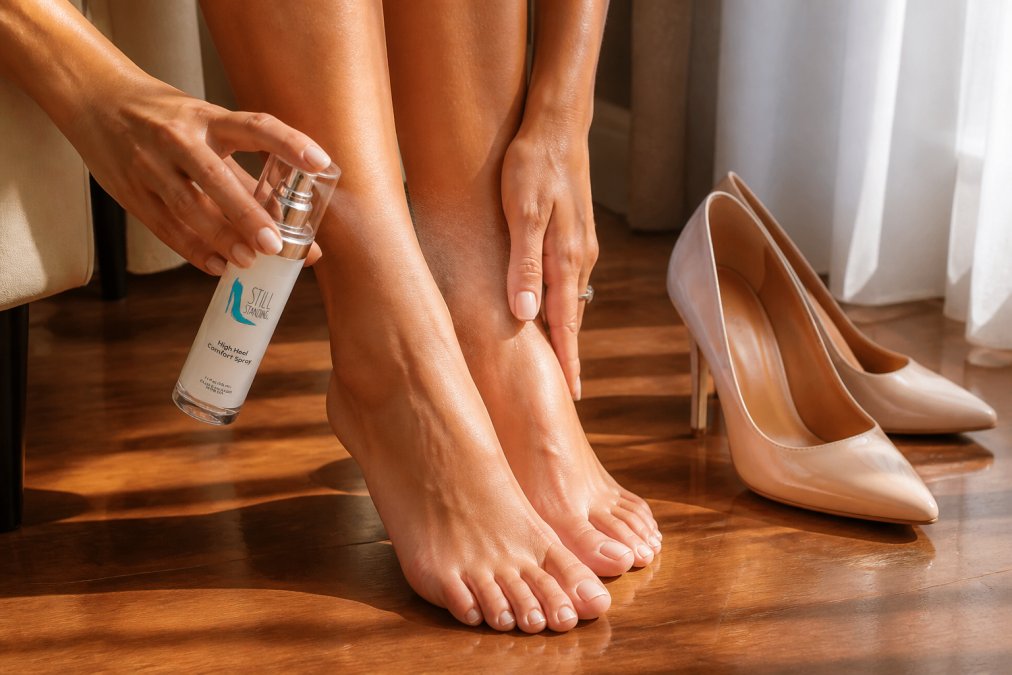
Still Standing® Spray takes a different approach. The non-numbing formula uses cooling menthol and plant-derived, anti-inflammatory ingredients to address foot pain at the source, reducing inflammation and soothing tired tissue, without eliminating sensation. You still feel your feet. You just feel them significantly less.

The spray works best applied before you put your shoes on, allowing the formula to absorb into the skin. The portable bottle design means you can reapply during the day without needing to carry a bag full of accessories. According to The Zoe Report's review of heel comfort products, Still Standing® is "a lifesaver" for anyone enduring a long day on their feet in heels.
The spray works for 94% of users and carries a 30-day money-back guarantee. The Still Standing® Spray Large is the best option for regular use, while the Still Standing® Spray Mini fits easily into a clutch for on-the-go reapplication.

Tips for Wearing Heels at a Wedding All Day
Weddings are the ultimate test of heel endurance. The combination of a ceremony, cocktail hour, reception, and dancing can mean eight to ten hours on your feet, often on multiple surface types. Strategic planning is what makes the difference.
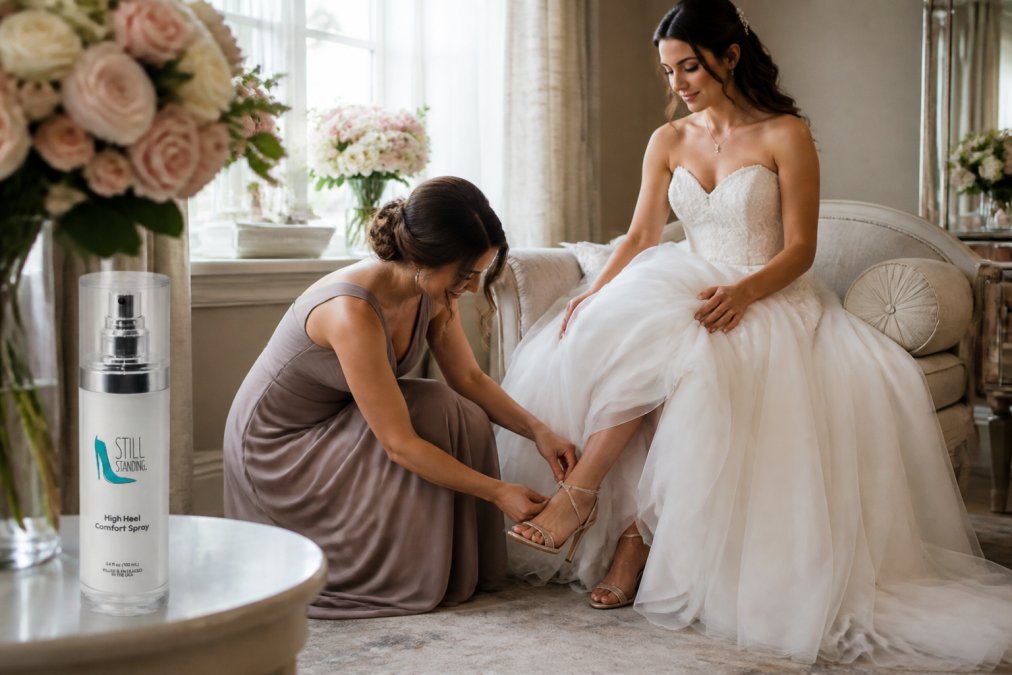
Solutions Bridal put it directly: "Our Stiletto Solution is here! Every bride, mother of the occasion, bridesmaid, and wedding planner needs this!" That endorsement reflects a real operational truth: brides who plan their heel strategy in advance finish the night on their feet.
Taping Toes and Managing Friction Before the Event
Taping toes is one of the most effective and underused techniques for managing pressure points during long events. Taping the third and fourth toes together with medical-grade tape takes pressure off the nerve junction between them, a significant pain point under prolonged heel wear.
Apply tape before you put your shoes on, not after pain starts. For blister prevention, moleskin or gel strips applied to known friction points, the back of the heel, the sides of the little toe, and the top of the big toe joint, create a barrier between skin and shoe before the skin breaks down. A thin nylon stocking also reduces shoe-to-skin friction significantly compared to bare feet.
Reducing Wear Time Strategically During the Day
Eight hours in heels doesn't have to mean eight continuous hours. Strategic breaks are one of the most effective tools for all-day wear. Sit during cocktail hour. Remove your heels under the table during dinner. These micro-recoveries allow blood flow to normalize, tissue to decompress, and your calf muscles to reset. According to foot health guidance from the American Orthopaedic Foot & Ankle Society, regular weight-bearing breaks significantly reduce cumulative soft tissue stress during prolonged standing and walking.
How to Wear High Heels All Day: Recovery Routines That Prevent Next-Day Pain
What you do in the first 30 minutes after removing heels determines how your feet feel the next morning. Most people skip this entirely, which is why the day after a wedding or long event so often involves sore calves, stiff arches, and tender metatarsals.
Calf Massage and Stretching After You Remove Your Heels
Heels hold your calf muscles in a shortened position for hours. Without intervention, they stay slightly contracted overnight, which is why the first steps the morning after often feel so stiff.
A targeted calf stretch immediately after removing heels addresses this directly. Stand facing a wall, place both hands on it, and step one foot back with the heel flat on the floor. Hold for 30 seconds, then switch. Follow the stretch with a self-massage of the calf and the arch of the foot using your thumbs to apply firm pressure along the arch from heel to ball. A tennis ball or massage ball rolled under the foot provides the same effect with less effort.
According to podiatric rehabilitation guidance from the American College of Foot and Ankle Surgeons, consistent stretching after high-heel wear reduces the risk of plantar fasciitis and Achilles tendon shortening over time.
Ankle-Strengthening Exercises for Long-Term Stability
The most overlooked aspect of wearing heels comfortably is what you do when you're not wearing them. Ankle stability directly affects how long you can wear heels before fatigue sets in. Weak ankle stabilizers tire quickly under the lateral load that heels create, leading to wobbling and compensatory gait changes.
Three exercises address this effectively:
- Single-leg balance: Stand on one foot for 30 seconds. Add difficulty by closing your eyes or standing on a folded towel.
- Calf raises: Rise onto the balls of both feet, hold for two seconds, and lower slowly. Three sets of 15 repetitions builds calf strength.
- Ankle circles: Seated, rotate each ankle through its full range of motion, 10 circles in each direction.
Doing these three to four times per week produces noticeable improvements in stability within four to six weeks.
| Exercise | Target Area | Frequency | Sets/Reps |
|---|---|---|---|
| Single-leg balance | Ankle stabilizers | 4x per week | 3 x 30 seconds each side |
| Calf raises | Calf strength | 4x per week | 3 x 15 reps |
| Ankle circles | Joint mobility | Daily | 10 circles each direction |
| Arch massage | Plantar fascia | After heel wear | 2 minutes each foot |
Wearing high heels all day without pain is achievable, but it requires the right combination of smart shoe selection, physical preparation, and consistent recovery. Still Standing® Spray's non-numbing formula handles the in-the-moment inflammation and discomfort that accessories alone can't address, using cooling menthol and plant-derived anti-inflammatory ingredients so you stay comfortable and steady on your feet. Pair the Still Standing® Spray Comfort Set with the stretching and strengthening routines above, and you have a complete system for all-day heel comfort. Add Still Standing® Spray to your routine before your next event and feel the difference from the first hour.

Frequently Asked Questions
How can I prepare my feet for a long day in heels?
Start by choosing shoes with a round or square toe box and a heel no higher than 3 inches for all-day events. Apply a foot comfort spray before putting your shoes on to reduce inflammation from the start. Add gel insoles or metatarsal padding to redistribute pressure away from the ball of your foot. Tape your third and fourth toes together to relieve tension on the metatarsal nerve. In the days before the event, do calf stretches and ankle circles to improve stability and reduce fatigue.
How do you break in high heels quickly without pain?
Wear your new heels for short sessions at home, 20 to 30 minutes at a time, on carpet to soften the material gradually. Use a thick sock and a hairdryer to gently warm tight spots, then walk in the shoes while they cool to mold them to your foot shape. Focus on the heel counter and toe box, which are typically the stiffest areas. A non-numbing foot comfort spray for heels can help manage discomfort during the break-in period without masking important pain signals.
Do high heels ever stop hurting, or is pain inevitable?
Pain is not inevitable. Most heel discomfort comes from poor shoe fit, inadequate arch support, or skipping prep steps rather than from heels themselves. Shoes with proper cushioned insoles, a wider toe box, and a stable heel counter distribute weight more evenly across your foot. Strengthening your calf muscles and ankles over time also reduces foot fatigue significantly. Many people who wear high heels all day without pain combine the right shoe selection with pre-wear preparation and a consistent post-wear recovery routine.
What makes a foot comfort spray different from gel inserts for heels?
Gel inserts address pressure points mechanically by adding cushioning between your foot and the shoe. A foot comfort spray for heels works differently: Still Standing® Spray uses cooling menthol and plant-derived anti-inflammatory ingredients to reduce inflammation and discomfort from the inside out, without numbing your feet. Numbing products mask pain signals, which can cause dangerous falls in heels. Still Standing® works for 94% of users and is recommended by Solutions Bridal specifically for brides who need all-day comfort without compromising stability.