
Table of Contents
- Why Heels Hurt: The Anatomy Behind the Pain
- Step 1: Choose the Right Fit to Stop Feet from Hurting in Heels
- Best Insoles for High Heels: Gel, Metatarsal, and Arch Options
- How to Break in New Heels Before a Big Event
- Taping, Padding, and On-the-Spot Pain Relief Techniques
- High Heel Pain Relief Spray: What It Does and How to Use It
- Post-Wear Recovery: What to Do After a Long Day in Heels
- Conclusion
Last Updated: August 22, 2026
Heels look incredible but wreak havoc on feet in ways most "quick fix" guides miss. At Still Standing® Spray, we've worked with brides, performers, and professionals who refuse to choose between style and comfort. The question we hear most: how to stop feet from hurting in heels without giving up the shoes you love.
Real comfort comes from combining the right fit, smart support, targeted pain relief, and a recovery routine that keeps your feet healthy. Below, we'll walk through each layer, starting with why heels hurt in the first place.
Why Heels Hurt: The Anatomy Behind the Pain
Heel pain is a mechanical problem with a biomechanical explanation.
How Heel Height Shifts Your Weight Distribution
Every centimeter of heel height changes how your body distributes weight across your foot. A flat shoe spreads load evenly across the heel, arch, and forefoot. A stiletto pushes the majority of your body weight onto the ball of the foot and metatarsal bones behind your toes.
According to American Orthopaedic Foot & Ankle Society guidance on high heel biomechanics, elevated heel heights significantly increase forefoot pressure, the primary driver of pain during extended wear. The higher the heel, the more your body compensates by shifting posture forward, creating altered gait mechanics, compressed toe box, and increased load on the plantar fascia.
Heel height is not just a style choice, it's a biomechanical variable that determines how much pain you'll feel after two hours versus six.
Pressure Points That Cause the Most Damage
Common pressure points include:
- The metatarsal heads (knuckle-like bones behind your toes), where concentrated impact causes inflammation
- The Achilles tendon, which shortens over time, creating stiffness when you return to flat shoes
- The plantar fascia, the connective tissue along the sole, which bears increased tension without arch support
- The little toe and pinky-toe joint, where a narrow toe box causes friction, blisters, and bunion development
Understanding these pressure points tells you exactly where to focus your prevention strategy.
Step 1: Choose the Right Fit to Stop Feet from Hurting in Heels
The biggest mistake is treating shoe selection as a style decision alone. Fit is the foundation of everything else.
Heel Height and Toe Box Width
A two-inch heel is manageable for most people over a full day. A four-inch stiletto concentrates load so aggressively that even the best insoles cannot fully compensate.
If you must wear a higher heel, prioritize a wider toe box. A pointed toe box compresses the metatarsals together, accelerating pain and bunion risk. A rounded or square toe box allows the forefoot to spread naturally, reducing impact on individual pressure points. Platforms also help: a one-inch platform under a four-inch heel effectively reduces true heel elevation to three inches, significantly changing the biomechanics.
Sizing for Foot Swelling and Width
Feet swell throughout the day, particularly during extended standing or dancing. Shop for heels in the afternoon or evening when your feet are largest, and if you're between sizes, size up.
Width matters as much as length. According to American Podiatric Medical Association foot health resources, ill-fitting footwear is among the most common causes of preventable foot pain. If your foot spills over the inner edge of the insole, you need a wider width.
Best Insoles for High Heels: Gel, Metatarsal, and Arch Options
The right insole can transform an unwearable shoe into something you can last in for hours. The wrong one adds bulk without solving the underlying problem.
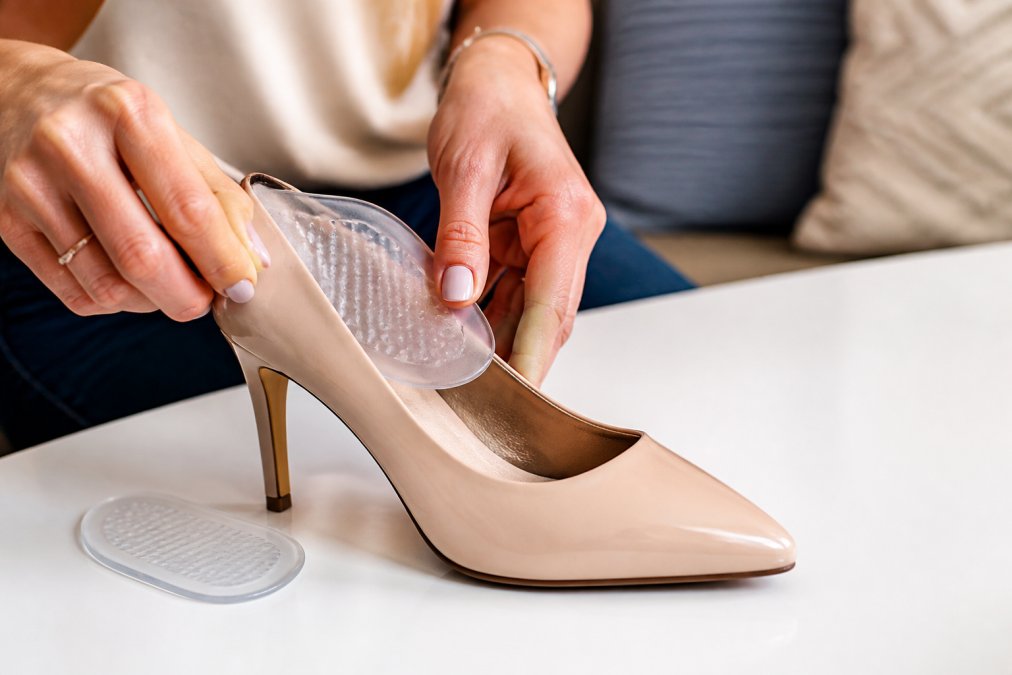
| Insole Type | Best For | Key Benefit | Limitation |
|---|---|---|---|
| Gel ball-of-foot pads | Forefoot pain and impact absorption | Cushions metatarsal heads directly | Does not address arch or heel |
| Metatarsal pads | Spreading forefoot pressure across bones | Redistributes load away from pressure points | Placement is critical |
| Full-length arch support | Plantar fascia pain, general fatigue | Stabilizes the whole foot | Can add bulk in narrow shoes |
| Gel heel liners | Heel slipping and Achilles friction | Prevents blisters and improves stability | Minimal forefoot benefit |
Metatarsal padding placed just behind the ball of the foot is the single most effective insole choice for high heel pain. It shifts weight distribution backward, off the most vulnerable pressure points. Place the pad just behind the metatarsal heads, not on top of them.
A common mistake is layering multiple insoles thinking more cushioning equals more comfort. In a fitted shoe, extra bulk compresses your foot further into a narrow toe box, making pain worse. One well-placed pad beats three stacked generic inserts.
How to Break in New Heels Before a Big Event
Never wear brand-new heels to a wedding, gala, or long event. Breaking in new heels gradually softens the material, allows it to conform to your foot shape, and reveals any fit issues before they become painful surprises. A good break-in timeline for a significant event is two to three weeks of short, progressive wear sessions.
Start with 20 to 30 minutes of wear around the house. Wear socks if the shoe allows it, which speeds up the stretching process. Increase wearing time by 15 to 20 minutes per session, paying attention to where friction or pressure builds.
Shoe Stretching and Material-Specific Tips
Leather and suede respond well to a shoe stretcher or the sock-and-heat method: wear thick socks with the shoes, then apply a hair dryer on low heat to tight spots for 20 to 30 seconds while flexing your foot.
Synthetic materials are less responsive to heat and stretching. Focus on shorter, more frequent wear sessions to condition your foot to the shoe.
Patent leather can crack if exposed to heat. Stick to gradual wear and a professional shoe stretcher.
Cobbler-applied shoe stretching spray can help with tight spots in leather shoes.
Taping, Padding, and On-the-Spot Pain Relief Techniques
Taping toes is one of the most effective and underused techniques for reducing forefoot pain in heels. Taping the third and fourth toes together with medical-grade sports tape reduces tension on the nerve running beneath a key pressure point, significantly reducing the burning sensation at the ball of the foot.
Additional on-the-spot techniques:
- Blister prevention strips applied before wearing, not after a blister forms
- Silicone toe separators for those prone to bunion pain or toe overlap
- Moleskin padding cut to size and applied to hot spots inside the shoe
- Heel grip pads inside the heel cup to prevent slipping and blisters
Apply tape before putting on shoes, not when already in pain.
High Heel Pain Relief Spray: What It Does and How to Use It
High heel pain relief spray has grown significantly as wearers seek solutions beyond cushioning.
Numbing sprays block sensation entirely, which sounds appealing until you realize the consequence: you cannot feel the feedback your foot is giving you. That feedback tells you to shift your weight, adjust your posture, or step carefully on uneven ground. Numbing that signal increases the risk of falls and ankle injuries.
Still Standing® Spray works differently. Its non-numbing formula is designed to prevent foot pain rather than mask it, which means you retain full sensation and stability while wearing your heels. The Zoe Report described it as a "lifesaver" for anyone spending a long day on their feet in heels, and Solutions Bridal recommends it specifically for brides, mothers of the occasion, and bridesmaids who need to last through a full event.
The application is straightforward: spray onto clean feet before putting on your heels. The portable bottle fits in a clutch or evening bag, which matters when you need a mid-event refresh during a long wedding or formal event.
For anyone who has tried gel inserts and found them insufficient, the mechanism here is different. Insoles address cushioning and load distribution. A foot comfort spray works at the skin and nerve level to reduce the sensation of pain before it builds, which is why combining both approaches produces better results than either alone.
Post-Wear Recovery: What to Do After a Long Day in Heels
Most guides end at "here is how to survive the event." What happens to your feet afterward matters for long-term foot health.

After extended heel wear, your feet need circulation restoration, tension release, and inflammation reduction.
Immediately after removing heels:
- Roll a tennis ball or massage ball slowly under the arch and ball of the foot for two to three minutes per foot to release tension in the plantar fascia and stimulate circulation.
- Elevate your feet above heart level for 10 to 15 minutes to reduce swelling.
- Apply a cool compress to the forefoot if experiencing significant inflammation.
Within the hour:
- Soak feet in warm water with Epsom salts for 15 minutes to ease tension and increase circulation.
- Moisturize the heel and ball of the foot, where skin is under the most mechanical stress.
As documented in National Institutes of Health guidance on foot health and musculoskeletal recovery, consistent recovery practices reduce cumulative tissue stress and lower the risk of chronic conditions developing from repetitive strain.
Stretching and Strengthening Exercises for Long-Term Foot Health
If you wear heels regularly, your foot muscles and Achilles tendon need active maintenance to stay healthy.
Daily stretches that make a real difference:
- Calf stretch against a wall - Stand arm's length from a wall, step one foot back, press the heel flat, and hold for 30 seconds. This counteracts Achilles shortening from heel wear.
- Toe spread and lift - Sit with feet flat. Spread all toes wide, hold for five seconds, then lift just the big toe while keeping the others down. Reverses compression from narrow toe boxes.
- Towel scrunches - Place a small towel on the floor and use your toes to scrunch it toward you. Strengthens intrinsic foot muscles that support the arch.
- Plantar fascia stretch - Before getting out of bed, pull your toes back toward your shin and hold for 20 seconds. Important for anyone experiencing heel pain first thing in the morning.
Foot muscle strengthening is the long-term investment most wearers skip. Strong intrinsic foot muscles improve stability in heels, reduce fatigue, and lower the risk of chronic conditions like plantar fasciitis and metatarsalgia. It takes five minutes a day.
Foot pain in heels is a solvable problem, not an inevitable tax on wearing shoes you love. The solution is layered: the right fit, targeted insoles, smart breaking-in, taping and padding for event days, and a consistent recovery routine that keeps your feet resilient over time. For those days when you need every advantage, Still Standing® Spray offers a non-numbing formula specifically designed to prevent pain before it starts, with a portable design that goes wherever your heels do. Add Still Standing® Spray to your routine and wear your favorite shoes with confidence, all day, every time.
Frequently Asked Questions
Q: Why do heels hurt my feet so badly?
A: Heels shift up to 75% of your body weight onto the ball of the foot and forefoot, compressing the metatarsal bones and straining the plantar fascia. A narrow toe box worsens this by squeezing the toes together, increasing pressure on bunion-prone areas and reducing stability. The higher the heel, the more your gait mechanics change, which accelerates foot fatigue and can cause lasting discomfort after even a few hours of daily wear.
Q: Are there sprays to stop foot pain in heels?
A: Yes. High heel pain relief sprays are designed to prevent discomfort before it starts, applied directly to the feet before putting on shoes. Unlike numbing sprays, which block sensation and raise fall risk, a non-numbing formula like Still Standing® Spray works to reduce pain signals without removing your ability to feel the ground beneath you. It works for 94% of users and has been featured in The Zoe Report as a go-to comfort solution for long events.
Q: What are the best insoles for high heels?
A: Metatarsal pads and gel heel liners are the most effective insoles for high heels. Metatarsal padding redistributes forefoot pressure away from the ball of the foot, while gel heel liners cushion impact absorption at the back of the shoe. Full-length orthotics with arch support work well in lower heels, but in stilettos, a slim three-quarter insole typically fits better without pushing the foot forward and creating more toe-box pressure.
Q: How do you break in new heels to prevent pain?
A: Wear new heels at home for 30-60 minutes daily over one to two weeks before your event. Thick socks paired with a shoe stretcher help widen a tight toe box, especially in leather. For synthetic materials, a blow dryer on low heat softens the upper while you flex your foot inside the shoe.