
Table of Contents
- What Is Ball of Foot Pain and Why It Happens
- Immediate Relief: The RICE Method and Pain Management
- Metatarsalgia Treatment at Home: Proven Techniques
- How to Prevent Ball of Foot Pain in Heels
- Exercises for Metatarsalgia and Foot Strengthening
- Footwear and Orthotics: Choosing the Right Support
- When to See a Doctor About Ball of Foot Pain
- Frequently Asked Questions
Last Updated: September 3, 2026
What Is Ball of Foot Pain and Why It Happens
Ball of foot pain, medically known as metatarsalgia, is inflammation in the area just behind your toes where the metatarsal bones sit. This condition develops when pressure, impact, or repetitive stress concentrates on the ball of the foot, creating sharp or burning sensations.
The ball of your foot absorbs tremendous force, up to three times your body weight with each step (peer-reviewed research). High heels shift your weight forward, forcing the metatarsal heads to bear loads they weren't designed to handle. High-impact activities like running, jumping, or prolonged standing without proper cushioning strain the area. Structural issues like high arches or flat feet alter pressure distribution, while tight footwear reduces shock absorption.
Understanding what causes your pain is the first step toward relief. Most cases respond well to immediate pain management, targeted exercises, and smart footwear choices. Still Standing® Spray users report that a non-numbing approach to foot comfort allows them to address root causes while staying active.

Immediate Relief: The RICE Method and Pain Management
When ball of foot pain strikes, the RICE method, Rest, Ice, Compression, Elevation, remains one of the most effective immediate interventions.
Rest means stepping back from the activity causing pain. Even brief breaks interrupt the cycle of increasing inflammation. For recurring pain, reduce high-impact activities for a few days to let inflammation subside.
Ice reduces swelling by constricting blood vessels. Apply ice wrapped in a thin cloth to the ball of your foot for 15-20 minutes, three to four times daily (the CDC). Never apply ice directly to skin. The cooling effect works best within the first 48 hours of acute pain.
Compression stabilizes the area and prevents additional swelling. Wrap your foot snugly with an elastic bandage or compression sock to keep inflammation contained and provide structural support.
Elevation uses gravity to reduce swelling. Prop your foot on pillows so it's higher than your heart. This position drains fluid away from the inflamed area, easing pressure and discomfort.
Over-the-counter pain management complements RICE. Ibuprofen reduces inflammation directly, while acetaminophen addresses pain. Follow package directions and take with food if you have a sensitive stomach. Ibuprofen often works better for metatarsalgia since inflammation is a core issue.
For events where you can't take a break, Still Standing® Spray offers portable relief. The non-numbing formula prevents pain from building in the first place, providing hours of comfort without the side effects of numbing products that can cause dangerous falls.

Metatarsalgia Treatment at Home: Proven Techniques
Home treatment for metatarsalgia focuses on reducing inflammation, improving support, and modifying activities that aggravate pain. Most cases resolve within two to four weeks with consistent home care.
Footwear modifications are foundational. Swap high heels for lower, wider shoes with cushioned insoles during recovery. Flats and low-heeled shoes (under 1.5 inches) reduce pressure on the ball of your foot dramatically. Look for shoes with soft, flexible toe boxes that don't compress your toes.
Metatarsal pads are small adhesive or removable pads placed just behind the ball of your foot inside your shoe. They redistribute pressure away from the painful area by supporting the metatarsal arch. Many people find noticeable relief within a few days.
Foot soaks reduce inflammation and provide comfort. Soak your feet in warm water for 15-20 minutes, twice daily. Add Epsom salt if available. Follow soaks with gentle foot massage to improve circulation.
Massage and manual therapy break up inflammation and improve blood flow. Using your thumbs or a massage ball, apply gentle pressure to the ball of your foot in circular motions for 5-10 minutes. The goal is gentle stimulation, not deep tissue work.
Weight management reduces overall stress on your feet. Even a small reduction in body weight decreases the force your feet must absorb with each step.
Combining these techniques accelerates recovery. A typical approach: ice in the morning, wear supportive shoes during the day, use metatarsal pads, massage in the evening, and apply Still Standing® Spray before events where you need to wear heels.

How to Prevent Ball of Foot Pain in Heels
Prevention is far easier than treatment. Building prevention into your routine keeps pain from developing in the first place.
Heel height matters significantly. Heels under 2 inches shift your weight forward minimally. Heels between 2-3 inches create moderate pressure on the ball of your foot. Heels over 3 inches concentrate significant pressure on a small area, making pain likely during extended wear. Reserve high heels for shorter events and wear lower heels for all-day occasions.
Shoe fit is non-negotiable. Your toes should have wiggle room without being loose or compressed. A tight toe box forces your foot to work harder and concentrates pressure on the ball of your foot. Try on shoes at the end of the day when your feet are slightly swollen.
Graduated wear builds foot strength gradually. Break in new heels with shorter wear periods over several weeks before wearing them for extended periods.
Cushioning and arch support prevent pressure buildup. Gel inserts or memory foam insoles absorb shock and distribute pressure more evenly. Quality insoles are one of the best investments for heel wearers.
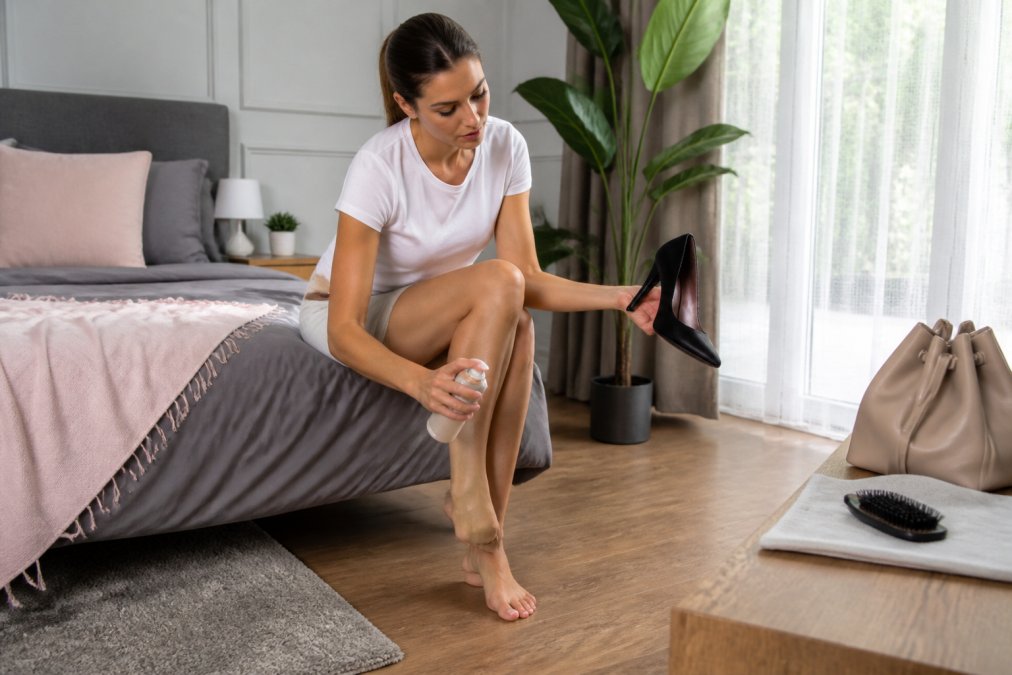
Pre-event preparation prevents last-minute pain. The night before a big event, soak your feet and massage them gently. In the morning, use metatarsal pads and cushioned insoles before putting on your heels. Still Standing® Spray applied 10-15 minutes before putting on your shoes creates a protective barrier that prevents pain from building during hours of wear.
Alternating footwear prevents repetitive stress injuries. Rotate between different heel heights and shoe styles so different parts of your foot bear the load.
Exercises for Metatarsalgia and Foot Strengthening
Targeted exercises strengthen the muscles supporting your arch and ball of your foot, improving shock absorption and reducing pain. Aim for five to seven days per week.
Towel curls strengthen the small muscles on the bottom of your foot. Sit in a chair with a towel flat on the floor in front of you. Using only your toes, curl the towel toward you, then straighten it out. Repeat 10-15 times.
Calf raises improve ankle and foot stability. Stand with your feet hip-width apart and rise up onto your toes, holding for two seconds, then lower back down. Do three sets of 15 repetitions.
Arch flexes improve flexibility and strength. While sitting, point your toes downward for two seconds, then pull them upward toward your shin for two seconds. Repeat 20 times.
Toe spreads activate intrinsic foot muscles. Sit with your feet flat and try to spread your toes apart without curling them. Hold for three seconds and release. Do three sets of 10 repetitions.
Plantar fascia stretches reduce tension on the tissue running along the bottom of your foot. Sit and cross one leg over the other. Using your hand, gently pull your toes back toward your shin. Hold for 30 seconds and repeat three times per foot.
Single-leg balance improves proprioception and foot stability. Stand on one foot for 30 seconds, keeping your other leg lifted. Do three sets per foot.
Most people notice improved foot comfort within two to three weeks of consistent practice. Exercises work best when combined with proper footwear, cushioning, and activity modification.
Footwear and Orthotics: Choosing the Right Support
The shoes you wear are your first line of defense against metatarsalgia.
Heel height and shape directly affect pressure distribution. Kitten heels (1-2 inches) and block heels distribute weight more evenly than stilettos. Wide heels are more stable than thin heels. Platform heels elevate your entire foot, reducing the angle of your arch and decreasing pressure on the ball of your foot.
Cushioning and materials matter significantly. Leather and fabric uppers mold to your foot naturally. Memory foam insoles absorb shock better than standard foam. Gel inserts provide targeted cushioning under the ball of your foot.
Toe box width prevents compression. A narrow toe box compresses your metatarsal heads, increasing pressure and pain. Look for shoes with a roomy toe box that allows your toes to spread naturally.
Arch support reduces the work your intrinsic foot muscles must do. Shoes with built-in arch support or custom orthotics stabilize your arch and distribute pressure more evenly. For severe metatarsalgia, custom orthotics made by a podiatrist provide personalized support.
Over-the-counter insoles offer affordable support. Gel inserts, memory foam insoles, and metatarsal pads are available at drugstores and online. Many people find significant relief with products in the $15-40 range.
Shoe shopping strategy prevents buying painful heels. Always try shoes on in the afternoon when your feet are slightly swollen. Walk around the store for at least five minutes. If they're uncomfortable in the store, they'll be worse after hours of wear.
Still Standing® Spray complements proper footwear by preventing pain from building during extended wear. Applied before putting on your heels, it works alongside your shoe choice and insoles to keep you comfortable.
When to See a Doctor About Ball of Foot Pain
Most metatarsalgia improves with home treatment within two to four weeks. However, certain situations warrant professional evaluation.
See a doctor if pain persists beyond four weeks despite consistent home treatment including rest, ice, and activity modification. Chronic pain may indicate structural issues requiring professional assessment.
Seek immediate care if you experience severe swelling that doesn't improve with ice and elevation, visible deformity in your foot, inability to bear weight, signs of infection like redness or warmth, or pain that radiates up your leg.
Schedule an appointment if you have a history of foot problems, diabetes or other conditions affecting circulation, or pain that interferes with daily activities despite treatment.
A podiatrist can perform a gait analysis to identify biomechanical issues contributing to your pain and prescribe custom orthotics tailored to your foot structure. According to the American Podiatric Medical Association, professional evaluation is particularly important if home treatment isn't working after consistent effort.
Physical therapy helps some people, especially those with chronic metatarsalgia or biomechanical issues. For most people, a combination of home treatment, proper footwear, and Still Standing® Spray prevents the need for professional intervention. Starting prevention before pain develops is even better.
Ball of foot pain doesn't have to be part of the price of looking beautiful. Whether you're walking down the aisle, standing through a work event, or dancing until midnight, your feet deserve comfort. Still Standing® Spray prevents metatarsalgia from building in the first place, letting you wear the heels you love without the pain. With a 30-day money-back guarantee and a non-numbing formula that keeps you safe and stable, Still Standing® Spray is the solution that lets you feel confident and comfortable. Get started with the Still Standing® Spray - Large and experience hours of pain-free heel wear.
Frequently Asked Questions
How can I massage the ball of my foot to relieve ball of foot pain?
Use your thumbs to apply firm, slow pressure along the arch and ball of your foot in circular motions for 5-10 minutes daily. Start at the heel and work toward your toes, focusing on tender areas. You can also roll a tennis ball or frozen water bottle under your foot for 10 minutes to combine massage with ice therapy. Massage increases blood flow and reduces inflammation associated with metatarsalgia.
What's the difference between metatarsalgia treatment at home and numbing sprays?
At-home treatments like ice, stretching, and orthotics address the root cause of inflammation and pressure distribution, providing lasting relief. Numbing sprays mask pain temporarily but don't reduce swelling or fix biomechanical issues. Still Standing® Spray uses a non-numbing, anti-inflammatory formula with cooling menthol that prevents pain while keeping your feet fully functional, you remain aware of your body's signals, which is safer than numbness.
How long does ball of foot pain typically take to improve?
Mild cases often improve within 2-4 weeks with consistent at-home treatment like ice, rest, and proper footwear. Moderate pain may take 4-8 weeks. Chronic metatarsalgia can take several months, especially if caused by structural issues like high arches. Starting treatment early with stretching, cushioning, and anti-inflammatory support speeds recovery significantly.
Can I still wear high heels if I have ball of foot pain?
Yes, with the right preparation and support. Use metatarsal pads or gel inserts inside your heels to reduce pressure on the ball of your foot. Apply Still Standing® Spray before putting on your shoes to provide anti-inflammatory relief and cooling comfort. Choose heels with wider toe boxes and lower heights when possible. For events, limit heel-wearing time and alternate with flat shoes when you can.