
Table of Contents
- Why Your Feet Hurt: The Real Biomechanics of Standing in Heels
- How to Wear High Heels Comfortably: Pre-Event Conditioning
- Your On-Feet Strategy: Posture, Movement, and Weight Distribution
- The Best Foot Comfort Spray for Heels: How Still Standing® Works
- Preventing Foot Pain at Weddings: A Hour-by-Hour Survival Plan
- Recovery Protocols: Post-Shift Care for Swollen, Aching Feet
- Common Mistakes That Sabotage Your Standing Endurance
- Conclusion: Stay Standing, Stay Comfortable, Stay Confident
- Frequently Asked Questions
Last Updated: September 8, 2026
Why Your Feet Hurt: The Real Biomechanics of Standing in Heels
Standing in heels for hours is a biomechanical challenge your body was not designed to meet. Elevating your heel shifts your center of mass forward and forces your calf muscles into constant contraction, restricting venous return and causing feet to swell and ache (peer-reviewed research).
Most women blame the shoes, but the real culprit is how your body responds to the unnatural angle. Your knees lock, your pelvis tilts forward, and your lower back arches excessively, creating a chain of joint stress up your spine. Understanding this cascade is the first step toward learning how to stay standing comfortably for hours. Understanding this cascade is the first step toward learning how to stay standing comfortably for hours. The solution requires a strategy, not just a product.
The good news is that you can train your body to handle this stress. Below, we'll show you how to condition your feet, adjust your posture, and use the right tools to survive a full day in heels. The strategies we cover can help brides, professionals, and performers stay on their feet through long occasions.
How to Wear High Heels Comfortably: Pre-Event Conditioning
The secret to how to wear high heels comfortably starts days before you slip them on. Your muscles need to be primed for the shortened position that heels force them into; skipping this preparation leads to muscle fatigue within the first hour.
Strength Exercises That Build Standing Stamina
Building standing stamina requires targeted work on your calves, arches, and core. A common approach is to perform these exercises daily in the two weeks leading up to your event:
- Calf raises: Stand on a step and slowly lower your heels below the edge, then rise onto your toes. Do 3 sets of 15 reps to build calf endurance.
- Towel scrunches: Sit in a chair with a towel under your foot and scrunch it toward you using only your toes. This strengthens the intrinsic muscles that support your arch.
- Core engagement: Hold a plank for 30 seconds. A strong core reduces the pelvic tilt that causes lower back pain when you stand.
- Balance work: Stand on one foot for 30 seconds, then switch. This improves proprioception, which helps your body make micro-adjustments that prevent knee locking.
Your On-Feet Strategy: Posture, Movement, and Weight Distribution
Once the event begins, your posture is your primary defense. Keep your ears, shoulders, and hips in a straight line, with your pelvis slightly tucked to prevent the exaggerated arch that causes lower back pain. Think of lengthening your spine rather than leaning back.
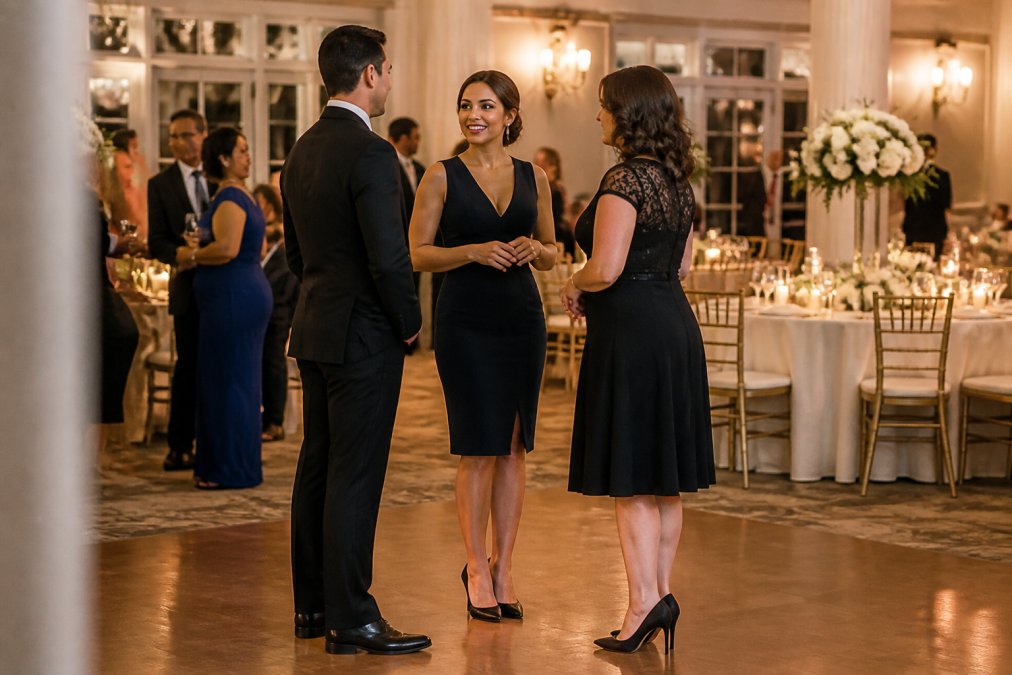
Static standing destroys your feet. Dynamic movement, even subtle shifts, keeps blood flowing and prevents the muscle fatigue that sets in when you lock your knees. Shift your weight from your toes to your heels every few minutes, and take small steps whenever conversation allows.
A common mistake is standing with your weight jammed into the balls of your feet. Instead, distribute weight across your entire foot, pressing gently into your heels and the outer edges. Engaging your glutes and core, rather than relying on your quads, reduces joint stress and helps you maintain standing stamina.
The Best Foot Comfort Spray for Heels: How Still Standing® Works
When conditioning and posture are not enough, the best foot comfort spray for heels provides an immediate layer of defense. Still Standing® Spray uses a non-numbing formula combining cooling menthol with plant-derived, anti-inflammatory ingredients to soothe feet before pain signals become overwhelming.

Unlike numbing products that block all sensation and create a dangerous fall risk, this spray keeps your proprioception intact. You still feel the ground beneath you, but the cooling sensation interrupts the cycle of discomfort. The portable bottle is TSA-approved for travelers who need relief on the go.
The formula is designed to be sprayed on before you put your shoes on, allowing it to absorb and start working immediately. For best results, reapply at the midpoint of a long event. The Zoe Report endorsed the approach, and Solutions Bridal recommends it for every bride and bridesmaid.
| Product | Size | Best For | Price |
|---|---|---|---|
| Still Standing® Spray - Mini | Travel size | Touch-ups and handbags | $20.00 |
| Still Standing® Spray - Large | Full size | Weddings and all-day events | $40.00 |
| Still Standing® Spray Comfort Set | Two full sizes | Frequent wearers and sharing | $60.00 |
Preventing Foot Pain at Weddings: A Hour-by-Hour Survival Plan
Preventing foot pain at weddings requires planning that starts before the ceremony and continues through the last dance. The average wedding day spans 8 to 10 hours. Here is a realistic timeline for staying comfortable:
The Getting-Ready Hour (Hours 0-1): Apply Still Standing® Spray 15 minutes before you put on your shoes. Do a final round of calf stretches while your hair is being styled. Hydrate well, because dehydration accelerates muscle cramping.

Ceremony and Cocktail Hour (Hours 1-3): Focus on your posture during the ceremony. When standing for vows, keep your weight balanced and avoid locking your knees. During cocktail hour, make a point to walk, don't stand still, to keep your calf pump active.
Dinner and Speeches (Hours 3-5): This is the most dangerous period for static loading. Sit whenever you can, and when you stand for toasts, shift your weight frequently. If your feet begin to ache, excuse yourself for a quick two-minute stretch in the restroom.
Dancing and Reception (Hours 5-8): Before dancing, reapply your spray and do a quick ankle roll. On the dance floor, the movement is actually good for your feet. If you need relief, alternate between dancing and sitting for slow songs.
Recovery Protocols: Post-Shift Care for Swollen, Aching Feet
The work does not end when you take your heels off. Post-shift recovery is critical for reducing inflammation and preventing long-term damage. Elevate your feet above your heart for 15 minutes, lying with your legs propped against the wall at a 90-degree angle to reverse the gravitational pull that has been pooling blood in your lower legs. addressing foot pain.
The 30-Minute Evening Recovery Protocol
Most guides stop at "elevate and stretch," but a structured protocol can deliver better results. The sequence below takes about 30 minutes and targets the specific tissues that take the most abuse from heel wear.
Minutes 0-5: Contrast Hydrotherapy. Fill two basins, one with cool water (60-65°F) and one with warm water (95-100°F). Submerge your feet for 60 seconds in warm, then 30 seconds in cool (PubMed). Repeat for five cycles, always ending on cool. This can stimulate blood flow and flush metabolic waste, while the cool finish can constrict blood vessels to reduce swelling.
Minutes 5-15: Targeted Stretching. The gastrocnemius and soleus muscles both attach to the Achilles tendon, but they respond to different stretches. For the gastrocnemius, perform a straight-leg calf stretch against a wall, keeping your heel down for 30 seconds. For the soleus, bend the knee slightly during the same stretch. Follow with a plantar fascia stretch: sit with your leg extended, loop a towel around the ball of your foot, and gently pull your toes toward your shin for 30 seconds. Repeat each stretch three times.
Minutes 15-20: Myofascial Release. Roll a frozen water bottle under your foot for 10 minutes to combine cold therapy with myofascial release. Move slowly from your heel to the ball of your foot, pausing on tender spots for 20-30 seconds until they release. If you do not have a frozen bottle, a golf ball works, but the cold reduces the deep inflammation that causes next-morning soreness.
Minutes 20-25: Ankle Mobility Work. Heels force your ankle into a plantar-flexed position for hours, so restoring dorsiflexion is essential. Sit with your legs extended, loop a resistance band around the ball of one foot, and pull gently toward you while resisting. Perform 15 slow reps per foot to strengthen the anterior tibialis.
Minutes 25-30: Compression and Elevation. Put on light compression socks (15-20 mmHg) and elevate your feet for the remaining time (the CDC). This low-grade option can help maintain venous return while you sleep, and it can make a difference in how your feet feel the next morning.
The Next-Morning Check
A simple self-assessment tells you whether your recovery worked. When you wake up, place your palms flat on the floor with your legs straight. If you cannot touch the floor or feel a sharp pull in your calves, your recovery was incomplete. If your feet are still swollen after a full night of elevation, consider whether your shoes are too narrow, chronic swelling is often a sign of compression at the metatarsal heads.
Common Mistakes That Sabotage Your Standing Endurance
Several habits undermine your ability to stay standing, even when you have prepared well. The first is choosing poor footwear. Well-fitting footwear with arch support is non-negotiable; shoes that are too loose cause your foot to slide forward, jamming your toes.
Another frequent error is neglecting compression gear. Compression socks or stockings support circulatory health by preventing blood from pooling in your lower legs. Modern fabrics are breathable and invisible under formal wear.
The Hydration and Electrolyte Blind Spot
The most overlooked mistake is treating hydration as an afterthought. Your calf muscles and the intrinsic muscles of your feet rely on a precise balance of sodium, potassium, and magnesium to contract and relax. When you sweat, you lose these electrolytes, and as their concentration drops, your muscle fibers may fire less efficiently, potentially causing premature cramping and a drop in standing stamina.
Plain water alone can sometimes make this worse. Drinking large volumes of water without replacing sodium can dilute your blood's electrolyte concentration further, which may trigger muscle spasms. Hydrating aggressively with water while skipping meals can contribute to conditions that may lead to calf cramps during an event.
Start hydrating two hours before the event, aiming for 16 to 20 ounces of water paired with a light snack that contains sodium, a handful of pretzels, a piece of cheese, or a small sports drink. During the event, alternate between water and an electrolyte beverage if you are dancing or standing in a warm room. Coconut water is a natural option, but check the label: many commercial brands add sugar without meaningful sodium. A pinch of salt in your water bottle is a low-cost alternative.
Magnesium deserves special attention. It is the mineral most involved in muscle relaxation, and a deficiency is common among women who stand for long hours. While a supplement taken days before an event can help, an Epsom salt foot soak the night before, or a magnesium spray applied to your calves 30 minutes before you put on your heels, can also be beneficial.
Finally, ignoring your breathing is a silent stamina killer. Focusing on slow exhalation can help you maintain core engagement and may prevent tension that accelerates fatigue. When you hold your breath or breathe shallowly, your diaphragm can tighten, potentially compromising subtle postural adjustments that keep your joints aligned. A simple pattern, inhale for four counts, exhale for six, may help reset your nervous system and reduce the perceived effort of standing.
Conclusion: Stay Standing, Stay Comfortable, Stay Confident
Enduring a long event in heels is a physical challenge, but it is one you can meet with the right preparation. Conditioning your body, maintaining dynamic posture, and using tools like Still Standing® Spray allow you to focus on the celebration rather than your aching feet. Our non-numbing formula keeps you safe while providing the relief you need, backed by a 30-day money-back guarantee.
Get started with Still Standing® Spray and enjoy your next event on your feet, comfortable and confident from the first toast to the last dance.
Frequently Asked Questions
How do I train myself to stand longer in heels?
Build strength gradually. Practice wearing your heels at home for 30 minutes daily, increasing by 15 minutes each week. Focus on core engagement and avoid locking your knees. Calf raises and toe spreads build the muscles that support your arch. On event day, apply a non-numbing foot comfort spray for heels like Still Standing® before putting your shoes on to help prevent discomfort from starting.
How can I improve my posture to stand for longer periods?
Keep your ears, shoulders, and hips aligned. Tuck your pelvis slightly under to prevent lower back arching, and engage your core as if bracing for a light punch. Shift your weight from one foot to the other every 10-15 minutes. Avoid locking your knees, which restricts circulation. Good posture reduces joint stress and muscle fatigue, helping you stay standing comfortably through long events.
Does foot comfort spray actually work for long events?
The right formula does. Still Standing® uses cooling menthol and plant-derived anti-inflammatory ingredients that soothe feet without numbing them. Numbing sprays block all sensation, which raises fall risk. A non-numbing spray keeps pain signals manageable while preserving the feedback your feet need for balance. The spray can help users feel beautiful and confident, reducing foot pain and allowing for longer wear of high heels.
What are the best ways to prevent foot fatigue at weddings?
Start with well-fitting heels and break them in for two weeks before the event. Bring backup flats for the dance floor. Apply Still Standing® spray 15 minutes before getting dressed, then reapply mid-event. Take seated breaks during dinner and speeches to let your calf muscles recover. Stay hydrated and stretch your calves briefly in the restroom. These steps dramatically reduce foot fatigue and keep you present for the celebration.