
Table of Contents
- Why Dr. Scholl's Inserts Aren't Your Only Option for Heels
- Best Dr Scholls Alternatives for Heels: A Quick Comparison
- Still Standing® Spray: The Non-Numbing Comfort Solution
- Slim-Profile Insoles for Tight-Fitting Pumps
- How to Make High Heels More Comfortable with the Right Fit
- Choosing the Best High Heel Pain Relief for Your Heel Height
-
Common Mistakes to Avoid with Heel Inserts
- Mistake: Using Insoles That Are Too Wide for the Shoe
- Mistake: Ignoring Material Breathability
- Mistake: Not Cleaning or Replacing Insoles Regularly
- Mistake: Transitioning Too Quickly from Orthotics to Regular Shoes
- Mistake: Forgetting That Insoles Change Shoe Fit Over Time
- The Bottom Line on Insole Care
- Conclusion
- Frequently Asked Questions
Last Updated: September 4, 2026
Why Dr. Scholl's Inserts Aren't Your Only Option for Heels
If you’ve ever spent a long event in stilettos, you know the throbbing at the ball of your foot and the burning in your arches. Many women reach for Dr. Scholl's inserts first, but those gel pads slide around, add bulk inside tight pumps, and fail to address the deep fatigue from hours on your feet.
At Still Standing® Spray, we’ve spent years focused on one question: how do you keep heels comfortable without sacrificing style or safety? The answer isn’t just cushioning, it’s addressing inflammation and swelling before they start.

Below, we’ll compare the top alternatives and explain how a non-numbing spray like Still Standing® works. But first, here’s what most guides get wrong: they treat the symptom of pressure, not the cause of swelling and fatigue.
Best Dr Scholls Alternatives for Heels: A Quick Comparison
Choosing the right alternative depends on your shoe type, heel height, and how long you’ll be standing.
| Solution | Best For | Key Benefit | Consideration |
|---|---|---|---|
| Still Standing® Spray | Long events, all heel heights | Reduces swelling & pain without numbing | Requires reapplication for all-day wear |
| Slim-Profile Insoles | Tight-fitting pumps | Adds cushioning without bulk | May not address deep arch fatigue |
| Metatarsal Pads | High heels 3-4 inches | Relieves forefoot pressure | Can shift or slide during wear |
| Full-Length Orthotics | Looser shoes & boots | Provides arch support & alignment | Too thick for most pointed-toe heels |
| Custom Inserts | Severe foot conditions | Semi-custom fit for biomechanics | Expensive and requires a podiatrist visit |
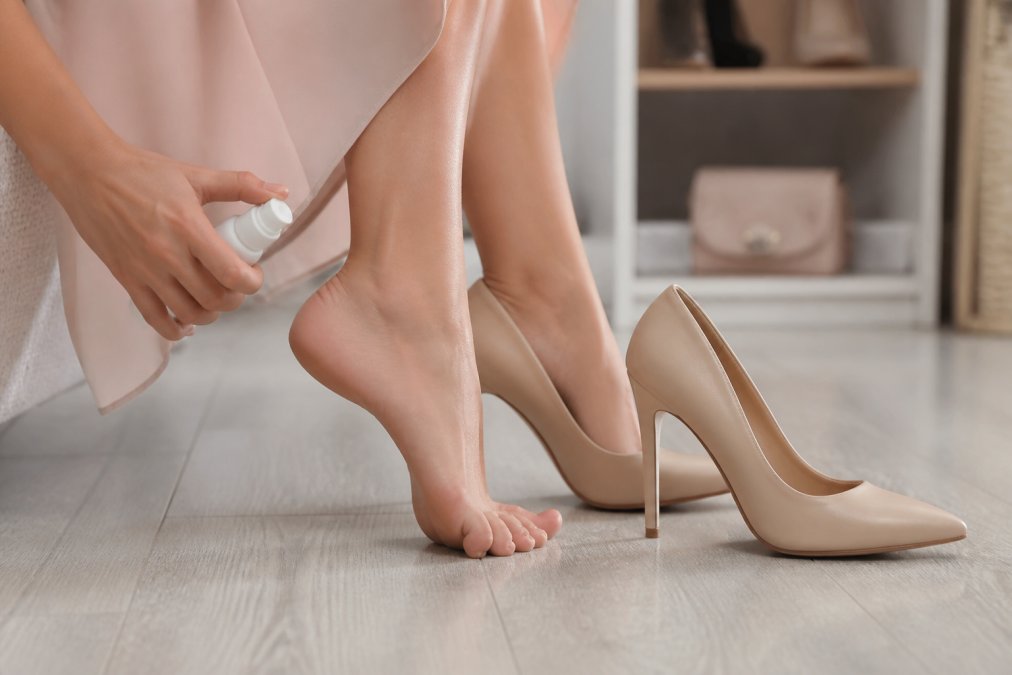
If your main issue is pressure on the ball of your foot, a metatarsal pad or slim insole helps. If you’re dealing with general fatigue and swelling, a spray that targets inflammation is often more effective. For women with plantar fasciitis, a semi-custom fit from a podiatrist might be necessary, but that’s a heavier investment than most casual wearers need.

Still Standing® Spray: The Non-Numbing Comfort Solution
Our top pick is Still Standing® Spray, and it earns that spot by solving the problem inserts can't. This cooling menthol foot spray uses plant-derived, anti-inflammatory ingredients to reduce the swelling behind "stiletto suffering." Because it’s made without numbing agents, you keep full sensation in your feet, which is critical for balance and preventing falls.

The formula is paraben-free and cruelty-free, and the Large size comes in a TSA-friendly 3.4 fl oz (100 mL) bottle. It’s recommended by Solutions Bridal for every bride and bridesmaid, and featured in The Zoe Report as a lifesaver for long days on foot.
Inserts provide a physical barrier, but they don't stop your foot from swelling inside the shoe. Still Standing® targets the inflammation directly, preventing pain from building up. The Large bottle is $40.00, and the Still Standing® Spray - Large is ideal as your primary application. For touch-ups, the Still Standing® Spray - Mini at $20.00 fits in a clutch.
Slim-Profile Insoles for Tight-Fitting Pumps
For women whose main complaint is the ball of the foot hitting the hard sole, slim-profile insoles are a solid addition. But not all thin inserts are created equal.
What Makes an Insole Truly Slim-Profile
A true slim-profile insole is typically 2-4 mm thick at the forefoot, tapering to near-nothing at the toes (peer-reviewed research). Any material under your toes raises the shoe's volume, pushing your foot forward and jamming your toes into the pointed tip. The best designs use a graduated thickness: cushioning at the metatarsal heads, a subtle arch rise, and a feather-thin edge at the toe box.
Look for viscoelastic polyurethane foam rather than standard EVA (PubMed). Polyurethane molds to your foot with body heat, while EVA stays stiff and can create pressure points. Some premium options use a dual-layer construction: a firm base for stability and a softer top for comfort.
Adhesive Quality Is the Hidden Differentiator
The most common complaint about slim insoles is that they slide forward or bunch up. Most drugstore inserts use a light-pressure adhesive that fails on smooth leather or patent finishes. Look for insoles with a medical-grade acrylic adhesive, which bonds aggressively to smooth surfaces and maintains its grip through sweat and movement.
Some brands offer a "grip-back" design with a silicone layer instead of adhesive, useful for open-toe heels or slick linings. The trade-off is that silicone-backed insoles can shift slightly, so they work best in shoes with a snug fit.
Matching the Insole to Your Heel Height
The biomechanics of your foot change dramatically with heel height. Here is how to match them:
- Under 2 inches: Your weight is distributed relatively evenly. A basic 2 mm cushioned insole with light arch support is sufficient.
- 2-3 inches: Pressure shifts to the metatarsal heads. Choose an insole with a metatarsal pad built into the design, not a separate adhesive pad that can shift.
- 3-4 inches: Your foot is at a 30-degree angle. You need an insole with a firm heel cup to stabilize the calcaneus and a pronounced metatarsal dome to spread the forefoot pressure. At this height, look for insoles that are 3-4 mm thick at the heel and 2 mm at the forefoot.
- 4 inches and above: Most slim insoles cannot provide enough support at this angle. If you insist on an insole, look for one with a rigid arch support made from nylon or carbon fiber, not just foam. These are rare in slim profiles, which is why many women at this height turn to sprays or other solutions.
The Foot-Molding Factor
Heat-moldable insoles are made from a thermoplastic material that softens at body temperature. You wear them for 10-15 minutes, and they conform to your foot. The benefit in high heels is that the insole molds to your foot in the heeled position, not the flat position, so the arch support ends up exactly where your arch is when standing in heels.
Podiatrists often recommend heat-moldable insoles for women who wear heels more than 20 hours per week (apma.org). The molding process takes the guesswork out of arch placement, the most common reason insoles fail to relieve heel pain.
When a Slim Insole Is Not Enough
A slim insert relieves forefoot pressure but does little for shock absorption or alignment. If you have pain that radiates up your leg, or a condition like plantar fasciitis, a slim insole is unlikely to resolve it. You need either a full-length orthotic in a roomier shoe or a solution that addresses inflammation directly. The insole handles mechanical pressure; the spray handles the biological response. Combining both delivers better results than either alone for heel heights above 3 inches.
How to Make High Heels More Comfortable with the Right Fit
The most effective way to make high heels more comfortable starts before you buy the shoe. A pump that is too loose causes your foot to slide forward, jamming your toes and increasing forefoot pressure. A shoe that is too tight restricts blood flow and accelerates swelling.
Women with wider feet or a higher arch often need a half-size up in heels. Once you have the right fit, you can layer solutions. A moisture-wicking, slim insole helps with slip-resistance, while a spray like Still Standing® tackles the inflammation that causes the burning sensation after hour two.
Choosing the Best High Heel Pain Relief for Your Heel Height
The best high heel pain relief depends almost entirely on heel height. For kitten heels under 2 inches, a basic cushioned insole often suffices. For classic 3-inch heels, forefoot pressure increases significantly, so you’ll want both a metatarsal pad and an anti-inflammatory solution.
For heels above 4 inches, your foot is nearly vertical, placing immense strain on the plantar fascia and ball of the foot. A full-length orthotic rarely fits, so a spray that reduces swelling is often the most practical choice. Many performers and drag artists rely on this method to maintain stability without losing the feel of the floor.
| Heel Height | Primary Pressure Point | Recommended Solution |
|---|---|---|
| Under 2 inches | Even distribution | Slim cushioned insole |
| 2-3 inches | Ball of foot | Metatarsal pad + anti-inflammatory spray |
| 3-4 inches | Forefoot & arch | Slim insole + cooling spray |
| 4+ inches | Severe forefoot | Non-numbing spray for swelling & stability |
Common Mistakes to Avoid with Heel Inserts
Most women buy the thickest insert they can find, assuming more padding equals more comfort. In a tight pump, this backfires. Adding volume pushes your foot forward, increasing the very pressure you're trying to relieve.
Another frequent error is ignoring adhesive quality. Cheap gel pads shift and bunch under your toes, creating new hot spots. Look for strong adhesive backing and a tapered design. Finally, don't wait until your feet hurt to apply a solution. Applying a spray like Still Standing® before you leave the house prevents swelling, rather than chasing the pain after it arrives.
Beyond these basics, there are several less obvious mistakes that can damage both your feet and your designer heels.
Mistake: Using Insoles That Are Too Wide for the Shoe
High-end heels often run narrow. If you trim an insole, cut along the manufacturer's designated trim lines. Cutting into the arch support or heel cup destroys the insole's function and can create sharp edges. A better approach is to choose a brand offering narrow-width options for pointed-toe pumps.
Mistake: Ignoring Material Breathability
Heels are worn without socks, so your feet sweat directly onto the insole. Standard foam absorbs moisture, breeds bacteria, and breaks down faster, leading to odor and blisters. Look for insoles with a moisture-wicking top layer made from bamboo charcoal, merino wool, or a synthetic wicking fabric.
Women who wear heels for 6-plus hours at events experience significantly more discomfort in the second half due to moisture buildup. A breathable insole or moisture-management spray can extend comfort by hours.
Mistake: Not Cleaning or Replacing Insoles Regularly
Pressure, sweat, and friction break down insoles faster in heels than in athletic shoes. Most manufacturers recommend replacing them every 3-6 months, but in heels worn weekly, that shortens to every 2-3 months. Signs of replacement include visible compression marks, loss of springiness, or adhesive that no longer sticks.
To extend their life, remove insoles after each wear and let them air dry completely. Never machine wash an insole unless the manufacturer states it is safe, most foam insoles will disintegrate. Spot-clean with a damp cloth and mild soap, then air dry away from direct heat.
Mistake: Transitioning Too Quickly from Orthotics to Regular Shoes
If you have been wearing custom orthotics, switching to a slim insole or no insole requires a transition period. Your foot muscles have adapted to the support, and removing it abruptly can cause a flare-up of plantar fasciitis or arch pain.
A safe protocol is to wear the new setup for 1-2 hours at a time for the first week, then increase by 30 minutes each subsequent week. Pay attention to sharp pain, as opposed to general fatigue, sharp pain signals you to slow down or reconsider your support level.
Mistake: Forgetting That Insoles Change Shoe Fit Over Time
As an insole compresses, it becomes thinner, so a shoe that fit snugly may become loose after a month. A loose heel can cause your foot to slide forward, creating new pressure points. If your heels feel looser after several weeks, add a heel grip or replace the insole to restore the fit.
The Bottom Line on Insole Care
The difference between an insole that lasts three months and one that lasts a year comes down to maintenance. Air them out, clean them gently, and replace them at the first sign of compression. And remember: an insole is a mechanical solution. For the inflammatory component of heel pain, a non-numbing spray is a complementary approach that addresses what padding cannot.
Conclusion
Finding the best Dr Scholls alternatives for heels means moving beyond the idea that a gel pad is your only defense. The real challenge is managing the swelling that builds up over hours, not just cushioning the initial pressure. Inserts have their place, but they fail to address the root cause of stiletto suffering.
Still Standing® Spray offers a different path. Its non-numbing, cooling formula with plant-derived anti-inflammatory ingredients helps you stay comfortable and stable, whether you’re a bride, a bridesmaid, or a professional on your feet all day. With a portable design and a 30-day money-back guarantee, it’s the confidence you need to wear your favorite heels for hours.
Frequently Asked Questions
Which Dr. Scholl's inserts are best for heel pain?
Dr. Scholl's offers several inserts for heel pain, but for high heels, the challenge is finding a slim enough profile that fits without making shoes too tight. Many women find that gel inserts with deep heel cups provide the best support for plantar fasciitis. However, for severe pain during long events, a non-numbing spray like Still Standing® may offer better relief because it doesn't add bulk to your shoe and works on the entire foot.
Are there non-numbing alternatives for high heel pain relief?
Yes. Numbing agents can be dangerous because they block all sensation, which can lead to falls or injuries. Non-numbing alternatives like Still Standing® Spray use cooling menthol and plant-derived anti-inflammatory ingredients to reduce swelling and discomfort while keeping your natural foot awareness intact. This approach allows you to feel the ground beneath you, maintaining balance and stability, which is critical when walking in heels for extended periods.
How do foot comfort sprays compare to traditional gel insoles?
Gel insoles provide cushioning and arch support but add volume to your shoe, which can cause tightness in heels. Foot comfort sprays like Still Standing® work differently: they cool and soothe the entire foot, reducing the swelling and inflammation that cause pain. Sprays are also more versatile, working with any shoe type, including open-toe styles where insoles would be visible. For many, a combination of targeted support and a comfort spray works best.
Can orthotic insoles be used in open-toe heels?
Most full-length or three-quarter-length orthotic insoles are visible in open-toe heels, which ruins the aesthetic. For open-toe styles, consider slim-profile metatarsal pads or toe crests that sit discreetly under the ball of your foot. Alternatively, a foot comfort spray like Still Standing® is completely invisible and provides relief without compromising your shoe's look, making it a practical choice for dressy open-toe heels.