
Table of Contents
- How Dr. Scholls and Other Foot Sprays Compare
- Ingredient Breakdown: Menthol, Tolnaftate, and Antifungals
- The Best High Heel Pain Relief Options for Long Events
- How Long Does Foot Comfort Spray Last?
- Why a Non-Numbing Foot Comfort Spray Changes Everything
- Cost Per Use and Material Safety: What Competitors Miss
- Frequently Asked Questions
Last Updated: September 12, 2026
How Dr. Scholls and Other Foot Sprays Compare
The dr scholls vs other sprays conversation usually starts the same way: someone has a wedding, a long workday, or a formal event coming up, and they want to know which spray actually keeps heels bearable. At Still Standing® Spray, we hear this question constantly from brides, bridesmaids, attorneys, and performers. The honest answer is that these products are not built for the same job. Some are antifungal treatments, some are odor neutralizers, and a few are genuine foot comfort sprays designed for extended heel wear.

Dr. Scholl's is a legacy brand with a broad catalog spanning inserts, powders, and medicated sprays. Most of its spray lineup targets odor and moisture rather than heel discomfort specifically. A foot comfort spray built for high heels is a different category: it addresses the friction, pressure, and swelling that build up over hours in a narrow shoe, not just the smell that follows.
That distinction matters more than any single ingredient list. If your goal is treating athlete's foot, you want a tolnaftate or antifungal product. If your goal is standing through a six-hour reception in stilettos, you want something formulated for that scenario. Below, we break down ingredients, longevity, cost per use, and the safety questions most guides skip.
Ingredient Breakdown: Menthol, Tolnaftate, and Antifungals
Foot sprays fall into three functional groups, and the active ingredient on the label tells you which one you're holding. Reading that label correctly is the difference between buying a treatment, a deodorizer, or a comfort product.
Tolnaftate (1%): An antifungal agent classified as an over-the-counter drug (the FDA). It works by interfering with the fungal cell membrane, which stops the growth of the organisms that cause athlete's foot and ringworm. Tolnaftate does nothing for heel pain, friction, or pressure. If your feet itch, peel, or crack between the toes, this is the category you want. If your feet hurt after four hours in pumps, it is not.
Menthol (often 0.5% to 3%): A cooling agent that activates the TRPM8 cold-sensing receptors in the skin. That triggers a genuine cooling sensation and a mild analgesic effect, which is why menthol shows up in everything from muscle rubs to foot sprays. Menthol soothes the sensation of tired, hot feet. It does not reduce swelling, and it does not block nerve signals the way a numbing agent does.
Aluminum-based antiperspirant compounds (aluminum chlorohydrate, aluminum zirconium): These temporarily plug sweat ducts, which reduces moisture. Less moisture means less bacterial growth, which means less odor. They are the same actives used in underarm antiperspirants, and they carry the same caveats: skin irritation is possible, and they can leave residue on fabric.
Deodorizers without antiperspirant actives: These typically rely on alcohol, zinc ricinoleate, or fragrance to neutralize or mask odor. They do not reduce sweating and do not treat fungus. They are the weakest category for anyone dealing with genuine foot odor tied to perspiration.
| Active | Category | What It Does | What It Does Not Do |
|---|---|---|---|
| Tolnaftate 1% | Antifungal drug | Stops fungal growth | Relieve pain or friction |
| Menthol | Cooling agent | Cools and mildly soothes | Reduce swelling or numb |
| Aluminum compounds | Antiperspirant | Reduces sweat and odor | Treat fungus or comfort |
| Zinc ricinoleate / fragrance | Deodorizer | Neutralizes or masks odor | Reduce sweat |
Still Standing® Spray sits in the menthol category, combining cooling menthol with plant-derived anti-inflammatory ingredients. It is made without numbing agents. That last point is the one people ask about most, so let's address it directly.

One more label habit worth building: check whether the product is registered as an OTC drug (it will carry a "Drug Facts" panel) or sold as a cosmetic. Antifungal and antiperspirant claims require the Drug Facts panel. Comfort and cooling claims generally do not. That panel is the fastest way to tell what a spray is actually allowed to claim it does.
The Best High Heel Pain Relief Options for Long Events
For long events, the best high heel pain relief comes from preventing discomfort before it starts, not numbing it after the fact. Application timing, shoe fit, and product choice all matter more than the brand name on the bottle.
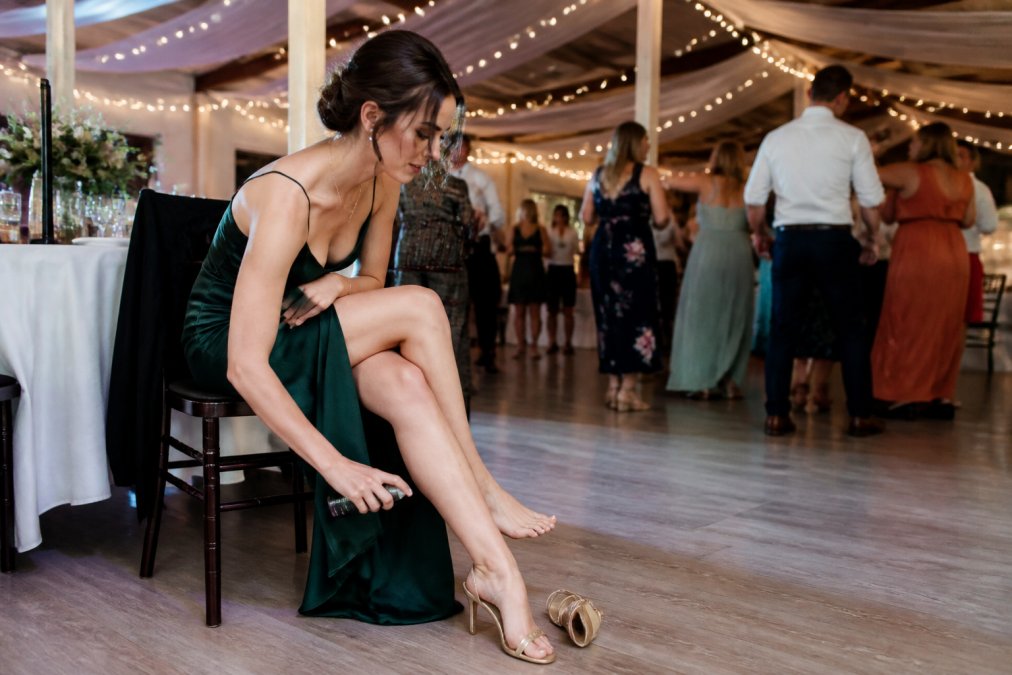
A practical approach for a full event day:
- Apply a comfort spray to clean, dry feet before putting shoes on.
- Let it absorb fully rather than spraying and immediately stepping in.
- Target the arch, ball of the foot, and heel, the three highest-pressure zones.
- Keep a mini bottle in your clutch for a mid-event reapplication.
- Take a seated break every few hours to reset circulation.
The Still Standing® Spray Comfort Set pairs a large 3.4 fl oz bottle for the first application with a 0.5 fl oz mini for touch-ups. For a wedding party, the Mini Set lets you hand bottles to bridesmaids so everyone has one in reach. Keeping your feet pain-free throughout a long event is essential, much like selecting comfortable stylish shoes that support you through every daily task.

How Long Does Foot Comfort Spray Last?
Most foot comfort sprays last between two and four hours per application, depending on the formula, your activity level, and how much you sweat. Cooling menthol products tend to fade faster under heavy activity because the sensation dissipates as the skin warms and as the menthol evaporates off the surface.
Three variables drive that range more than the brand name:
- Sweat rate. Moisture dilutes and carries away the active. A humid reception hall or a dance floor accelerates fade time.
- Friction and heat. Walking generates heat in the shoe, which speeds evaporation and shortens the cooling window.
- Application coverage. A thin, uneven spray fades faster than a full, even layer across the high-pressure zones.
That range is why reapplication matters for anything longer than a standard workday. A wedding runs six to eight hours. A conference day can run ten. If you're relying on a single spray at 8 a.m. to carry you to a 10 p.m. reception, you will need a second application.
| Scenario | Typical Duration | Reapplication Needed |
|---|---|---|
| Short event (2-3 hours) | One application | No |
| Workday in heels (6-8 hours) | Two to four hours | Yes, once |
| Wedding or gala (8+ hours) | Two to four hours | Yes, once or twice |
| Performance or stage (varies) | Depends on activity | Yes, between sets |
Getting Spray Into Hard-to-Reach Areas Without the Mess
This is the part most guides skip, and it is where application technique actually determines how long a spray lasts. The arch, the sides of the toes, and the heel cup are the hardest zones to coat and the ones most prone to friction blisters.
A practical method:
- Hold the bottle four to six inches from the foot and angle the nozzle rather than holding it flat against the skin.
- Spray the ball of the foot, the heel, and the arch as three separate passes. One wide pass leaves the arch dry.
- For the sides of the toes, spray onto a fingertip and dab rather than spraying directly, which avoids overspray into the shoe.
- Let the product dry fully before stepping in. Stepping in early transfers wet product to the lining and shortens the effective window.
- If you are spraying inside the shoe rather than on the foot, spray the insole and let it dry for at least a minute before wearing.
Duration and Material Compatibility
How long a spray lasts is also a question about where it lands. A formula that stays put on skin may behave differently on a shoe lining.
- Leather and suede: Test on a small hidden area first. Some formulas can darken or spot the finish, and a darkened patch on a leather pump is not reversible.
- Satin and dyed fabrics: Choose a non-staining formula and spray your feet, not the shoe. Satin bridal heels are the highest-risk item in most closets.
- Synthetic mesh and linings: Generally more tolerant, but residue-free formulas keep the interior cleaner and prevent powder caking that can shorten how long the next application lasts.
Long-lasting protection depends as much on your reapplication habit and your application coverage as on the formula. This is the practical argument for carrying a mini bottle rather than relying on a single large one at home.
Why a Non-Numbing Foot Comfort Spray Changes Everything
A non-numbing foot comfort spray keeps sensation intact while reducing the friction that causes pain in the first place. That is the core difference between comfort and deadening.
The confusion is understandable. If your feet aren't numb, won't you still feel everything? You will feel your feet, and that is the point. Numbing agents block nerve signals, which removes pain but also removes the feedback your body uses to balance. The alternative is to address the cause: cooling menthol soothes, while plant-derived anti-inflammatory ingredients help reduce discomfort.
Still Standing® Spray was built around this principle. It is designed to support comfort without deadening sensation, so you stay aware of your footing on stairs, dance floors, and uneven pavement.
Cost Per Use and Material Safety: What Competitors Miss
Two factors separate a smart purchase from an impulse buy: cost per use and material compatibility. Most comparison content ignores both.
Cost per use is simple math. A larger bottle costs more upfront but delivers more applications, which lowers the per-event cost. A mini bottle costs less but covers fewer events. For someone wearing heels a few times a month, the large bottle plus a mini for touch-ups is usually the better value. For a one-time event, a mini set may be enough.
Material safety is the factor almost nobody discusses. Sprays land on more than skin. They contact the interior lining of leather, satin, synthetic fibers, and dye-treated materials. A non-staining formula matters if you're spraying near a $200 pair of satin bridal heels. Residue-free application matters if you don't want powder residue caking inside the shoe.
- Leather and suede: Test on a small hidden area first; some formulas can darken or spot the finish.
- Satin and dyed fabrics: Choose a non-staining formula and spray your feet, not the shoe.
- Synthetic linings: Generally more tolerant, but residue-free formulas keep the interior cleaner.
| Consideration | What to Check | Why It Matters |
|---|---|---|
| Cost per use | Applications per bottle | Lower cost per event over time |
| Material compatibility | Non-staining, residue-free | Protects expensive footwear |
| Application frequency | Duration per spray | Determines reapplication needs |
| Skin sensitivity | Paraben-free, dermatological safety | Reduces irritation risk |
For sensitive skin, patch-test on a small area a day before your event. Formulas without numbing agents tend to be gentler for repeated use, though no product can guarantee zero reaction for every person.
Frequently Asked Questions
Do podiatrists recommend Dr. Scholls foot sprays?
Podiatrists often recommend medicated sprays containing tolnaftate for fungal conditions like athlete's foot. However, for heel pain from wearing high heels, most podiatrists suggest non-numbing comfort sprays that reduce swelling without deadening sensation. Dr. Scholls offers several product lines, so effectiveness depends on which specific spray you choose and what you're treating. For event-day comfort in heels, a menthol-based comfort spray is generally preferred over antifungal formulas.
What is the difference between medicated foot sprays and comfort sprays?
Medicated foot sprays treat fungal infections using active ingredients like tolnaftate. Comfort sprays address pain and friction using cooling agents like menthol and plant-derived anti-inflammatories. If you need antifungal treatment, choose a medicated spray. If you need to stay comfortable in heels for hours, a non-numbing comfort spray like Still Standing® targets discomfort without numbing your feet, so you maintain balance and sensation.
Is there a non-numbing alternative to standard foot sprays?
Yes. Many standard foot sprays use numbing agents like benzocaine or lidocaine, which deaden sensation and can increase fall risk in heels. Non-numbing alternatives use cooling menthol and anti-inflammatory botanicals to reduce swelling and discomfort while keeping your natural sensation intact. Still Standing® Spray is one example, designed specifically for high heel wearers who want comfort without losing feeling in their feet.
How do I choose the right foot spray for long events?
Match the spray to your primary need. For fungal issues, pick a medicated antifungal. For heel pain and swelling during weddings or long workdays, choose a non-numbing comfort spray with menthol and anti-inflammatory ingredients. Check the application frequency, bottle size for portability, and whether it leaves residue on shoes. A TSA-friendly mini bottle is useful for touch-ups during events.
Are there safety concerns with using aerosol foot sprays daily?
Daily use of aerosol sprays can cause skin irritation, especially on sensitive skin. Numbing ingredients like benzocaine may trigger allergic reactions in some people. Non-numbing formulas with menthol and plant-derived ingredients tend to be gentler for repeated use. Always patch-test first, avoid spraying on broken skin, and check for certifications if those matter to you.
Long events expose the real gap between products: most sprays handle odor or fungus, while very few are built for the pressure and swelling of extended heel wear. Still Standing® Spray addresses that gap with a non-numbing, cooling menthol formula that combines plant-derived anti-inflammatory ingredients, a portable bottle that fits a clutch, and a 30-day money-back guarantee. Get started with Still Standing® Spray and walk into your next event confident, comfortable, and standing tall.