
Table of Contents
- Flats vs Heels for Long Days: The Core Trade-Offs
- How Heel Height Changes Your Foot Biomechanics
- How to Wear High Heels Comfortably for 8+ Hours
- Foot Pain Relief for High Heels: What Works and What Doesn't
- When Flats Are the Better Choice (and When They Aren't)
- Post-Event Recovery and Surface Strategies for Long Days
- Frequently Asked Questions
Last Updated: September 13, 2026
Flats vs Heels for Long Days: The Core Trade-Offs
The choice between comfortable flats vs high heels for long days comes down to a simple trade-off: heels change how your weight loads through your feet, while flats keep that load closer to neutral. Neither option is automatically pain-free. A cheap, unsupportive flat can leave your feet just as sore as a poorly fitted heel.
This guide from Still Standing® Spray breaks down what happens inside your shoes over an eight-hour day, which heel heights your feet tolerate best, and how to stay comfortable in either option.
The core trade-offs at a glance:
| Factor | Flats | High Heels |
|---|---|---|
| Weight distribution | Spread across the whole foot | Shifted onto the ball of the foot |
| Arch support | Depends on the insole | Often minimal |
| Calf and Achilles load | Low | Increased |
| Posture effect | Near-neutral | Pelvis and spine tilt forward |
| Style versatility | Casual to smart | Formal and evening wear |
Flats win on biomechanics. Heels win on occasion. The rest of this article closes that gap.
How Heel Height Changes Your Foot Biomechanics
Heel height alters your biomechanics, the way your muscles, joints, and bones move together during walking. As the heel lifts, your center of gravity shifts forward and your weight moves onto the ball of the foot and toes. That is why a long day in stilettos produces burning under the metatarsals rather than general soreness. A lower heel changes this less; a higher heel changes it more, and faster.
The heel-to-toe drop is the height difference between the heel and the front of the shoe. A small drop keeps your ankle closer to its natural position. A large drop pushes the ankle into plantarflexion, which shortens the calf and loads the Achilles tendon. Over hours, that load shows up as tightness, foot fatigue, and pressure points under the toes.
The Goldilocks Heel Height for All-Day Wear
Most podiatrists and footwear specialists point to a similar range: heels between roughly one and two inches cause the least disruption for extended wear (apma.org). Below that, you are close to flat; above it, forefoot pressure climbs quickly.
This is the "Goldilocks" zone: high enough to read as a heel, low enough that your gait stays close to normal. A block heel or wedge in this range widens the contact area, improving stability and reducing the wobble that forces your toes to grip.
If you must go higher, treat height as a budget you spend across the day rather than a fixed setting.
How Specific Foot Conditions Change the Math
Generic advice assumes a neutral foot. Most people do not have one, and the trade-offs shift with your foot type.
Plantar fasciitis. The plantar fascia, the band of tissue from heel to toes, tolerates a low, supportive heel better than a completely flat shoe, because a slight lift takes tension off the fascia at the heel attachment (orthoinfo.aaos.org). A one-inch block heel with a cushioned footbed is often more comfortable for a full day than a ballet flat with no support.
High arches. A rigid, high-arched foot does not absorb shock well. Heels concentrate load on an already-stiff forefoot, so cushioning under the ball matters more than heel height. Flats with a molded arch and cushioned forefoot usually win.
Flat feet and overpronation. A foot that rolls inward needs arch support and a stable heel counter. A high, narrow heel gives it nothing to brace against, so the ankle works harder for balance. A low wedge or supportive flat with a firm midsole is the safer all-day choice.
Bunions and wide forefeet. Any heel that narrows the toe box presses the big toe joint. Height is secondary here; width and a soft upper are what keep the day tolerable.
Reading the Numbers on Your Own Shoes
You do not need a gait lab to apply this. Measure the heel-to-toe drop by placing the shoe on a flat surface and comparing thickness under the heel to thickness under the ball. A drop under about a quarter inch behaves like a flat; over about two inches, forefoot pressure and calf tightness accelerate for most wearers.
People tolerate a higher heel for a short event and a lower heel for a long day, but they buy for the event and wear the shoe for the day. Matching the drop to the duration is the most useful adjustment you can make before leaving the house.
How to Wear High Heels Comfortably for 8+ Hours
Wearing high heels comfortably for a full day is a preparation problem, not a tolerance problem. People who reach hour eight without wincing set up their shoes, feet, and schedule before the event starts.
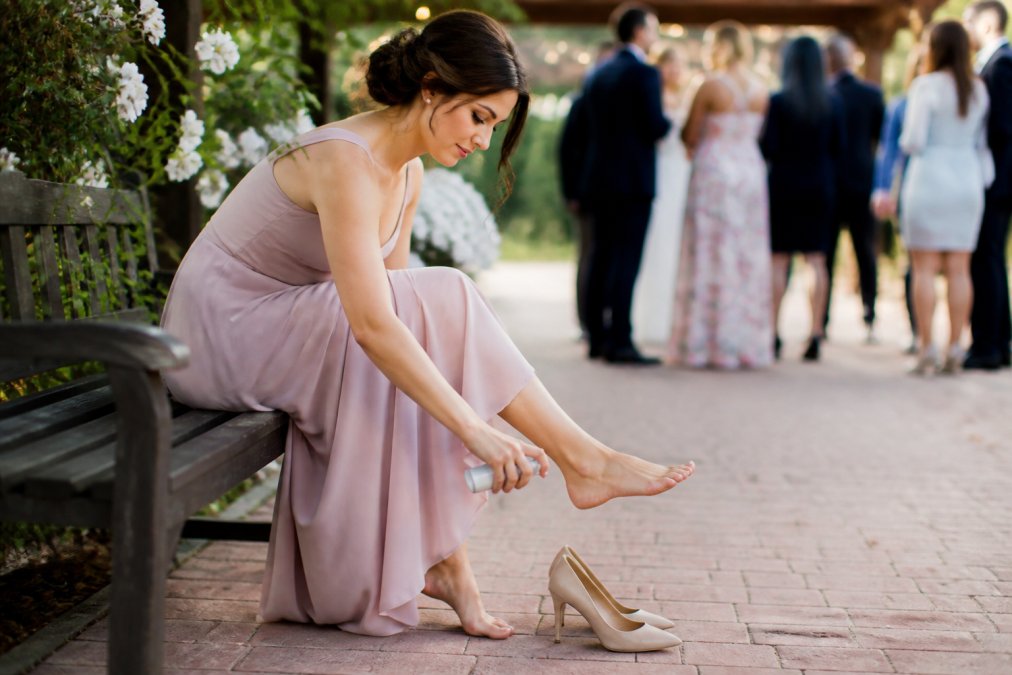
Start with fit. Your toe box should let your toes lie flat without pinching; if your toes are stacked or curled, no insert will save the day. Break new heels in over several short wears before the main event. Then think about the surface: carpet, grass, and marble demand different things from your outsole, and a thin leather sole on a slick floor forces your foot to work harder for traction, accelerating fatigue.
Fit, Materials, and Cushioning That Actually Help
Materials matter more than most buyers expect. Leather and suede breathe better than coated synthetics, reducing heat and swelling over a long day. A padded insole with metatarsal padding takes pressure off the ball of the foot, and a cushioned midsole absorbs impact that would otherwise travel up your leg. A common mistake is buying heels a half size too small because they feel snug in the store; feet swell during the day, so a snug shoe becomes painful by hour three.
Foot Pain Relief for High Heels: What Works and What Doesn't
Foot pain relief for high heels works best when it targets the two real drivers: pressure under the forefoot and inflammation from swelling. Cooling and anti-inflammatory ingredients address the second; padding and fit address the first. Numbing agents address neither, which is why they disappoint.
Here is how the common options compare:
| Approach | What it does | Where it falls short |
|---|---|---|
| Gel inserts | Cushions the ball of the foot | Shifts inside the shoe, adds bulk |
| Numbing sprays | Deadens sensation | Can mask pain and raise fall risk |
| Cooling menthol sprays | Reduces swelling and discomfort | Needs reapplication on long days |
| Cushioned insoles | Spreads pressure, adds support | May not fit slim heels |
| Stretching and recovery | Eases tight calves and arches | Works after the fact, not during |
Numbing products deaden your feet, removing the feedback your body uses to stay balanced. On stairs or uneven ground, that is a genuine safety problem.
This is the gap Still Standing® Spray was built for. Its non-numbing formula pairs cooling menthol with plant-derived anti-inflammatory ingredients, so it targets the swelling and discomfort behind "stiletto suffering" without deadening sensation. The Still Standing® Spray - Large bottle is designed for your first application of the day, and the Still Standing® Spray - Mini fits in a clutch for top-ups later.

The American Podiatric Medical Association guidance on footwear is a useful reference for anyone weighing inserts against sprays.
When Flats Are the Better Choice (and When They Aren't)
Flats are the better choice whenever the day involves long stretches of walking, uneven ground, or standing on hard surfaces. Commutes, trade shows, city travel, and full workdays on your feet all favor a flat with real arch support. But not all flats are supportive: a thin-soled ballet flat with no insole and a narrow toe box can be nearly as punishing as a heel, offering no cushioning and no shock absorption. Look for a thicker midsole, a molded footbed, and a flexible outsole that bends where your foot bends. Selecting the right foundation for your feet is only the first step toward maintaining comfort, as coordinating these choices with the rest of your apparel for long days ensures you remain supported from head to toe.
What Actually Makes a Flat Supportive
Support in a flat comes from four things you can check in the store in under a minute.
Arch support. Press your thumb into the footbed under the arch. If it gives way with no resistance, the shoe is not supporting you. A molded footbed or a removable insole with a raised arch contour is what keeps the arch from collapsing over hours of standing.
Cushioning and shock absorption. Squeeze the midsole. EVA foam and polyurethane return energy and damp impact; a hard, paper-thin sole transmits every step up your leg. On concrete, that difference is felt by hour two.
Stability. Twist the shoe and check the heel counter. A flat that twists like a dishrag offers no lateral control on uneven pavement; a firm heel counter holds the rearfoot in place.
Flexibility where it counts. The shoe should bend at the ball of the foot, not in the middle of the arch. Bending at the arch means the shoe is fighting your foot's natural motion.
Materials and Construction That Hold Up Over a Long Day
Leather and knit uppers breathe and conform to the foot better than stiff coated synthetics, which trap heat and swelling. A leather lining reduces friction at the heel, and a padded collar prevents the rubbing that turns a hot spot into a blister by mid-afternoon. For the outsole, rubber grips better than leather on slick floors and lasts longer on pavement; a slightly thicker sole adds cushioning without much weight.
When Flats Are the Wrong Call
Where flats lose: formal events, weddings, and evening wear where the dress code calls for height. If the occasion demands a heel, choose a lower, wider heel rather than a flat that feels out of place. There is also a surface problem: on marble or polished tile, a flat with a hard leather sole can slip, and one with too much grip can catch and twist your knee. Match the outsole to the floor you will actually be on.
A Quick In-Store Test
Wear the flats for a few minutes on a hard floor, not carpet. Carpet hides how much shock the shoe absorbs. Walk, turn, and stand still. If your arch aches within five minutes on tile, it will ache far worse after eight hours.
Post-Event Recovery and Surface Strategies for Long Days
Recovery starts the moment you take your shoes off. Elevating your feet above heart level for fifteen to twenty minutes moves pooled fluid and reduces next-morning swelling. A gentle calf stretch and a slow roll of the arch over a cold bottle or ball eases tightness from hours in a raised heel.
Surface choice shapes the whole day. Marble and tile offer no give, so every step lands hard; grass and carpet absorb impact but demand more grip, which tires your toes. If you can plan your route, alternate surfaces and sit whenever the schedule allows.
Transitioning between flats and heels deserves its own plan. Going straight from a week of flats into a full day of heels is the fastest route to sore calves and aching arches. Build up over several days, an hour or two at a time.
If you want a recovery routine that fits in a handbag, the Still Standing® Spray Comfort Set pairs a large bottle for the morning with a mini for reapplication, and the Still Standing® Spray - Mini Set works well as a gift for a bridal party.


The real challenge with comfortable flats vs high heels for long days is that your feet rarely get a vote until the damage is done. Preparation is what changes the outcome, and that is exactly what Still Standing® Spray is built around: a non-numbing, cooling menthol formula that helps reduce swelling and discomfort so you can stay in your shoes longer, a portable bottle that fits a clutch or pocket, and a 30-day money-back guarantee if it does not work for you. Get started with Still Standing® Spray and enjoy the occasion instead of counting the minutes until you can sit down.
Frequently Asked Questions
Do high heels feel better than flats for long-term wear?
Neither wins outright. Flats reduce pressure on the ball of the foot and keep your ankle stable, but thin-soled flats can leave you with arch strain and heel impact pain after several hours. Heels shift weight forward and shorten your calf muscles over time. The better question is which shoe matches your day. For an 8-hour event with mixed standing and sitting, a low block heel with arch support often beats both a stiletto and a ballet flat.
What are the most comfortable heels for wearing all day long?
Look for a heel under 2 inches, a wider block or stacked heel for ankle stability, a padded insole with metatarsal support, and a toe box wide enough to spread your toes. Leather or suede uppers breathe better than synthetic materials. A non-numbing foot comfort spray like Still Standing® can also help reduce swelling and discomfort before you put the shoes on, so you get through the full day without the pain building up.
How can I make high heels feel like flats during a long event?
Prep your feet before the event: apply a cooling foot spray, add metatarsal padding, and break the shoes in around the house first. During the event, sit when you can, shift your weight between feet, and keep a mini spray in your clutch for a mid-day reapplication. Avoid thin stilettos on hard tile or concrete, since those surfaces amplify impact. A block heel on a carpeted or wood floor will feel noticeably easier than a stiletto on marble.
Are flats always the healthier choice for your feet?
No. Flats with no arch support or cushioning can cause plantar fasciitis, heel pain, and foot fatigue just as easily as heels. A flat with a supportive insole, a slightly thicker outsole, and a roomy toe box is a good option. A paper-thin ballet flat is not. If you have flat feet, high arches, or a history of foot pain, the insole matters more than the heel height. Talk to a podiatrist about what fits your foot type.
Can wearing heels all day cause long-term foot issues?
Yes, with regular wear. Years of high heels can shorten the Achilles tendon, tighten calf muscles, and contribute to bunions, hammertoes, and metatarsalgia. The risk goes up with heel height and wear frequency. If you wear heels several days a week, alternate with supportive flats or low heels, stretch your calves daily, and give your feet recovery time. Occasional wear for events is far less likely to cause lasting problems than daily 4-inch stilettos.