
Table of Contents
- Why High Heels Hurt (And What That Means for Relief)
- The Best High Heel Pain Relief Options, Ranked
- Best Insoles for High Heels: Arch Support and Orthotics
- How to Make High Heels Comfortable Before You Even Leave the House
- Preventing Foot Pain in Heels with Stretching and Strengthening
- Post-Event Recovery: High Heel Pain Relief After a Long Day
- Conclusion
Last Updated: August 22, 2026
Most high heel pain relief guides give you two options: numb your feet or suffer through it. Both are bad. Numbing agents mask sensation completely, increasing the risk of ankle rolls and falls. At Still Standing® Spray, we've spent years focused on a third path: preventing the pain before it starts, without deadening sensation. Below, we cover every credible method for high heel pain relief, ranked by effectiveness.

Why High Heels Hurt (And What That Means for Relief)
High heel pain relief starts with understanding why heels hurt. A standard heel shifts body weight forward onto the metatarsal heads, the five bones that form the ball of the foot. The higher the heel, the more dramatic that weight distribution becomes. At four inches, that load becomes extreme, compressing the metatarsal heads together and irritating the nerves that run between them.
This is why the burning, tingling nerve pain so many heel wearers describe is real and measurable. According to American Podiatric Medical Association guidance on footwear, high heels are a leading contributor to forefoot pain, metatarsalgia, and chronic discomfort in women. The Achilles tendon and calf muscles also shorten over time with regular heel wear, changing gait mechanics even in flat shoes. Understanding this cascade tells you where to intervene: pressure distribution at the ball of the foot, nerve pain management, inflammation control, and circulation support.
The Best High Heel Pain Relief Options, Ranked
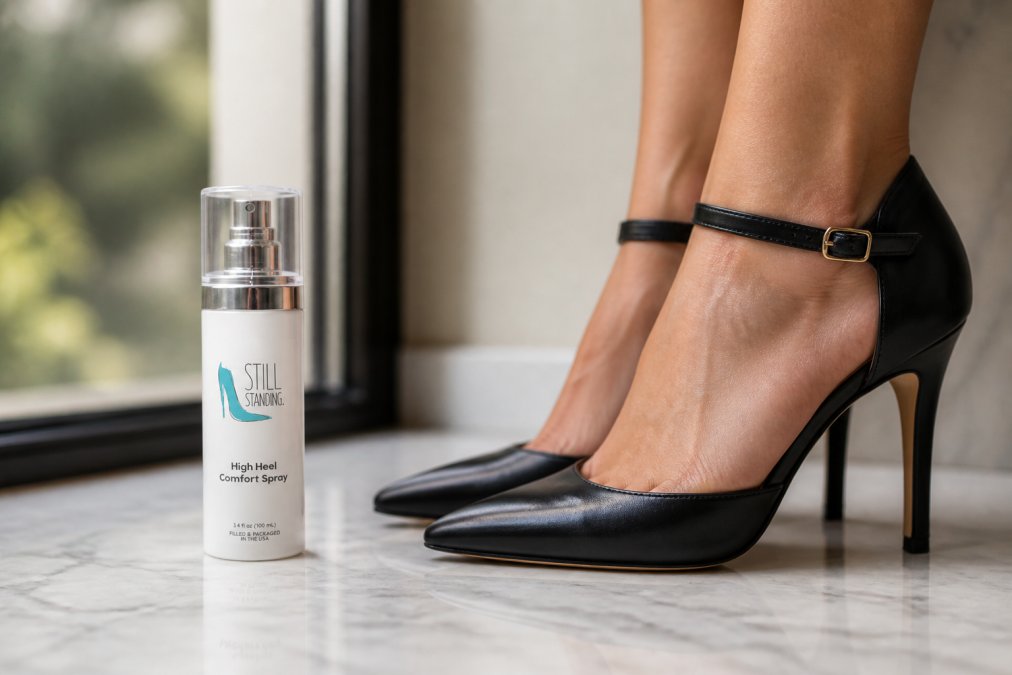
1. Non-Numbing Comfort Sprays: Still Standing® Spray
The best high heel pain relief approach prevents pain without compromising your safety. Still Standing® Spray does exactly that. Its non-numbing formula combines cooling menthol with plant-derived, anti-inflammatory ingredients to reduce swelling and discomfort without deadening sensation.
This distinction matters more than most people realize. Numbing your feet before wearing heels is risky, you lose the feedback that tells you when you're about to roll an ankle. Still Standing® works differently: it addresses the inflammatory response and foot fatigue at the source so you feel comfort, not numbness.
The Zoe Report described it plainly: "Endure a long day on foot by spritzing your feet with this soothing spray before slipping on your stilettos. Trust us, it's a lifesaver." Solutions Bridal calls it "our Stiletto Solution" and recommends it for every bride, bridesmaid, and mother of the occasion.
Works for 94% of users.
Product options:
- Still Standing® Spray - Large (3.4 fl oz / 100 mL), $40.00. Best as your primary application for maximum coverage and longest-lasting comfort.
- Still Standing® Spray - Mini (0.5 fl oz / 15 mL), $20.00. Fits in a clutch for touch-ups throughout the day.
- Still Standing® Spray Comfort Set, $60.00. The large and mini together, ideal for weddings and all-day events.
- Still Standing® Spray - Mini Set, $40.00. Two minis, perfect for gifting to the whole wedding party.
2. Over-the-Counter Pain Relievers and Topical Analgesics
Oral nonsteroidal anti-inflammatory drugs (NSAIDs) can reduce inflammation and pain after a long event, but they work systemically and take time to kick in, making them reactive rather than preventative. Topical analgesics with menthol create a cooling sensation that can temporarily ease nerve pain. Lidocaine-based numbing sprays block sensation entirely, increasing fall risk in heels. For pre-event use, menthol-based topicals are safer. For post-event recovery, oral NSAIDs are appropriate for most healthy adults.


3. Gel Cushions, Metatarsal Pads, and Gel Heel Cups
Gel cushions and metatarsal pads address the pressure distribution problem directly. A well-placed metatarsal pad sits just behind the ball of the foot and redistributes weight away from the metatarsal heads, reducing nerve compression that causes burning pain. The practical limitation: gel inserts add volume inside an already snug shoe. Many wearers find that half-insoles placed at the ball of the foot work better than full insoles in heels, because they don't push the foot forward and worsen toe compression.
4. Taping Techniques for Toes and the Ball of the Foot
A common technique among performers and frequent heel wearers involves taping the third and fourth toes together with athletic or medical tape. The nerve that causes the signature burning pain of metatarsalgia runs between those two toes, and taping reduces the spread and compression that irritate it. This is a legitimate short-term fix that takes about two minutes and costs almost nothing.
Best Insoles for High Heels: Arch Support and Orthotics
The best insoles for high heels are thin, targeted, and designed specifically for heeled footwear. Standard arch support insoles built for athletic shoes will not fit inside most heels and can actually make fit worse.
What to look for in heel-specific insoles: half-length design that covers only the ball and arch, metatarsal pad integration for pressure distribution, low-profile cushioning that doesn't add significant height, and non-slip backing so the insert stays in place.
Custom orthotics prescribed through podiatry can address underlying biomechanical issues, including overpronation or high arches, that make heel wearing more painful. According to American Academy of Orthopaedic Surgeons patient resources, custom orthotics are particularly beneficial for people with structural foot differences that affect weight distribution.
| Relief Method | Best For | Limitations | When to Apply |
|---|---|---|---|
| Still Standing® Spray | All-day events, weddings, work | Apply before wearing, not during | Pre-event, before putting heels on |
| Metatarsal pads | Ball-of-foot nerve pain | May not fit narrow toe boxes | Inside shoe, before wearing |
| Taping third/fourth toes | Acute nerve pain during events | Temporary, doesn't address swelling | Just before wearing |
| Oral NSAIDs | Post-event inflammation | Reactive, not preventative | After event, with food |
| Custom orthotics | Structural foot issues | Requires podiatry visit | Inside shoe, ongoing |
| Stretching routine | Prevention and recovery | Takes consistent practice | Morning and post-event |
How to Make High Heels Comfortable Before You Even Leave the House
Most high heel pain is preventable. The mistake most people make is treating comfort as something to manage after the pain starts rather than something to engineer before it does.
Shoe Selection: Toe Box, Heel Height, and Weight Distribution
The toe box is the single most important factor in forefoot comfort. A pointed toe box compresses the toes laterally and increases metatarsal pressure regardless of what else you do. An almond or round toe box gives the foot more natural spread and dramatically reduces nerve compression. Heel height affects weight distribution in a direct, measurable way. A block heel or platform distributes that load across more surface area than a stiletto, making the same heel height significantly more comfortable for extended wear.
Gradual Break-In Strategies That Actually Work
Breaking in heels is not a myth, but most people do it wrong. Wearing new heels for a full day as their first outing is how blisters and pressure sores happen. A practical break-in protocol: Wear new heels indoors for 30 minutes on the first day, increase to one hour on day two, and by day four or five, wear them for a short outing of two to three hours. Reserve them for a full event only after five to seven sessions of gradual wear.
Preventing Foot Pain in Heels with Stretching and Strengthening
Preventing foot pain in heels requires building the foot and ankle strength to support the position heels put you in. The most effective stretching exercises for heel wearers target the calf complex and the plantar fascia.
Calf and Achilles stretches: Stand facing a wall, place both hands on the wall, step one foot back, and press the heel flat to the floor. Hold for 30 seconds. Repeat with a slight bend in the back knee to target the soleus.
Plantar fascia release: Roll the arch of each foot over a firm ball for two minutes before putting on heels. This mobilizes the plantar fascia and reduces the tension that contributes to heel pain and foot fatigue.
Toe-spreading exercises: Sit barefoot and actively spread your toes as wide as possible. Hold for five seconds, release, repeat ten times. This strengthens the intrinsic foot muscles that stabilize the forefoot in heels.
According to guidance from the American Physical Therapy Association on foot health, consistent foot and ankle strengthening exercises reduce the risk of overuse injuries and improve tolerance for demanding footwear over time.
Post-Event Recovery: High Heel Pain Relief After a Long Day
The right post-event recovery protocol makes a real difference in how quickly your feet recover and whether chronic discomfort develops over time.
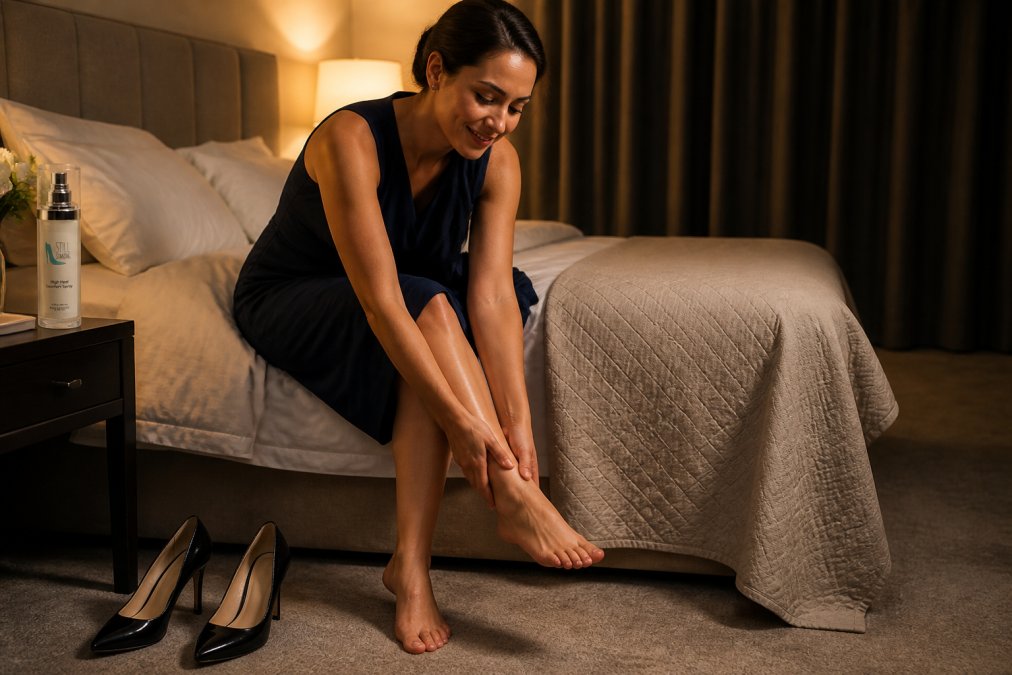
Start with elevation. Lie down and prop your feet above heart level for at least 15 minutes to actively reduce swelling by encouraging fluid drainage from the lower extremities. Follow with a cold soak or ice pack on the ball of the foot for 10 to 15 minutes to address any acute inflammation. Massage the plantar fascia and the spaces between the metatarsals using your thumbs to apply firm pressure along the arch from heel to ball, then gently separate the toes and apply pressure between each metatarsal. Perform the stretching routine described in the previous section, especially calf stretches immediately after removing heels to prevent the Achilles tendon from staying in its shortened position overnight.
Anatomical Considerations: When Your Feet Need More Than a Quick Fix
Some foot pain in heels signals an underlying structural issue that over-the-counter solutions won't fully address.
Morton's neuroma is a thickening of the nerve tissue between the third and fourth metatarsals, caused by repeated compression. It produces a burning, tingling, or numb sensation in the ball of the foot that worsens in heels. It can be managed conservatively with metatarsal pads and wider footwear, but persistent cases may require podiatric intervention.
Plantar fasciitis produces sharp heel pain, typically worst with the first steps in the morning. Regular heel wear shortens the calf muscles and increases tension on the plantar fascia. Stretching and orthotics help, but a podiatrist can assess severity and recommend appropriate treatment.
Bunions are bony protrusions at the base of the big toe that worsen with pointed-toe footwear. They change the biomechanics of the entire forefoot and increase the risk of nerve pain and metatarsal stress.
If your high heel pain is severe, persists for more than a few days after events, or is localized to a specific area rather than general foot fatigue, a visit to a podiatrist is the right next step. The American Podiatric Medical Association maintains a podiatrist finder at APMA's find-a-podiatrist tool for anyone seeking professional foot care.
Foot pain in heels is genuinely solvable for most people, but it requires addressing the right problems in the right order. Still Standing® Spray is built for exactly this: preventing the inflammation and discomfort that turn a beautiful event into an endurance test, without numbing your feet and creating a fall risk. With a 30-day money-back guarantee and a portable design that fits in any clutch, it's the first layer of any serious high heel comfort strategy. Add it to your pre-event routine and build from there.
Frequently Asked Questions
Q: How do I get instant relief from high heel pain?
A: The fastest options are a cooling menthol comfort spray applied before and during wear, over-the-counter nonsteroidal anti-inflammatory drugs like ibuprofen taken before an event, and metatarsal pads placed under the ball of the foot to redistribute pressure. Removing your heels and elevating your feet for even 10 minutes also reduces swelling quickly. For ongoing events like weddings, a pocket-sized spray, such as the Still Standing® Spray Mini, lets you reapply throughout the day without leaving the room.
Q: Are non-numbing sprays actually effective for high heel comfort?
A: Yes, and they have a safety advantage over numbing agents. Lidocaine-based sprays and topical numbing products block nerve pain signals entirely, which sounds appealing but removes the feedback your feet need to maintain balance, increasing fall risk in heels. Non-numbing formulas like Still Standing® Spray use cooling menthol and plant-derived anti-inflammatory ingredients to reduce swelling and discomfort without cutting off sensation. The formula works for 94% of users, and The Zoe Report calls it 'a lifesaver' for long days on your feet.
Q: Do shoe inserts actually help with high heel pain?
A: They help with specific problems. Gel heel cups cushion the heel strike and reduce impact. Metatarsal pads shift pressure away from the ball of the foot, which takes the most load in heels. Full-length orthotics with arch support improve biomechanics and weight distribution across the entire foot. The key is matching the insert to your pain location, a heel cup does nothing for forefoot pain, and a metatarsal pad won't address heel discomfort. Slim-profile insoles designed for heels avoid the fit problems that bulk out the toe box.
Q: What stretches help prevent foot pain in heels?
A: Three stretches address the soft tissue most stressed by heels. A calf stretch against a wall loosens the Achilles tendon and plantar fascia tightened by heel elevation. Toe spreads, fanning your toes wide and holding for five seconds, counteract the compression of a narrow toe box. Rolling a tennis ball under the arch for two minutes before putting on heels warms up the plantar fascia and improves circulation. Doing these consistently before events reduces the cumulative foot fatigue that leads to chronic discomfort.
Q: How long does Still Standing® Spray last, and is it worth the price versus cheaper insoles?
A: The Large bottle (3.4 fl oz / 100 mL) is priced at $40 and the Mini (0.5 fl oz / 15 mL) at $20. For frequent heel wearers, the Comfort Set at $60 pairs both sizes for full-day coverage. Unlike insoles, which address pressure distribution only, the spray targets inflammation and swelling directly, a different mechanism. For events where you can't swap shoes or add bulk inside a dress heel, a spray is the only practical option. The 30-day money-back guarantee removes the financial risk of trying it.