
Table of Contents
- Tip 1: Choose Stable Shoe Styles for Outdoor Wedding Footwear
- Tip 2: How to Wear High Heels Comfortably for Hours
- Tip 3: Use Heel Protectors for Grass and Uneven Ground
- Tip 4: Best Wedding Shoes for Grass and Outdoor Terrain
- Tip 5: Prepare for Weather and Ground Conditions
- Conclusion: Putting Your Outdoor Wedding Footwear Plan Together
- Frequently Asked Questions
Last Updated: October 8, 2026
Tip 1: Choose Stable Shoe Styles for Outdoor Wedding Footwear
The single most important decision you'll make about outdoor wedding footwear happens before you buy anything: pick a stable base.
Outdoor wedding footwear is any shoe chosen for a ceremony or reception held on grass, gravel, sand, or another unpaved surface. The defining requirement is stability, not height.
Here's the trade-off nobody explains clearly enough: the narrower the heel, the more pressure it puts on a single point. On a hard floor that's fine.
Our non-numbing foot comfort spray is designed for the hours after the shoe choice is made, when even a sensible heel starts to wear on you.

Block Heels and Wedges vs. Stilettos on Grass
Block heels and wedges stay on top of grass because their wide base distributes weight; stilettos concentrate it into a point and sink. If your venue has any soft ground at all, the wide heel wins on physics alone.
A block heel of 2 to 3 inches gives you height without the wobble. A wedge goes further, offering continuous contact from heel to toe. Both handle uneven ground far better than a thin heel.
Stilettos aren't impossible outdoors. They're just a calculated risk, and one you should take only if the ceremony and reception are fully paved.
Tip 2: How to Wear High Heels Comfortably for Hours
Learning how to wear high heels comfortably comes down to preparation before the event, not endurance during it. Break the shoes in, dial in the fit for your actual foot shape, and build in a genuine break partway through the day.
Start with fit, because fit is where most end-of-night pain begins. A shoe that slips at the heel forces your toes to grip with every step, and that gripping is what produces most of the burning and cramping people blame on the heel height.
Fit, Foot Shape, and Accessibility
Most advice stops at "buy your size." That's not enough for an outdoor wedding, where you may be standing, walking on uneven ground, and on your feet for six or more hours.
- Wide feet: Look for a wide or extra-wide width rather than sizing up. Sizing up adds length you don't need and lets the heel slip, which is the exact problem you're trying to avoid. A shoe with an adjustable strap across the instep accommodates a wider forefoot far better than a fixed-width pump.
- High arches: A shoe with a slightly cushioned insole or a removable footbed lets you add arch support without changing the look. Flat, hard-soled dress shoes tend to be the worst offenders for high arches over a long day.
- Bunions or forefoot pain: A wider toe box and a lower heel (1 to 2 inches) reduce pressure on the ball of the foot. A pointed toe concentrates pressure; a rounded or almond toe spreads it.
- Balance or mobility needs: Treat a stable, low shoe as the primary choice, not the backup. A block heel or dressy flat with a secure strap gives you a wider base and less ankle work. If you use a cane, walker, or orthotic, test the shoe with that aid on a similar surface before the event.
- Extended standing: If the ceremony, cocktail hour, and reception keep you upright for hours, plan a seated break and a second, lower pair. It's not defeat; it's strategy.
A common pattern is that people buy the shoe for the photo and only discover the fit problem on the day. Wear new shoes indoors for short stretches on several different days before the wedding.
Do this on carpet first, then on a hard floor.
The day itself matters too. Apply a foot comfort spray before you put the shoes on, not after the pain starts. Still Standing® Spray uses a cooling menthol formula with plant-derived ingredients, and it's made without numbing agents, so you keep the natural sensation in your feet while you walk.

Tip 3: Use Heel Protectors for Grass and Uneven Ground
Heel protectors for grass are small caps that slip over the bottom of a heel to widen its footprint and stop it sinking. They're one of the cheapest, most effective additions to any outdoor wedding footwear plan.
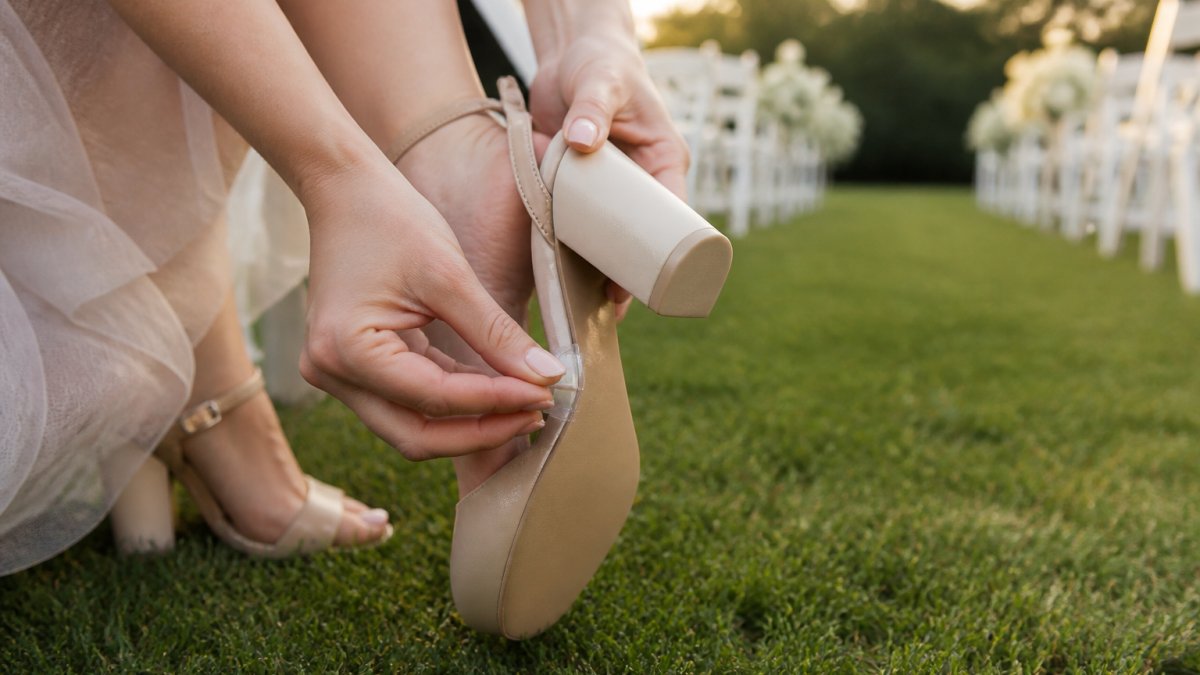
You'll find two main types:
- Wide-base caps that clip onto stilettos and turn a thin heel into a broader surface
- Full-sole traction grips that add grip across the whole shoe for gravel and slick stone
Neither is glamorous, and both are easy to lose, so pack spares. Traction inserts work the same way in reverse: they stop you sliding on polished stone patios and wooden decks, which are common at outdoor venues.
Tip 4: Best Wedding Shoes for Grass and Outdoor Terrain
The best wedding shoes for grass balance three things: a stable base, a secure fit, and a level of formality that matches the event. You don't have to sacrifice style, but you do have to prioritize the base.
Foot Comfort Spray for Ultimate High Heels →
Here's how the main options stack up.
| Shoe Type | Stability on Grass | Comfort for All-Day Wear | Formality | Best Terrain |
|---|---|---|---|---|
| Block heel | High | High | Formal | Grass, gravel |
| Wedge | High | High | Semi-formal | Grass, sand |
| Low heel (1-2 in) | Medium-high | Very high | Semi-formal | Grass, cobblestone |
| Dressy flat | Medium | Very high | Casual to semi-formal | Grass, gravel, sand |
| Sandal with straps | Medium | High | Casual to semi-formal | Grass, sand |
| Stiletto | Low | Low | Formal | Paved only |
A Decision Guide by Terrain
Most outdoor-wedding advice stops at grass. Real venues mix surfaces, so match the shoe to the ground you'll actually walk on.
- Grass: A block heel or wedge is the safest choice. A wide base spreads your weight and stays on top of the turf instead of punching through it. A stiletto concentrates your weight into a single point and sinks, especially after rain or on soft, freshly watered lawns.
- Sand: A wedge or a flat is the only sensible option. A wedge gives continuous contact from heel to toe, which keeps you from digging in. Thin heels disappear into sand, and even a block heel can wobble on loose, shifting ground.
- Gravel: Prioritize a flat or a low heel with real traction. Narrow heels catch in the gaps between stones and twist your ankle. A wider heel or a flat with a textured sole rolls over gravel instead of catching.
- Cobblestone: A low heel or a flat with a grippy sole is best. Cobblestone is uneven and often slick, so a lower center of gravity helps. A thin heel can wedge into the gaps and throw off your balance.
- Wooden decks and stone patios: These are usually the easiest surfaces, but they can be slick when damp. A sole with traction, or a traction insert, prevents sliding.
Check With the Venue and Tell Your Guests
One step almost no one takes: ask the venue what the ground is actually like. A coordinator can tell you whether the ceremony is on a lawn, a terrace, gravel, or a mix, and whether the grass is irrigated or likely to be soft. That single question can change your shoe choice.
If you're planning the wedding, put a note about the ground surface on your website or invitation suite. A short line like "the ceremony is on grass, so consider a block heel or flat" saves guests from a day of sinking and wobbling.
Dressy Flats, Low Heels, and Sandals
Dressy flats and low heels are the most reliable choice for long outdoor events, and they've become genuinely elegant in recent years.
Sandals with a secure ankle strap work well for summer weddings on grass or sand. The strap keeps the shoe from sliding, and the open design handles heat far better than a closed pump.
One honest limitation: flats and low heels give up height, and if your dress was hemmed for a taller shoe, it may drag. Get the hem adjusted for the shoe you'll actually wear.
Tip 5: Prepare for Weather and Ground Conditions
Weather and ground conditions change the right answer, so check the forecast and walk the venue if you can. Rain turns a lawn into mud, heat makes feet swell, and both should shape your footwear plan.
A few practical moves:
- Rain or mud: choose a wedge or block heel, and expect to wipe protectors clean
- Heat: pick an open sandal or a breathable fabric, and account for swelling by shopping later in the day
- Gravel and cobblestone: prioritize a flat or low heel with real traction, since narrow heels catch in the gaps
- Sand: a wedge or flat is the only sensible option; thin heels disappear
Fit and foot shape matter here too. If you have a wide foot or a high arch, a strap that adjusts makes more difference than any heel height. Anyone managing balance or accessibility needs should treat a stable, low shoe as the primary choice, not the backup.
Conclusion: Putting Your Outdoor Wedding Footwear Plan Together
The challenge with outdoor weddings is that the ground doesn't cooperate with the shoes we love most. You can plan around it, though: pick a stable base, break the shoes in, add heel protectors, and keep a backup pair within reach.
Still Standing® Spray was made for exactly this. Our foot comfort spray uses a cooling menthol formula designed for high heels and stilettos, comes in a TSA-friendly size you can tuck into a clutch, and is backed by a 30-day money-back guarantee. Add Still Standing® Spray to your wedding-day kit and stay comfortable from the first step to the last.
Frequently Asked Questions
What are the best shoes to wear to an outdoor wedding?
Block heels, wedges, dressy flats, and low heels work best for outdoor wedding footwear because their wider base distributes weight and reduces sinking. Stilettos are the riskiest choice on grass. Look for ankle straps or cross straps to keep shoes secure on uneven ground, and choose a heel height you can walk in for several hours.
How do you keep heels from sinking into grass?
Heel protectors for grass are the most direct fix. These caps widen the surface area of your heel so it stays on top of the lawn instead of punching through. Block heels and wedges already have a wider base, so they sink less. If the ground is soft from rain, consider switching to dressy flats for the ceremony and saving heels for the reception.
How to wear high heels comfortably for an all-day event?
Break in your shoes before the event by wearing them around the house for short periods. Apply a foot comfort spray like Still Standing® before putting shoes on, and keep the travel-size bottle in your clutch for touch-ups. Choose a heel height under three inches, add cushioning inserts, and sit down periodically to take pressure off your feet.
Are wedges better than stilettos for outdoor weddings?
Yes, wedges are far more stable on grass, gravel, and uneven ground. A wedge distributes your weight across the entire sole, so it won't sink or wobble the way a thin stiletto does. Block heels offer similar stability with a dressier look. If you love stilettos, save them for a paved reception area or use heel protectors.
What should I do if my feet swell during a long outdoor wedding?
Bring backup shoes, such as dressy flats or sandals, and switch into them after the ceremony. Choose shoes with adjustable straps so you can loosen them as feet swell. A cooling menthol foot spray can help refresh tired feet between events. Elevate your feet during any seated breaks to reduce swelling before it builds.